
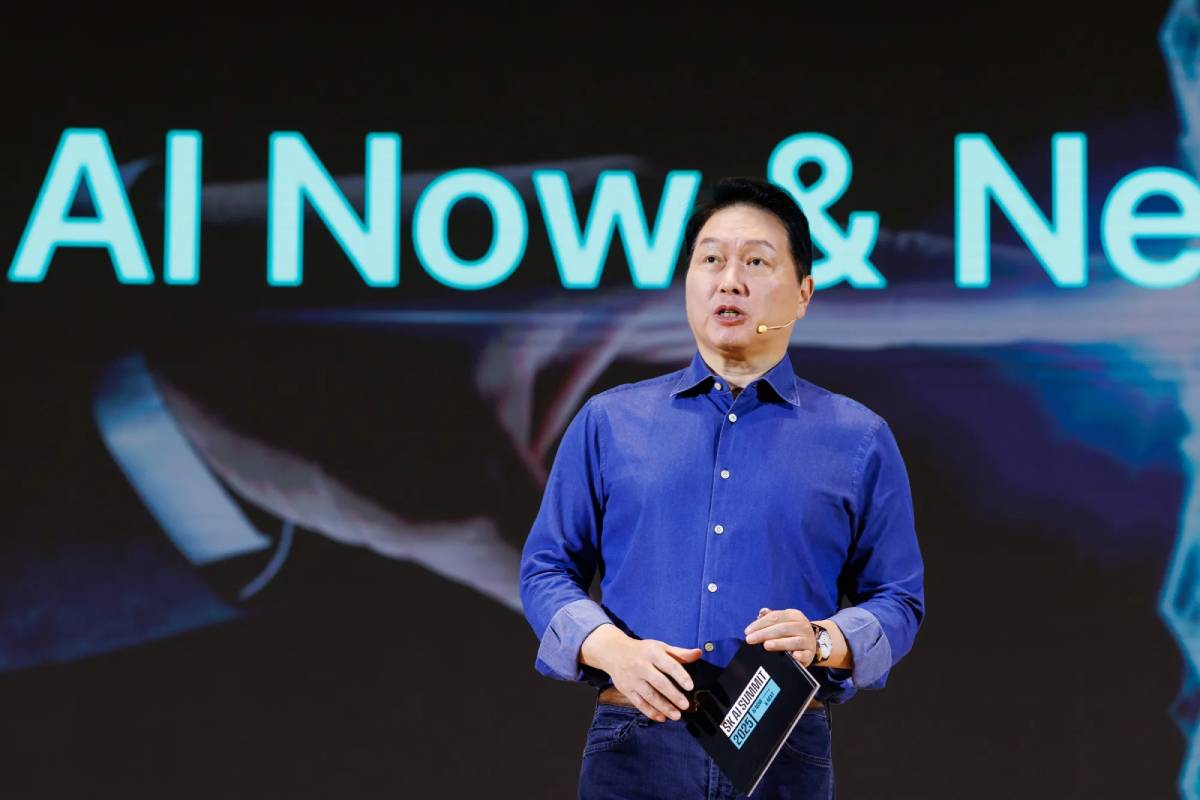
SK Hynix Expands AI Memory Output Amid Chip Race

SK Hynix’s leadership announced plans to increase output of advanced memory chips tailored for AI workloads, particularly high-bandwidth memory used in data centers and AI accelerators.

February 24, 2026
|

A significant escalation in the global semiconductor race unfolded as SK Hynix pledged to ramp up production of AI-focused memory chips. The move signals intensifying competition in high-bandwidth memory (HBM), a critical component powering advanced artificial intelligence systems worldwide.

SK Hynix’s leadership announced plans to increase output of advanced memory chips tailored for AI workloads, particularly high-bandwidth memory used in data centers and AI accelerators.

The commitment comes amid surging global demand for AI computing infrastructure, driven by hyperscale cloud providers and semiconductor firms developing next-generation AI processors.

The expansion underscores SK Hynix’s strategy to solidify its position in the premium memory segment, where supply constraints have tightened margins and strengthened pricing power.

The move also places the company in sharper competition with domestic rival Samsung Electronics and US-based memory producer Micron Technology. The development aligns with a broader global surge in AI-driven semiconductor demand. High-bandwidth memory is a crucial enabler of advanced AI models, facilitating rapid data transfer between processors and memory modules. As generative AI and large-scale machine learning systems expand, memory performance has become as critical as processing power.

Over the past two years, supply shortages in advanced memory segments have elevated strategic importance for manufacturers. AI accelerators from leading chip designers rely heavily on cutting-edge HBM configurations, turning memory producers into central players in the AI value chain.

South Korea remains a global hub for memory manufacturing, making SK Hynix’s production commitments geopolitically significant amid US-China technology tensions and supply chain realignments.

Industry analysts interpret SK Hynix’s pledge as both a defensive and offensive maneuver. By accelerating output, the company aims to capitalize on premium pricing while preventing rivals from capturing additional market share.

Semiconductor strategists note that AI memory has become one of the most profitable segments in the chip industry, offsetting cyclical downturns in traditional DRAM and NAND markets. Increased production, however, must balance capacity expansion with potential future oversupply risks.

Market observers suggest that sustained AI infrastructure spending by hyperscalers and enterprises will determine the durability of current demand levels. If AI investment remains robust, memory suppliers could enjoy multi-year revenue visibility.

For AI hardware manufacturers and cloud providers, expanded HBM supply could alleviate bottlenecks that have constrained AI deployment timelines. Improved availability may support faster scaling of generative AI services.

Investors may view SK Hynix’s expansion as a signal of continued confidence in AI capital expenditure cycles, though capital intensity and geopolitical risks remain considerations.

Policymakers are likely to monitor memory supply chains closely, given their strategic relevance to national technology competitiveness. For global executives, securing reliable semiconductor partnerships is becoming a board-level priority.

The pace and scale of SK Hynix’s output expansion will be closely tracked by markets seeking signals on AI demand sustainability. Pricing trends in high-bandwidth memory will serve as a leading indicator of industry momentum.

As AI workloads intensify, control over advanced memory production may prove as decisive as leadership in AI processors themselves.

Source: Bloomberg
Date: February 23, 2026

  • Featured tools
Alli AI
Free

Alli AI is an all-in-one, AI-powered SEO automation platform that streamlines on-page optimization, site auditing, speed improvements, schema generation, internal linking, and ranking insights.

#
SEO
Learn more
Surfer AI
Free

Surfer AI is an AI-powered content creation assistant built into the Surfer SEO platform, designed to generate SEO-optimized articles from prompts, leveraging data from search results to inform tone, structure, and relevance.

#
SEO
Learn more

Learn more about future of AI

Join 80,000+ Ai enthusiast getting weekly updates on exciting AI tools.
Thank you! Your submission has been received!
Oops! Something went wrong while submitting the form.

SK Hynix Expands AI Memory Output Amid Chip Race

February 24, 2026

SK Hynix’s leadership announced plans to increase output of advanced memory chips tailored for AI workloads, particularly high-bandwidth memory used in data centers and AI accelerators.

A significant escalation in the global semiconductor race unfolded as SK Hynix pledged to ramp up production of AI-focused memory chips. The move signals intensifying competition in high-bandwidth memory (HBM), a critical component powering advanced artificial intelligence systems worldwide.

SK Hynix’s leadership announced plans to increase output of advanced memory chips tailored for AI workloads, particularly high-bandwidth memory used in data centers and AI accelerators.

The commitment comes amid surging global demand for AI computing infrastructure, driven by hyperscale cloud providers and semiconductor firms developing next-generation AI processors.

The expansion underscores SK Hynix’s strategy to solidify its position in the premium memory segment, where supply constraints have tightened margins and strengthened pricing power.

The move also places the company in sharper competition with domestic rival Samsung Electronics and US-based memory producer Micron Technology. The development aligns with a broader global surge in AI-driven semiconductor demand. High-bandwidth memory is a crucial enabler of advanced AI models, facilitating rapid data transfer between processors and memory modules. As generative AI and large-scale machine learning systems expand, memory performance has become as critical as processing power.

Over the past two years, supply shortages in advanced memory segments have elevated strategic importance for manufacturers. AI accelerators from leading chip designers rely heavily on cutting-edge HBM configurations, turning memory producers into central players in the AI value chain.

South Korea remains a global hub for memory manufacturing, making SK Hynix’s production commitments geopolitically significant amid US-China technology tensions and supply chain realignments.

Industry analysts interpret SK Hynix’s pledge as both a defensive and offensive maneuver. By accelerating output, the company aims to capitalize on premium pricing while preventing rivals from capturing additional market share.

Semiconductor strategists note that AI memory has become one of the most profitable segments in the chip industry, offsetting cyclical downturns in traditional DRAM and NAND markets. Increased production, however, must balance capacity expansion with potential future oversupply risks.

Market observers suggest that sustained AI infrastructure spending by hyperscalers and enterprises will determine the durability of current demand levels. If AI investment remains robust, memory suppliers could enjoy multi-year revenue visibility.

For AI hardware manufacturers and cloud providers, expanded HBM supply could alleviate bottlenecks that have constrained AI deployment timelines. Improved availability may support faster scaling of generative AI services.

Investors may view SK Hynix’s expansion as a signal of continued confidence in AI capital expenditure cycles, though capital intensity and geopolitical risks remain considerations.

Policymakers are likely to monitor memory supply chains closely, given their strategic relevance to national technology competitiveness. For global executives, securing reliable semiconductor partnerships is becoming a board-level priority.

The pace and scale of SK Hynix’s output expansion will be closely tracked by markets seeking signals on AI demand sustainability. Pricing trends in high-bandwidth memory will serve as a leading indicator of industry momentum.

As AI workloads intensify, control over advanced memory production may prove as decisive as leadership in AI processors themselves.

Source: Bloomberg
Date: February 23, 2026

Promote Your Tool

Copy Embed Code

Similar Blogs

February 24, 2026
|

Jamie Dimon Calms Markets, Downplays AI Disruption Risks

Dimon addressed concerns at a corporate briefing, emphasizing JPMorgan’s proactive adoption of AI for efficiency, compliance, and customer services.
Read more
February 24, 2026
|

Asian Markets Steady After Wall Street Rout in AI Exposed Stocks

Markets across Asia traded unevenly following a sharp US selloff in technology and legacy IT stocks exposed to AI disruption. Wall Street investors rotated out of companies perceived as vulnerable to automation.
Read more
February 24, 2026
|

Crypto Markets Slide as AI Jitters Trigger Sharp IBM Selloff

Cryptocurrency markets recorded deeper declines amid a broader tech-led selloff, reflecting risk-off sentiment among global investors. IBM shares plunged 11%, highlighting heightened sensitivity to earnings expectations.
Read more
February 24, 2026
|

Indian IT Stocks Extend Losses as AI Fears Trigger Global Repricing

Shares of major Indian IT services firms extended losses following global volatility in AI-linked equities.
Read more
February 24, 2026
|

AI Coding Platforms Threaten Freemium App Model Economics

Advances in generative AI coding assistants now allow users to create simple, task-specific applications through natural language prompts, reducing reliance on standalone freemium utilities.
Read more
February 24, 2026
|

AI Powered Body Scans Expand Across Health and Retail

AI-driven body scanning platforms are increasingly being deployed in gyms, wellness centers, medical clinics, and retail environments.
Read more