
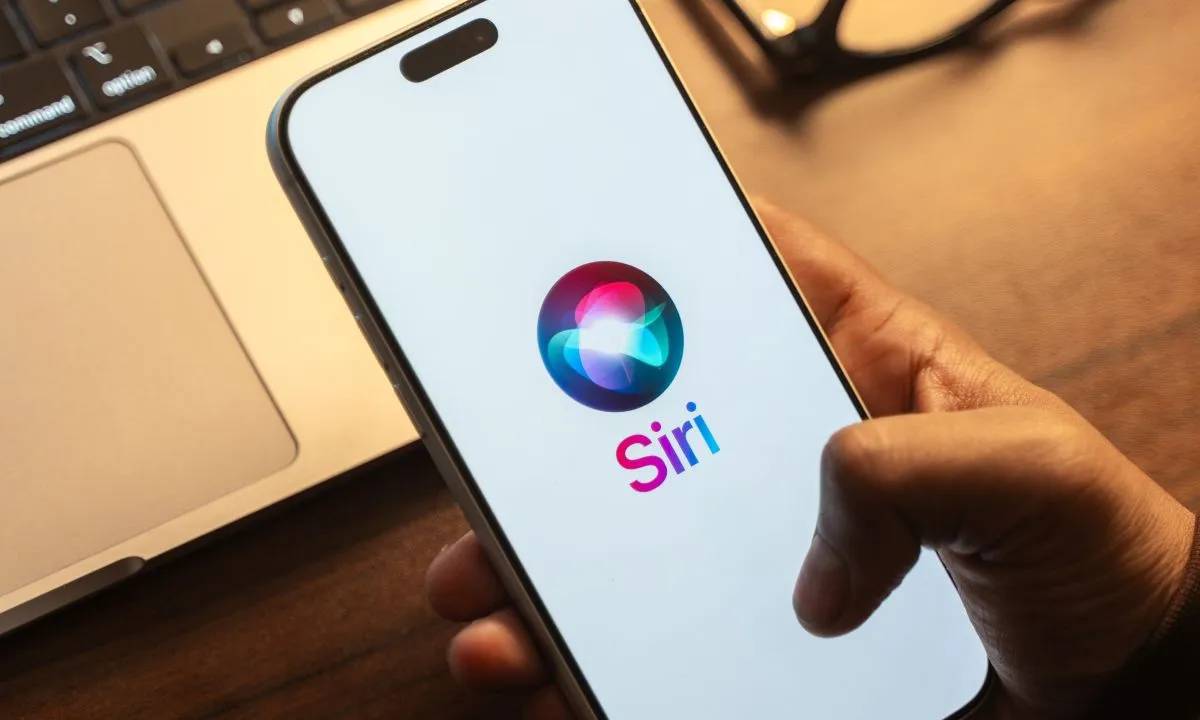
Apple Siri Strategy Shifts Hybrid AI Model

Reports suggest Apple is exploring deeper integration between Siri and external AI models, including advanced conversational systems, to enhance its capabilities ahead of WWDC 2026.

June 5, 2026
|

Apple’s evolving Siri strategy, reportedly integrating external AI models alongside its own systems, signals a potential shift in how the company approaches digital assistants. The move comes ahead of WWDC 2026 and highlights intensifying competition in AI-driven ecosystems, where voice assistants are becoming central to platform intelligence and user engagement.

Reports suggest Apple is exploring deeper integration between Siri and external AI models, including advanced conversational systems, to enhance its capabilities ahead of WWDC 2026. This approach indicates a shift from purely in-house AI development toward a hybrid architecture that leverages external intelligence layers.

The strategy aims to improve Siri’s contextual understanding, responsiveness, and task execution across Apple devices. This comes amid growing pressure from competitors that have rapidly advanced their AI assistant technologies. The development also reflects Apple’s broader effort to reposition Siri as a more capable productivity and ecosystem-wide assistant rather than a limited voice command tool.

The development aligns with a broader trend across global technology markets where AI assistants are evolving from simple command-based tools into fully integrated digital interfaces. Over the past several years, companies like Google, Microsoft, and Amazon have significantly advanced their AI ecosystems, placing pressure on Apple to modernize Siri.

Historically, Apple has taken a more privacy-focused and controlled approach to AI development, prioritizing on-device processing and tightly integrated systems. However, the rapid rise of generative AI has reshaped user expectations, pushing toward more conversational, context-aware assistants.

WWDC has traditionally served as Apple’s platform for unveiling major software and ecosystem updates. The 2026 edition is expected to be closely watched for indications of how Apple plans to balance privacy, performance, and external AI integration in its next-generation Siri architecture.

Industry analysts suggest that Apple’s potential hybrid AI strategy reflects a pragmatic shift in response to accelerating competition in generative AI. Experts note that while Apple has strong hardware and ecosystem control, it has lagged in deploying large-scale conversational AI compared to rivals.

Technology commentators argue that integrating external AI models could help Apple quickly close capability gaps while maintaining control over user privacy and device-level integration. However, some analysts caution that reliance on external systems may introduce complexity in data governance and user experience consistency.

Market observers emphasize that voice assistants are becoming critical entry points into digital ecosystems, influencing search, productivity, and smart device control. Experts believe that improvements to Siri will be essential for Apple to maintain competitiveness in an AI-first consumer technology landscape.

For Apple and the broader technology sector, a hybrid Siri model could redefine competitive dynamics in AI assistants. Businesses in software, app development, and smart devices may benefit from more capable AI interfaces embedded across Apple’s ecosystem.

Investors are likely to interpret this as a strategic acceleration in Apple’s AI roadmap, potentially narrowing the perceived gap with competitors in generative AI capabilities. From a policy perspective, increased reliance on external AI models raises questions around data privacy, cross-system transparency, and AI accountability. Regulators may increasingly scrutinize how large platforms integrate third-party intelligence while maintaining user data protection standards.

WWDC 2026 is expected to provide clearer signals on Apple’s AI direction and the future role of Siri within its ecosystem. The success of a hybrid model will depend on seamless integration, privacy safeguards, and performance improvements. The broader trajectory suggests Siri is being repositioned as a central AI interface, with Apple adapting to a rapidly evolving competitive landscape in generative intelligence.

Source: CNET
Date:
June 2026

  • Featured tools
Scalenut AI
Free

Scalenut AI is an all-in-one SEO content platform that combines AI-driven writing, keyword research, competitor insights, and optimization tools to help you plan, create, and rank content.

#
SEO
Learn more
Surfer AI
Free

Surfer AI is an AI-powered content creation assistant built into the Surfer SEO platform, designed to generate SEO-optimized articles from prompts, leveraging data from search results to inform tone, structure, and relevance.

#
SEO
Learn more

Learn more about future of AI

Join 80,000+ Ai enthusiast getting weekly updates on exciting AI tools.
Thank you! Your submission has been received!
Oops! Something went wrong while submitting the form.

Apple Siri Strategy Shifts Hybrid AI Model

June 5, 2026

Reports suggest Apple is exploring deeper integration between Siri and external AI models, including advanced conversational systems, to enhance its capabilities ahead of WWDC 2026.

Apple’s evolving Siri strategy, reportedly integrating external AI models alongside its own systems, signals a potential shift in how the company approaches digital assistants. The move comes ahead of WWDC 2026 and highlights intensifying competition in AI-driven ecosystems, where voice assistants are becoming central to platform intelligence and user engagement.

Reports suggest Apple is exploring deeper integration between Siri and external AI models, including advanced conversational systems, to enhance its capabilities ahead of WWDC 2026. This approach indicates a shift from purely in-house AI development toward a hybrid architecture that leverages external intelligence layers.

The strategy aims to improve Siri’s contextual understanding, responsiveness, and task execution across Apple devices. This comes amid growing pressure from competitors that have rapidly advanced their AI assistant technologies. The development also reflects Apple’s broader effort to reposition Siri as a more capable productivity and ecosystem-wide assistant rather than a limited voice command tool.

The development aligns with a broader trend across global technology markets where AI assistants are evolving from simple command-based tools into fully integrated digital interfaces. Over the past several years, companies like Google, Microsoft, and Amazon have significantly advanced their AI ecosystems, placing pressure on Apple to modernize Siri.

Historically, Apple has taken a more privacy-focused and controlled approach to AI development, prioritizing on-device processing and tightly integrated systems. However, the rapid rise of generative AI has reshaped user expectations, pushing toward more conversational, context-aware assistants.

WWDC has traditionally served as Apple’s platform for unveiling major software and ecosystem updates. The 2026 edition is expected to be closely watched for indications of how Apple plans to balance privacy, performance, and external AI integration in its next-generation Siri architecture.

Industry analysts suggest that Apple’s potential hybrid AI strategy reflects a pragmatic shift in response to accelerating competition in generative AI. Experts note that while Apple has strong hardware and ecosystem control, it has lagged in deploying large-scale conversational AI compared to rivals.

Technology commentators argue that integrating external AI models could help Apple quickly close capability gaps while maintaining control over user privacy and device-level integration. However, some analysts caution that reliance on external systems may introduce complexity in data governance and user experience consistency.

Market observers emphasize that voice assistants are becoming critical entry points into digital ecosystems, influencing search, productivity, and smart device control. Experts believe that improvements to Siri will be essential for Apple to maintain competitiveness in an AI-first consumer technology landscape.

For Apple and the broader technology sector, a hybrid Siri model could redefine competitive dynamics in AI assistants. Businesses in software, app development, and smart devices may benefit from more capable AI interfaces embedded across Apple’s ecosystem.

Investors are likely to interpret this as a strategic acceleration in Apple’s AI roadmap, potentially narrowing the perceived gap with competitors in generative AI capabilities. From a policy perspective, increased reliance on external AI models raises questions around data privacy, cross-system transparency, and AI accountability. Regulators may increasingly scrutinize how large platforms integrate third-party intelligence while maintaining user data protection standards.

WWDC 2026 is expected to provide clearer signals on Apple’s AI direction and the future role of Siri within its ecosystem. The success of a hybrid model will depend on seamless integration, privacy safeguards, and performance improvements. The broader trajectory suggests Siri is being repositioned as a central AI interface, with Apple adapting to a rapidly evolving competitive landscape in generative intelligence.

Source: CNET
Date:
June 2026

Promote Your Tool

Copy Embed Code

Similar Blogs

June 26, 2026
|

AlpineAI Raises Seed Round

AlpineAI has successfully closed a double-digit million seed funding round aimed at accelerating the development of sovereign AI technologies.
Read more
June 26, 2026
|

BLP Digital Raises $50M Funding Round

BLP Digital has secured $50 million in strategic funding from Goldman Sachs to accelerate the expansion of its AI-driven enterprise solutions.
Read more
June 26, 2026
|

Giotto AI RUAG Secure AI

Giotto.ai and RUAG have entered into a cooperation agreement focused on the distribution and deployment of state-of-the-art AI solutions across defense and industrial domains.
Read more
June 26, 2026
|

Fruitful AI Secures Funding Round

Fruitful AI has successfully completed a strategic investment round, strengthening its financial position to scale operations and enhance its AI-driven product suite.
Read more
June 26, 2026
|

Visium Raises AI Funding Round

Visium has successfully raised fresh funding aimed at scaling its operations across key European markets and expanding deeper into the US enterprise AI ecosystem.
Read more
June 26, 2026
|

Nuclidium Raises CHF 105M Series B

Nuclidium has successfully expanded its Series B funding round to CHF 105 million through a latest extension, attracting continued backing from existing and new investors.
Read more