
Google Tests Creator Driven Search Customization

Google’s new feature enables selected social media personalities and creators to personalize their search result pages, effectively shaping how their identity and content are presented to users.

June 5, 2026
|
Image Source: The Verge

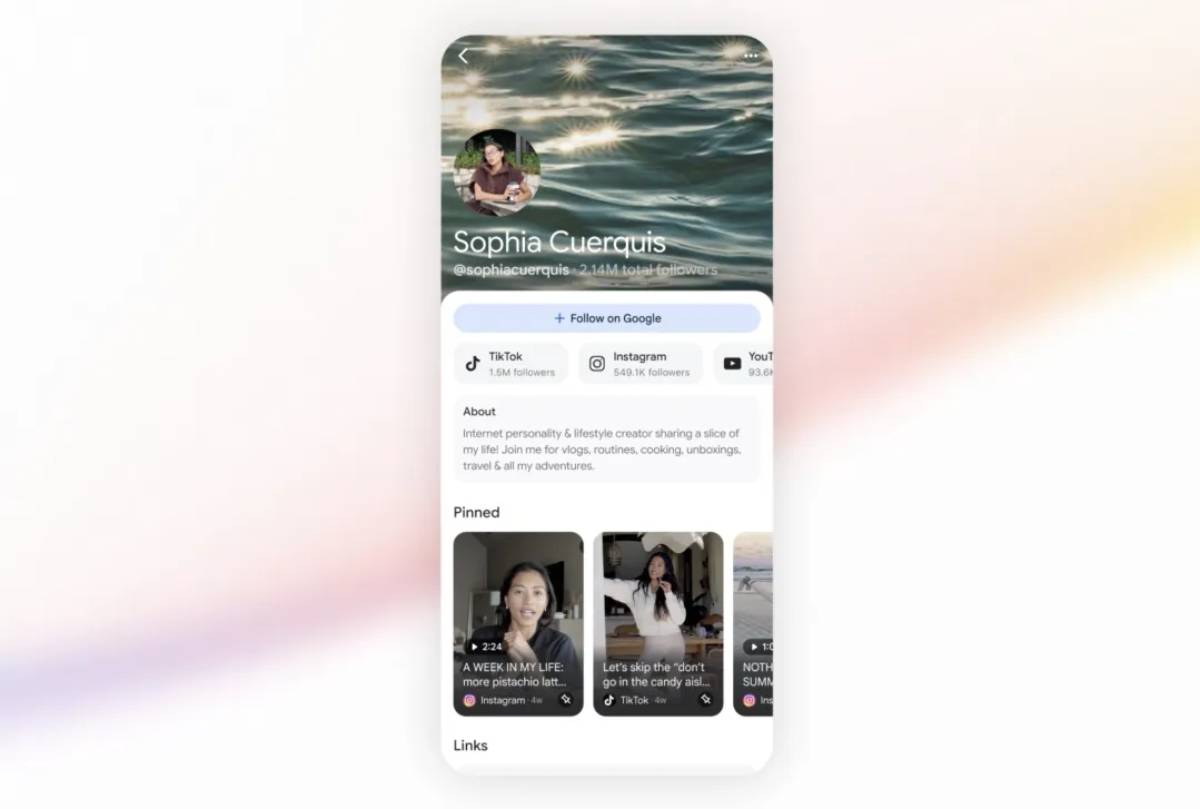
A notable shift in digital search dynamics is underway as Google experiments with allowing social media creators to customize how their profiles appear in search results. The initiative reflects a broader convergence between search engines and influencer ecosystems, raising new questions about visibility, content authority, and the commercialization of search experiences.

Google’s new feature enables selected social media personalities and creators to personalize their search result pages, effectively shaping how their identity and content are presented to users. The move is part of a broader effort to integrate creator-driven content more deeply into search experiences.

The initiative allows influencers to highlight curated information, links, and social media content directly within search listings. This represents a shift from static search results toward dynamic, user-influenced presentation layers. The feature is currently being tested with a limited group of creators, with potential expansion depending on user engagement and platform performance. The development signals Google’s increasing focus on creator economies and personalized search experiences.

The development aligns with a broader trend across global digital markets where traditional search engines are evolving into more interactive and personalized discovery platforms. Over the past decade, the rise of social media influencers has significantly reshaped how users consume information, shifting attention from institutional sources to personality-driven content.

Search engines like Google have historically prioritized relevance, authority, and algorithmic ranking. However, the increasing influence of creator economies and short-form content platforms has pressured traditional search models to adapt. The integration of social media profiles into search results reflects this structural shift in digital information discovery.

Historically, search engines have acted as neutral gateways to information. The introduction of creator-controlled elements marks a departure toward hybrid ecosystems where content presentation is partially influenced by individuals and brands. This evolution reflects broader monetization strategies across tech platforms seeking to retain user engagement in a highly competitive attention economy.

Digital media analysts suggest that the move represents a strategic effort by Google to remain competitive in an environment increasingly shaped by social-first discovery platforms. Experts note that younger audiences are more likely to rely on social media personalities than traditional search rankings when evaluating content and credibility.

Industry observers argue that enabling creators to customize search presence could enhance engagement but may also introduce concerns around information neutrality and algorithmic transparency. Some experts believe this could blur the distinction between organic search results and curated promotional content.

Technology strategists emphasize that the creator economy is becoming a central pillar of digital advertising revenue, and search engines must evolve to reflect changing user behavior. However, media governance specialists caution that increased personalization of search results may raise questions about bias, ranking integrity, and the commercialization of information discovery systems.

For global executives, the development signals new opportunities in digital marketing, influencer partnerships, and search-based brand positioning. Companies may need to rethink SEO strategies as creator-driven content becomes more prominent within search ecosystems.

Investors are likely to view the expansion of the creator economy within search platforms as a growth driver for digital advertising revenue and engagement metrics. This could strengthen monetization opportunities across content ecosystems.

For policymakers, however, the shift raises concerns around transparency, content authenticity, and potential manipulation of search visibility. Regulatory frameworks may increasingly need to address how personalized and creator-controlled content is labeled and ranked within search engines to maintain user trust.

Attention will now focus on user response and engagement metrics as Google evaluates the effectiveness of creator-customized search profiles. Expansion beyond early testers will depend on balancing personalization with search quality and trust.

The broader trajectory suggests continued convergence between search engines and social platforms, where identity, content, and discovery increasingly overlap in shaping digital information ecosystems.

Source: The Verge
Date:
June 2026

  • Featured tools
Upscayl AI
Free

Upscayl AI is a free, open-source AI-powered tool that enhances and upscales images to higher resolutions. It transforms blurry or low-quality visuals into sharp, detailed versions with ease.

#
Productivity
Learn more
Tome AI
Free

Tome AI is an AI-powered storytelling and presentation tool designed to help users create compelling narratives and presentations quickly and efficiently. It leverages advanced AI technologies to generate content, images, and animations based on user input.

#
Presentation
#
Startup Tools
Learn more

Learn more about future of AI

Join 80,000+ Ai enthusiast getting weekly updates on exciting AI tools.
Thank you! Your submission has been received!
Oops! Something went wrong while submitting the form.

Google Tests Creator Driven Search Customization

June 5, 2026

Google’s new feature enables selected social media personalities and creators to personalize their search result pages, effectively shaping how their identity and content are presented to users.

Image Source: The Verge

A notable shift in digital search dynamics is underway as Google experiments with allowing social media creators to customize how their profiles appear in search results. The initiative reflects a broader convergence between search engines and influencer ecosystems, raising new questions about visibility, content authority, and the commercialization of search experiences.

Google’s new feature enables selected social media personalities and creators to personalize their search result pages, effectively shaping how their identity and content are presented to users. The move is part of a broader effort to integrate creator-driven content more deeply into search experiences.

The initiative allows influencers to highlight curated information, links, and social media content directly within search listings. This represents a shift from static search results toward dynamic, user-influenced presentation layers. The feature is currently being tested with a limited group of creators, with potential expansion depending on user engagement and platform performance. The development signals Google’s increasing focus on creator economies and personalized search experiences.

The development aligns with a broader trend across global digital markets where traditional search engines are evolving into more interactive and personalized discovery platforms. Over the past decade, the rise of social media influencers has significantly reshaped how users consume information, shifting attention from institutional sources to personality-driven content.

Search engines like Google have historically prioritized relevance, authority, and algorithmic ranking. However, the increasing influence of creator economies and short-form content platforms has pressured traditional search models to adapt. The integration of social media profiles into search results reflects this structural shift in digital information discovery.

Historically, search engines have acted as neutral gateways to information. The introduction of creator-controlled elements marks a departure toward hybrid ecosystems where content presentation is partially influenced by individuals and brands. This evolution reflects broader monetization strategies across tech platforms seeking to retain user engagement in a highly competitive attention economy.

Digital media analysts suggest that the move represents a strategic effort by Google to remain competitive in an environment increasingly shaped by social-first discovery platforms. Experts note that younger audiences are more likely to rely on social media personalities than traditional search rankings when evaluating content and credibility.

Industry observers argue that enabling creators to customize search presence could enhance engagement but may also introduce concerns around information neutrality and algorithmic transparency. Some experts believe this could blur the distinction between organic search results and curated promotional content.

Technology strategists emphasize that the creator economy is becoming a central pillar of digital advertising revenue, and search engines must evolve to reflect changing user behavior. However, media governance specialists caution that increased personalization of search results may raise questions about bias, ranking integrity, and the commercialization of information discovery systems.

For global executives, the development signals new opportunities in digital marketing, influencer partnerships, and search-based brand positioning. Companies may need to rethink SEO strategies as creator-driven content becomes more prominent within search ecosystems.

Investors are likely to view the expansion of the creator economy within search platforms as a growth driver for digital advertising revenue and engagement metrics. This could strengthen monetization opportunities across content ecosystems.

For policymakers, however, the shift raises concerns around transparency, content authenticity, and potential manipulation of search visibility. Regulatory frameworks may increasingly need to address how personalized and creator-controlled content is labeled and ranked within search engines to maintain user trust.

Attention will now focus on user response and engagement metrics as Google evaluates the effectiveness of creator-customized search profiles. Expansion beyond early testers will depend on balancing personalization with search quality and trust.

The broader trajectory suggests continued convergence between search engines and social platforms, where identity, content, and discovery increasingly overlap in shaping digital information ecosystems.

Source: The Verge
Date:
June 2026

Promote Your Tool

Copy Embed Code

Similar Blogs

June 5, 2026
|

Apple Siri Strategy Shifts Hybrid AI Model

Reports suggest Apple is exploring deeper integration between Siri and external AI models, including advanced conversational systems, to enhance its capabilities ahead of WWDC 2026.
Read more
June 5, 2026
|

Nvidia RTX Spark Advances AI Creative Computing

Nvidia’s RTX Spark initiative emphasizes enhanced performance for creators using Windows-based systems, particularly in fields such as video editing, 3D rendering, and AI-assisted content generation.
Read more
June 5, 2026
|

DJI Osmo 360 Pushes Premium Market

DJI’s Osmo 360 camera has been reviewed as a technically strong device, offering high-resolution 360-degree capture and robust stabilization features aimed at content creators and professional users.
Read more
June 5, 2026
|

Meta Quest Bundles Boost VR Competition

Meta’s latest bundle promotions for its Quest VR headsets include incentives such as gaming subscription access and additional digital perks aimed at increasing device adoption.
Read more
June 5, 2026
|

Cyberdeck Computing Evolves DIY Hardware Niche

Cyberdecks, originally inspired by science fiction and early portable computing concepts, are increasingly being redesigned by independent creators and tech enthusiasts into compact, customized devices.
Read more
June 5, 2026
|

Google Tests Creator Driven Search Customization

Google’s new feature enables selected social media personalities and creators to personalize their search result pages, effectively shaping how their identity and content are presented to users.
Read more