
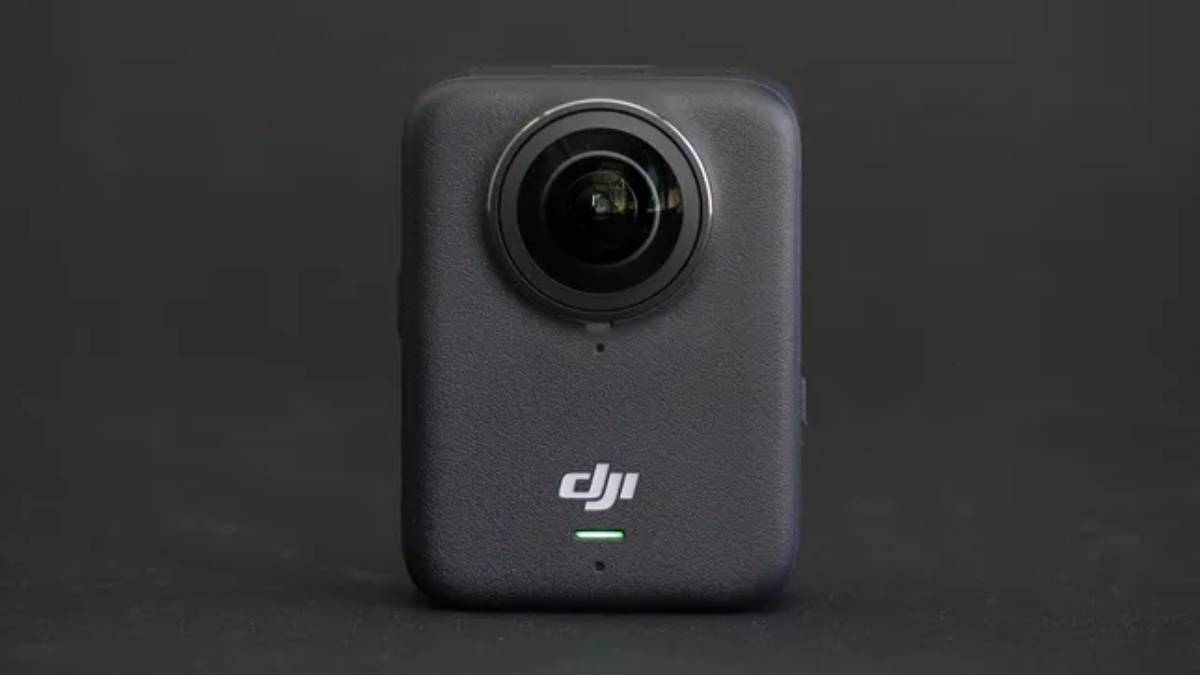
DJI Osmo 360 Pushes Premium Market

DJI’s Osmo 360 camera has been reviewed as a technically strong device, offering high-resolution 360-degree capture and robust stabilization features aimed at content creators and professional users.

June 5, 2026
|
Image Source:  CNET

The DJI Osmo 360 enters a rapidly evolving 360-degree camera market with strong hardware performance but notable limitations that could affect broader adoption. The device highlights increasing competition in immersive content creation tools, where manufacturers are balancing advanced imaging capabilities with usability constraints and ecosystem maturity in a growing creator-driven economy.

DJI’s Osmo 360 camera has been reviewed as a technically strong device, offering high-resolution 360-degree capture and robust stabilization features aimed at content creators and professional users. The product positions itself in a niche segment where demand is growing among social media creators, virtual production teams, and immersive media developers.

However, the review highlights a key limitation referred to as “the catch” which relates to usability constraints and workflow friction in post-production or ecosystem integration. While the hardware performance is widely praised, the device faces challenges in delivering a seamless end-to-end content creation experience. This places it in direct competition with established and emerging 360-degree imaging solutions.

The development aligns with a broader trend across global imaging and consumer electronics markets where demand for immersive content creation tools is accelerating. The rise of short-form video platforms, virtual reality experiences, and spatial media has driven manufacturers to invest in 360-degree capture technologies.

Over the past decade, companies like DJI have expanded beyond traditional drone systems into broader imaging ecosystems, targeting professional creators and semi-professional users. Meanwhile, competitors in the camera and smartphone industries have also integrated advanced computational imaging features to capture immersive content.

Historically, 360-degree cameras have struggled to reach mainstream adoption due to workflow complexity and limited everyday use cases. However, improvements in hardware miniaturization and software processing are gradually expanding their appeal. The Osmo 360 reflects this transition phase, where hardware innovation is advancing faster than ecosystem integration and user experience optimization.

Industry analysts suggest that DJI’s entry into the 360-degree camera segment underscores growing competition in immersive content hardware. Experts note that while hardware capabilities are becoming increasingly sophisticated, long-term success depends heavily on software ecosystems and editing workflows.

Technology commentators emphasize that creator adoption is often driven by ease of use rather than raw technical performance. Devices that simplify post-production and integrate seamlessly with editing platforms tend to outperform technically superior but complex alternatives.

Market observers also point out that the 360-degree camera segment remains a niche but growing category, primarily driven by professional creators, tourism content production, and virtual reality applications. Analysts caution that without strong ecosystem support, even high-performance devices may face adoption challenges despite positive hardware evaluations.

For technology companies, the DJI Osmo 360 highlights the importance of balancing hardware innovation with software ecosystem development. Competitive advantage in imaging hardware increasingly depends on integrated workflows and platform compatibility rather than standalone device performance.

Investors may interpret this as a signal that the 360-degree camera market remains early-stage but competitive, with growth tied to creator economy expansion and immersive media demand.

For policymakers, the expansion of immersive capture devices raises indirect considerations around digital content regulation, data privacy in spatial media, and emerging standards for immersive content creation tools. However, regulatory impact remains limited at this stage due to niche adoption.

Future adoption of 360-degree cameras like the DJI Osmo 360 will depend on improvements in software integration, editing simplicity, and ecosystem support. As immersive content becomes more mainstream across social platforms and virtual environments, demand is expected to grow gradually. However, sustained success will require manufacturers to address usability gaps and expand creator-friendly workflows that reduce production complexity.

Source: CNET
Date:
June 2026

  • Featured tools
Tome AI
Free

Tome AI is an AI-powered storytelling and presentation tool designed to help users create compelling narratives and presentations quickly and efficiently. It leverages advanced AI technologies to generate content, images, and animations based on user input.

#
Presentation
#
Startup Tools
Learn more
Ai Fiesta
Paid

AI Fiesta is an all-in-one productivity platform that gives users access to multiple leading AI models through a single interface. It includes features like prompt enhancement, image generation, audio transcription and side-by-side model comparison.

#
Copywriting
#
Art Generator
Learn more

Learn more about future of AI

Join 80,000+ Ai enthusiast getting weekly updates on exciting AI tools.
Thank you! Your submission has been received!
Oops! Something went wrong while submitting the form.

DJI Osmo 360 Pushes Premium Market

June 5, 2026

DJI’s Osmo 360 camera has been reviewed as a technically strong device, offering high-resolution 360-degree capture and robust stabilization features aimed at content creators and professional users.

Image Source:  CNET

The DJI Osmo 360 enters a rapidly evolving 360-degree camera market with strong hardware performance but notable limitations that could affect broader adoption. The device highlights increasing competition in immersive content creation tools, where manufacturers are balancing advanced imaging capabilities with usability constraints and ecosystem maturity in a growing creator-driven economy.

DJI’s Osmo 360 camera has been reviewed as a technically strong device, offering high-resolution 360-degree capture and robust stabilization features aimed at content creators and professional users. The product positions itself in a niche segment where demand is growing among social media creators, virtual production teams, and immersive media developers.

However, the review highlights a key limitation referred to as “the catch” which relates to usability constraints and workflow friction in post-production or ecosystem integration. While the hardware performance is widely praised, the device faces challenges in delivering a seamless end-to-end content creation experience. This places it in direct competition with established and emerging 360-degree imaging solutions.

The development aligns with a broader trend across global imaging and consumer electronics markets where demand for immersive content creation tools is accelerating. The rise of short-form video platforms, virtual reality experiences, and spatial media has driven manufacturers to invest in 360-degree capture technologies.

Over the past decade, companies like DJI have expanded beyond traditional drone systems into broader imaging ecosystems, targeting professional creators and semi-professional users. Meanwhile, competitors in the camera and smartphone industries have also integrated advanced computational imaging features to capture immersive content.

Historically, 360-degree cameras have struggled to reach mainstream adoption due to workflow complexity and limited everyday use cases. However, improvements in hardware miniaturization and software processing are gradually expanding their appeal. The Osmo 360 reflects this transition phase, where hardware innovation is advancing faster than ecosystem integration and user experience optimization.

Industry analysts suggest that DJI’s entry into the 360-degree camera segment underscores growing competition in immersive content hardware. Experts note that while hardware capabilities are becoming increasingly sophisticated, long-term success depends heavily on software ecosystems and editing workflows.

Technology commentators emphasize that creator adoption is often driven by ease of use rather than raw technical performance. Devices that simplify post-production and integrate seamlessly with editing platforms tend to outperform technically superior but complex alternatives.

Market observers also point out that the 360-degree camera segment remains a niche but growing category, primarily driven by professional creators, tourism content production, and virtual reality applications. Analysts caution that without strong ecosystem support, even high-performance devices may face adoption challenges despite positive hardware evaluations.

For technology companies, the DJI Osmo 360 highlights the importance of balancing hardware innovation with software ecosystem development. Competitive advantage in imaging hardware increasingly depends on integrated workflows and platform compatibility rather than standalone device performance.

Investors may interpret this as a signal that the 360-degree camera market remains early-stage but competitive, with growth tied to creator economy expansion and immersive media demand.

For policymakers, the expansion of immersive capture devices raises indirect considerations around digital content regulation, data privacy in spatial media, and emerging standards for immersive content creation tools. However, regulatory impact remains limited at this stage due to niche adoption.

Future adoption of 360-degree cameras like the DJI Osmo 360 will depend on improvements in software integration, editing simplicity, and ecosystem support. As immersive content becomes more mainstream across social platforms and virtual environments, demand is expected to grow gradually. However, sustained success will require manufacturers to address usability gaps and expand creator-friendly workflows that reduce production complexity.

Source: CNET
Date:
June 2026

Promote Your Tool

Copy Embed Code

Similar Blogs

July 13, 2026
|

Swiss Global Engagement Ahead World Cup

Swiss minister Martin Pfister is heading to the United States to support the national team during its World Cup quarter-final appearance. The visit represents an official presence at one of the world’s most watched sporting events.
Read more
July 13, 2026
|

France Challenges Swiss G7 Transparency Strategy

A French government official expressed disappointment with Switzerland’s handling of the G7 process, describing the approach as too closed and lacking broader consultation
Read more
July 13, 2026
|

Radiobotics Medimaps Build MSK AI Platform

Radiobotics and Medimaps are joining forces to build an integrated MSK AI platform that combines advanced imaging analysis with clinical decision-support capabilities.
Read more
July 13, 2026
|

Endform Raises €1.5M AI Testing

Endform has raised €1.5 million in seed funding to develop AI-driven solutions designed to improve software testing and quality assurance.
Read more
July 13, 2026
|

Peter Sarlin Launches Quantum AI Venture

Peter Sarlin has launched QuTwo, a company focused on advancing quantum computing capabilities and exploring their potential integration with artificial intelligence.
Read more
July 13, 2026
|

Agaton Raises $10M AI Sales Intelligence

Agaton has raised $10 million in seed funding to develop AI-powered sales intelligence technology aimed at helping companies improve revenue generation and customer engagement.
Read more