
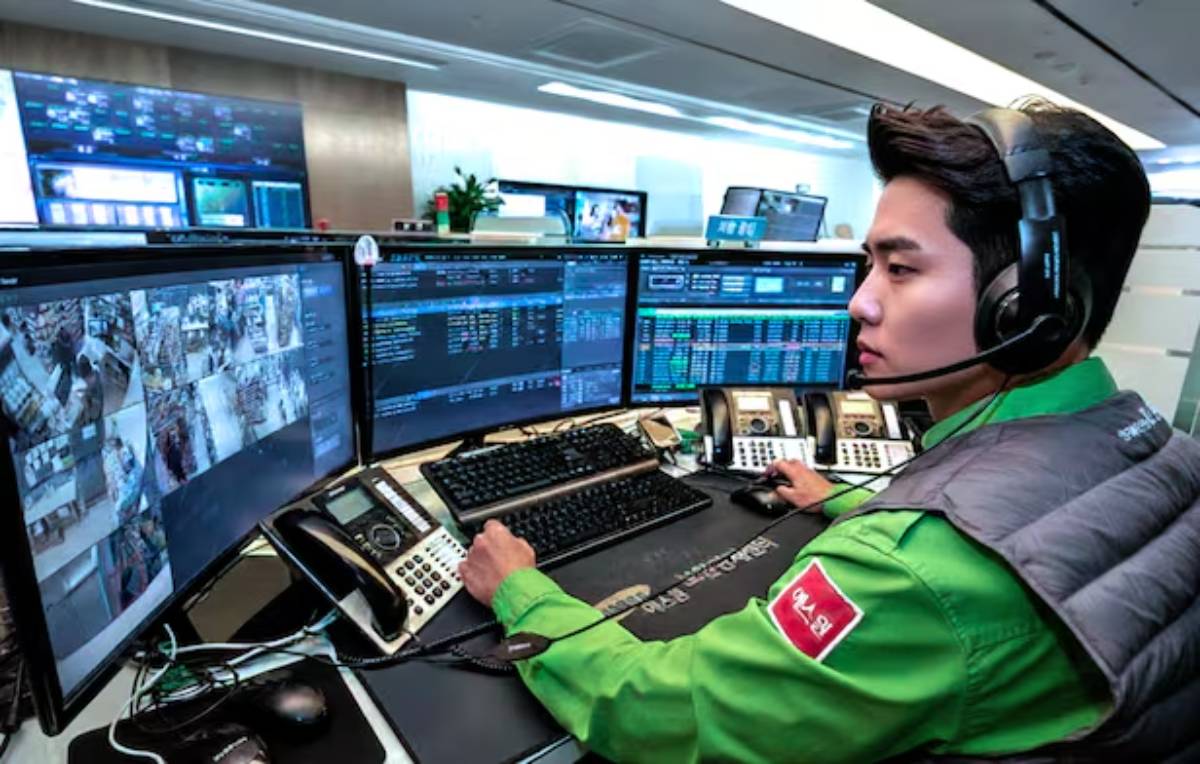
S1 Launches AI Security Center, Automates Threat Alerts

S1’s newly operational control center integrates AI systems designed to screen, prioritize, and triage incoming security alerts in real time.

February 24, 2026
|

S1 has opened a new security control center powered by artificial intelligence, claiming its AI systems now filter 78% of incoming security alerts. The development highlights the accelerating role of automation in national and enterprise security operations, with implications for risk management, workforce strategy, and public safety infrastructure.

S1’s newly operational control center integrates AI systems designed to screen, prioritize, and triage incoming security alerts in real time. According to officials, the AI platform filters approximately 78% of alerts, significantly reducing manual workload for human analysts.

The system is intended to streamline threat detection and response across multiple domains, potentially including physical security, cyber monitoring, and public safety operations. By automating initial assessments, the center aims to improve response times and operational efficiency.

The initiative reflects broader institutional investment in AI-driven surveillance and risk mitigation tools, as governments and enterprises confront rising volumes of digital and physical security data.

The development aligns with a broader trend across global markets where AI is transforming security operations centers (SOCs). Organizations worldwide face a surge in threat signals from cyberattacks and misinformation campaigns to physical security incidents creating alert fatigue among analysts.

AI-based triage systems have emerged as a solution, using machine learning to distinguish high-risk events from routine noise. By automating first-level screening, companies and governments aim to optimize scarce human expertise and reduce response delays.

Historically, security centers relied heavily on manual monitoring, which limited scalability and increased operational costs. The shift toward AI-enabled control rooms reflects the maturation of predictive analytics and real-time data processing capabilities.

Geopolitically, heightened cyber tensions and hybrid threats have accelerated adoption of advanced surveillance technologies, positioning AI as a core component of modern security infrastructure.

Security analysts note that filtering nearly four-fifths of alerts through AI could dramatically improve efficiency, but stress the importance of accuracy and oversight. False positives and false negatives remain critical concerns in automated systems.

Industry experts emphasize that AI should augment not replace human judgment. High-risk alerts still require contextual analysis, strategic interpretation, and accountability mechanisms that machines alone cannot provide.

Technology observers suggest the 78% automation figure signals confidence in model maturity, though independent validation will determine long-term credibility. Governance frameworks, transparency standards, and audit trails are increasingly seen as essential to maintaining public trust.

Executives in the cybersecurity and physical security sectors view the launch as part of a broader shift toward AI-first operational models, particularly in high-volume, mission-critical environments.

For global executives, S1’s model underscores the operational benefits of AI-driven automation in high-risk sectors. Organizations may reassess their own security architectures, prioritizing AI-enabled triage systems to manage growing data volumes efficiently.

Investors could interpret such initiatives as cost-optimization strategies, reducing labor intensity while improving scalability. However, regulatory bodies may scrutinize automated surveillance and alert filtering systems for compliance with privacy and data protection laws.

Policymakers face a balancing act: leveraging AI to strengthen security while ensuring accountability, ethical deployment, and safeguards against systemic errors that could have national or organizational consequences.

Stakeholders will closely monitor performance metrics, accuracy rates, and real-world outcomes from S1’s AI-powered control center. Expansion to additional domains or jurisdictions could follow if results meet operational benchmarks.

As AI increasingly underpins security ecosystems, the central question remains: can automation enhance resilience without compromising oversight? The answer will shape the next generation of global security strategy.

Source: UPI
Date: February 11, 2026

  • Featured tools
Wonder AI
Free

Wonder AI is a versatile AI-powered creative platform that generates text, images, and audio with minimal input, designed for fast storytelling, visual creation, and audio content generation

#
Art Generator
Learn more
Hostinger Horizons
Freemium

Hostinger Horizons is an AI-powered platform that allows users to build and deploy custom web applications without writing code. It packs hosting, domain management and backend integration into a unified tool for rapid app creation.

#
Startup Tools
#
Coding
#
Project Management
Learn more

Learn more about future of AI

Join 80,000+ Ai enthusiast getting weekly updates on exciting AI tools.
Thank you! Your submission has been received!
Oops! Something went wrong while submitting the form.

S1 Launches AI Security Center, Automates Threat Alerts

February 24, 2026

S1’s newly operational control center integrates AI systems designed to screen, prioritize, and triage incoming security alerts in real time.

S1 has opened a new security control center powered by artificial intelligence, claiming its AI systems now filter 78% of incoming security alerts. The development highlights the accelerating role of automation in national and enterprise security operations, with implications for risk management, workforce strategy, and public safety infrastructure.

S1’s newly operational control center integrates AI systems designed to screen, prioritize, and triage incoming security alerts in real time. According to officials, the AI platform filters approximately 78% of alerts, significantly reducing manual workload for human analysts.

The system is intended to streamline threat detection and response across multiple domains, potentially including physical security, cyber monitoring, and public safety operations. By automating initial assessments, the center aims to improve response times and operational efficiency.

The initiative reflects broader institutional investment in AI-driven surveillance and risk mitigation tools, as governments and enterprises confront rising volumes of digital and physical security data.

The development aligns with a broader trend across global markets where AI is transforming security operations centers (SOCs). Organizations worldwide face a surge in threat signals from cyberattacks and misinformation campaigns to physical security incidents creating alert fatigue among analysts.

AI-based triage systems have emerged as a solution, using machine learning to distinguish high-risk events from routine noise. By automating first-level screening, companies and governments aim to optimize scarce human expertise and reduce response delays.

Historically, security centers relied heavily on manual monitoring, which limited scalability and increased operational costs. The shift toward AI-enabled control rooms reflects the maturation of predictive analytics and real-time data processing capabilities.

Geopolitically, heightened cyber tensions and hybrid threats have accelerated adoption of advanced surveillance technologies, positioning AI as a core component of modern security infrastructure.

Security analysts note that filtering nearly four-fifths of alerts through AI could dramatically improve efficiency, but stress the importance of accuracy and oversight. False positives and false negatives remain critical concerns in automated systems.

Industry experts emphasize that AI should augment not replace human judgment. High-risk alerts still require contextual analysis, strategic interpretation, and accountability mechanisms that machines alone cannot provide.

Technology observers suggest the 78% automation figure signals confidence in model maturity, though independent validation will determine long-term credibility. Governance frameworks, transparency standards, and audit trails are increasingly seen as essential to maintaining public trust.

Executives in the cybersecurity and physical security sectors view the launch as part of a broader shift toward AI-first operational models, particularly in high-volume, mission-critical environments.

For global executives, S1’s model underscores the operational benefits of AI-driven automation in high-risk sectors. Organizations may reassess their own security architectures, prioritizing AI-enabled triage systems to manage growing data volumes efficiently.

Investors could interpret such initiatives as cost-optimization strategies, reducing labor intensity while improving scalability. However, regulatory bodies may scrutinize automated surveillance and alert filtering systems for compliance with privacy and data protection laws.

Policymakers face a balancing act: leveraging AI to strengthen security while ensuring accountability, ethical deployment, and safeguards against systemic errors that could have national or organizational consequences.

Stakeholders will closely monitor performance metrics, accuracy rates, and real-world outcomes from S1’s AI-powered control center. Expansion to additional domains or jurisdictions could follow if results meet operational benchmarks.

As AI increasingly underpins security ecosystems, the central question remains: can automation enhance resilience without compromising oversight? The answer will shape the next generation of global security strategy.

Source: UPI
Date: February 11, 2026

Promote Your Tool

Copy Embed Code

Similar Blogs

February 24, 2026
|

Jamie Dimon Calms Markets, Downplays AI Disruption Risks

Dimon addressed concerns at a corporate briefing, emphasizing JPMorgan’s proactive adoption of AI for efficiency, compliance, and customer services.
Read more
February 24, 2026
|

Asian Markets Steady After Wall Street Rout in AI Exposed Stocks

Markets across Asia traded unevenly following a sharp US selloff in technology and legacy IT stocks exposed to AI disruption. Wall Street investors rotated out of companies perceived as vulnerable to automation.
Read more
February 24, 2026
|

Crypto Markets Slide as AI Jitters Trigger Sharp IBM Selloff

Cryptocurrency markets recorded deeper declines amid a broader tech-led selloff, reflecting risk-off sentiment among global investors. IBM shares plunged 11%, highlighting heightened sensitivity to earnings expectations.
Read more
February 24, 2026
|

Indian IT Stocks Extend Losses as AI Fears Trigger Global Repricing

Shares of major Indian IT services firms extended losses following global volatility in AI-linked equities.
Read more
February 24, 2026
|

AI Coding Platforms Threaten Freemium App Model Economics

Advances in generative AI coding assistants now allow users to create simple, task-specific applications through natural language prompts, reducing reliance on standalone freemium utilities.
Read more
February 24, 2026
|

AI Powered Body Scans Expand Across Health and Retail

AI-driven body scanning platforms are increasingly being deployed in gyms, wellness centers, medical clinics, and retail environments.
Read more