
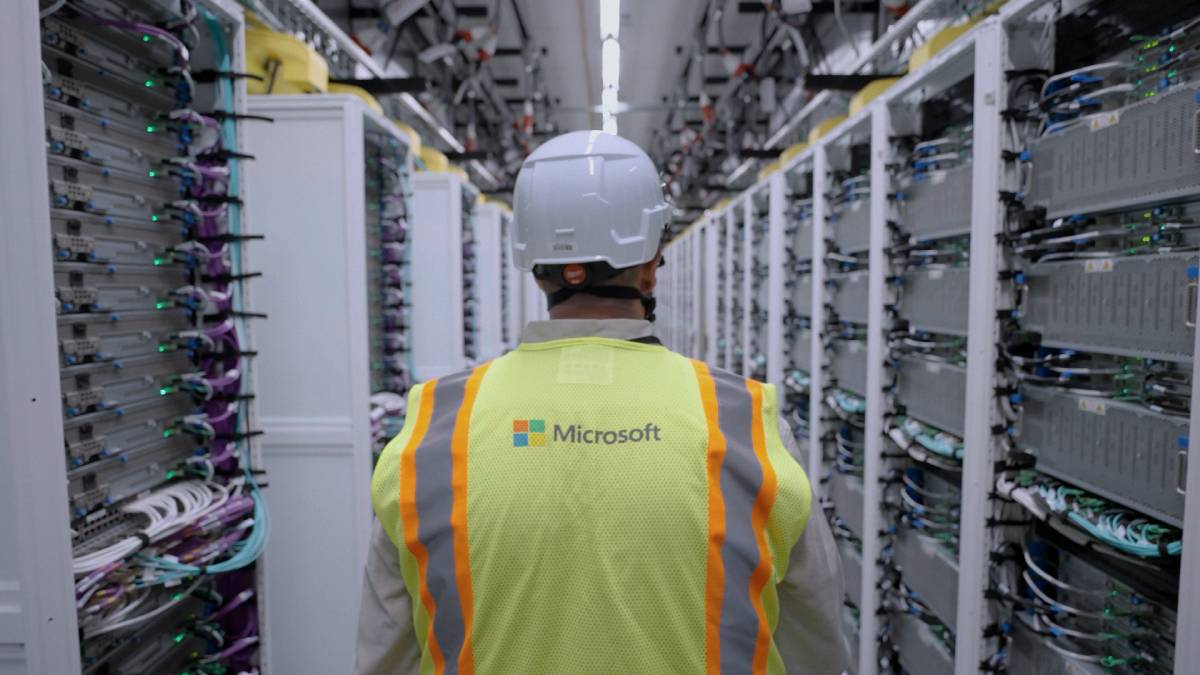
Microsoft Unveils Next-Gen AI Infrastructure Solutions

Microsoft unveiled a suite of AI-focused solutions spanning Azure AI infrastructure, Microsoft Foundry, and physical AI systems. The announcements emphasize deeper integration with NVIDIA technologies, leveraging advanced GPUs.

March 17, 2026
|
Image credit: https://blogs.microsoft.com/blog

A major development unfolded as Microsoft introduced new AI infrastructure and platform innovations at NVIDIA GTC 2026, reinforcing its push to dominate enterprise AI. The announcement highlights advancements in Azure AI, Foundry services, and physical AI, signaling a strategic expansion with implications for global enterprises and cloud competition.

Microsoft unveiled a suite of AI-focused solutions spanning Azure AI infrastructure, Microsoft Foundry, and physical AI systems. The announcements emphasize deeper integration with NVIDIA technologies, leveraging advanced GPUs and accelerated computing.

Key updates include enhancements to Azure’s AI capabilities, enabling enterprises to build, deploy, and scale AI applications more efficiently. Microsoft Foundry is positioned as a unified platform for developing and managing AI models across environments. The company also highlighted progress in physical AI, supporting robotics and real-world AI applications. The developments target enterprise customers seeking scalable, secure, and high-performance AI solutions in hybrid and multi-cloud environments.

The announcements come amid intensifying competition among global tech giants to lead the AI infrastructure race. Cloud providers are rapidly evolving into full-stack AI platforms, offering integrated solutions that combine computing power, data management, and AI tools.

Microsoft has been at the forefront of this shift, leveraging its Azure cloud platform and strategic partnerships to expand its AI ecosystem. The collaboration with NVIDIA reflects a broader industry trend where hardware and software integration is critical to delivering high-performance AI solutions. Physical AI systems that interact with the real world—represents an emerging frontier, particularly in robotics and industrial automation.

Geopolitically, the race for AI leadership is shaping national strategies, with governments and corporations investing heavily in infrastructure. This development underscores the growing importance of scalable AI platforms in driving digital transformation across industries.

Industry analysts view Microsoft’s announcements as a strategic move to consolidate its leadership in enterprise AI. Experts highlight that integrating Azure AI with NVIDIA’s hardware ecosystem can significantly enhance performance and scalability.

Technology leaders emphasize the importance of unified platforms like Microsoft Foundry in simplifying AI development and deployment. In the context of physical AI, analysts point to the potential for breakthroughs in robotics, manufacturing, and logistics. Policy experts note that as AI infrastructure becomes more central to economic growth, regulatory scrutiny around data security and competition is likely to increase. Overall, the consensus is that Microsoft’s integrated approach positions it strongly in the evolving AI landscape, though execution and adoption will be key determinants of success.

For businesses, Microsoft’s expanded AI offerings provide new opportunities to accelerate innovation and operational efficiency. Enterprises can leverage these tools to develop advanced AI applications, optimize workflows, and enhance customer experiences.

Investors may interpret the move as a signal of continued growth in AI-driven cloud services. Policymakers will need to address challenges related to data governance, competition, and infrastructure resilience. For global executives, choosing the right AI platform is becoming a critical strategic decision, with implications for scalability, cost, and long-term competitiveness.

Looking ahead, Microsoft’s success will depend on enterprise adoption, ecosystem growth, and continued innovation. Decision-makers should monitor advancements in Azure AI, the evolution of Microsoft Foundry, and developments in physical AI applications. As competition intensifies, further partnerships and technological breakthroughs are expected. The trajectory is clear: integrated AI infrastructure will be a defining factor in the next phase of global digital transformation.

Source: Microsoft Blog
Date: March 16, 2026

  • Featured tools
Beautiful AI
Free

Beautiful AI is an AI-powered presentation platform that automates slide design and formatting, enabling users to create polished, on-brand presentations quickly.

#
Presentation
Learn more
Wonder AI
Free

Wonder AI is a versatile AI-powered creative platform that generates text, images, and audio with minimal input, designed for fast storytelling, visual creation, and audio content generation

#
Art Generator
Learn more

Learn more about future of AI

Join 80,000+ Ai enthusiast getting weekly updates on exciting AI tools.
Thank you! Your submission has been received!
Oops! Something went wrong while submitting the form.

Microsoft Unveils Next-Gen AI Infrastructure Solutions

March 17, 2026

Microsoft unveiled a suite of AI-focused solutions spanning Azure AI infrastructure, Microsoft Foundry, and physical AI systems. The announcements emphasize deeper integration with NVIDIA technologies, leveraging advanced GPUs.

Image credit: https://blogs.microsoft.com/blog

A major development unfolded as Microsoft introduced new AI infrastructure and platform innovations at NVIDIA GTC 2026, reinforcing its push to dominate enterprise AI. The announcement highlights advancements in Azure AI, Foundry services, and physical AI, signaling a strategic expansion with implications for global enterprises and cloud competition.

Microsoft unveiled a suite of AI-focused solutions spanning Azure AI infrastructure, Microsoft Foundry, and physical AI systems. The announcements emphasize deeper integration with NVIDIA technologies, leveraging advanced GPUs and accelerated computing.

Key updates include enhancements to Azure’s AI capabilities, enabling enterprises to build, deploy, and scale AI applications more efficiently. Microsoft Foundry is positioned as a unified platform for developing and managing AI models across environments. The company also highlighted progress in physical AI, supporting robotics and real-world AI applications. The developments target enterprise customers seeking scalable, secure, and high-performance AI solutions in hybrid and multi-cloud environments.

The announcements come amid intensifying competition among global tech giants to lead the AI infrastructure race. Cloud providers are rapidly evolving into full-stack AI platforms, offering integrated solutions that combine computing power, data management, and AI tools.

Microsoft has been at the forefront of this shift, leveraging its Azure cloud platform and strategic partnerships to expand its AI ecosystem. The collaboration with NVIDIA reflects a broader industry trend where hardware and software integration is critical to delivering high-performance AI solutions. Physical AI systems that interact with the real world—represents an emerging frontier, particularly in robotics and industrial automation.

Geopolitically, the race for AI leadership is shaping national strategies, with governments and corporations investing heavily in infrastructure. This development underscores the growing importance of scalable AI platforms in driving digital transformation across industries.

Industry analysts view Microsoft’s announcements as a strategic move to consolidate its leadership in enterprise AI. Experts highlight that integrating Azure AI with NVIDIA’s hardware ecosystem can significantly enhance performance and scalability.

Technology leaders emphasize the importance of unified platforms like Microsoft Foundry in simplifying AI development and deployment. In the context of physical AI, analysts point to the potential for breakthroughs in robotics, manufacturing, and logistics. Policy experts note that as AI infrastructure becomes more central to economic growth, regulatory scrutiny around data security and competition is likely to increase. Overall, the consensus is that Microsoft’s integrated approach positions it strongly in the evolving AI landscape, though execution and adoption will be key determinants of success.

For businesses, Microsoft’s expanded AI offerings provide new opportunities to accelerate innovation and operational efficiency. Enterprises can leverage these tools to develop advanced AI applications, optimize workflows, and enhance customer experiences.

Investors may interpret the move as a signal of continued growth in AI-driven cloud services. Policymakers will need to address challenges related to data governance, competition, and infrastructure resilience. For global executives, choosing the right AI platform is becoming a critical strategic decision, with implications for scalability, cost, and long-term competitiveness.

Looking ahead, Microsoft’s success will depend on enterprise adoption, ecosystem growth, and continued innovation. Decision-makers should monitor advancements in Azure AI, the evolution of Microsoft Foundry, and developments in physical AI applications. As competition intensifies, further partnerships and technological breakthroughs are expected. The trajectory is clear: integrated AI infrastructure will be a defining factor in the next phase of global digital transformation.

Source: Microsoft Blog
Date: March 16, 2026

Promote Your Tool

Copy Embed Code

Similar Blogs

March 17, 2026
|

Dell NVIDIA DataRobot Launch Enterprise AI Factory

The Dell AI Factory combines hardware, software, and AI orchestration to deliver end-to-end enterprise AI solutions. NVIDIA provides high-performance GPU infrastructure.
Read more
March 17, 2026
|

ZeroSlop Launches AI SponsorBlock on X

ZeroSlop’s new platform acts like a “SponsorBlock for AI,” allowing users to skip low-value AI-generated segments in posts and threads.
Read more
March 17, 2026
|

CoreWeave Emerges as AI Powerhouse

CoreWeave has positioned itself at the center of the AI boom through a series of high-value deals. The company reportedly holds a $19.4 billion agreement with Microsoft to supply AI cloud infrastructure.
Read more
March 17, 2026
|

IQVIA Launches Agentic AI Platform with NVIDIA

The newly unveiled IQVIA.ai platform integrates advanced AI agents, data analytics, and domain-specific models to streamline workflows across clinical trials, commercialization, and regulatory processes.
Read more
March 17, 2026
|

Hollywood Faces AI Disruption and Automation

Artificial intelligence tools are increasingly being integrated into film production, supporting tasks ranging from script development and editing to visual effects and post-production.
Read more
March 17, 2026
|

AI Disruption May Undermine Workers First

Hughes called for proactive policy responses, including stronger labor protections and regulatory oversight. Stakeholders include governments, technology companies, labor unions, and corporate employers integrating AI into workflows.
Read more