
India France Push Global AI Democratization Agenda at Summit

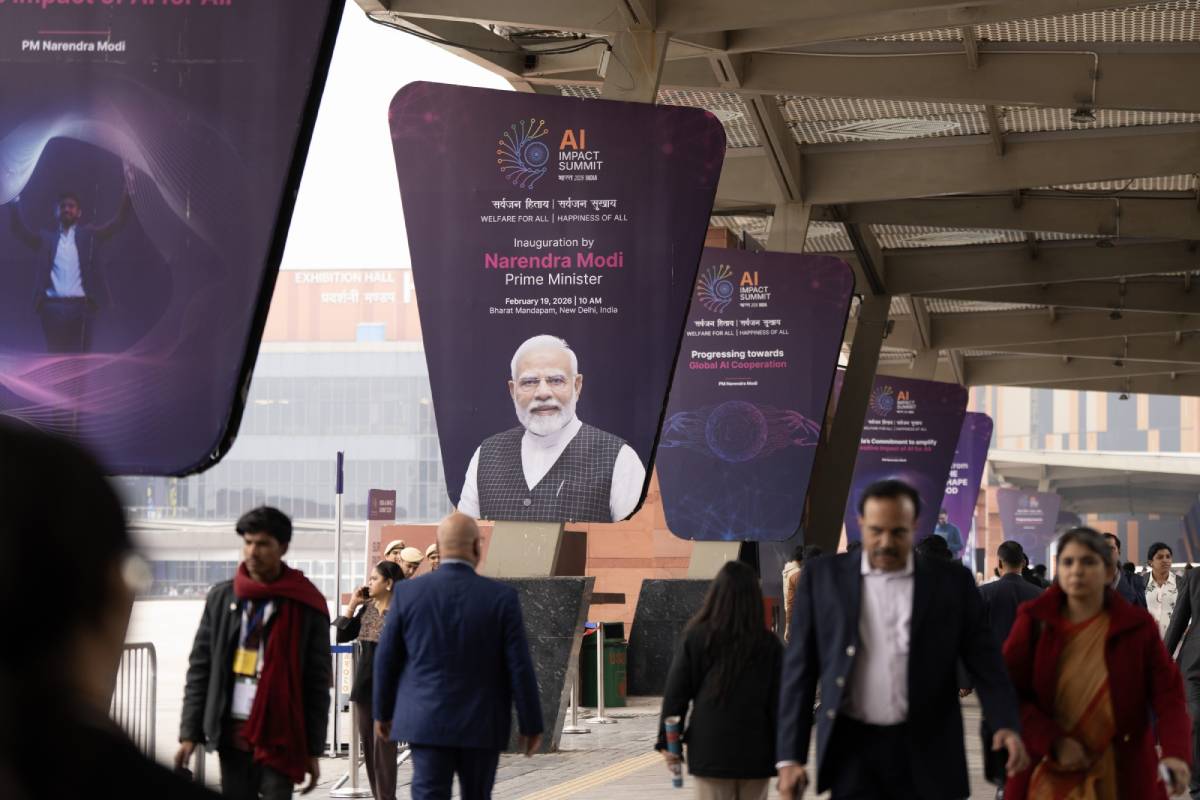
Speaking at the India AI Impact Summit, Modi and Macron emphasized equitable access to AI tools, open innovation frameworks, and safeguards against technological monopolization.

February 24, 2026
|

A strategic alignment emerged at India’s flagship AI summit as Narendra Modi and Emmanuel Macron jointly called for the democratization of artificial intelligence. Their message positions India and France at the forefront of a growing push to make AI more inclusive, transparent, and globally accessible.

Speaking at the India AI Impact Summit, Modi and Macron emphasized equitable access to AI tools, open innovation frameworks, and safeguards against technological monopolization.

Both leaders underscored the need for global cooperation in AI governance, advocating frameworks that balance innovation with ethical oversight. The summit convened policymakers, technology executives, and international stakeholders amid intensifying global competition over AI infrastructure and standards.

The leaders highlighted partnerships between India and France in digital public infrastructure, research collaboration, and talent development. The joint call reflects broader diplomatic coordination between New Delhi and Paris as they seek to shape emerging technology norms outside the dominant US China binary.

The development aligns with a broader trend across global markets where middle powers are seeking greater influence in AI governance debates. As artificial intelligence becomes central to economic productivity, defense capabilities, and data sovereignty, nations are competing not only on innovation but also on rule setting.

India has positioned itself as a champion of digital public goods, leveraging platforms such as Aadhaar and unified payment systems as scalable governance models. France, meanwhile, has advocated stronger European strategic autonomy in technology policy.

The joint messaging at the summit reflects growing concern that AI capabilities are becoming concentrated within a handful of corporations and countries. By promoting democratization, both leaders are signaling a desire to widen access to computing power, datasets, and research collaboration, particularly for developing economies.

For global executives, this signals potential shifts in regulatory expectations and cross border AI partnerships. Policy analysts interpret the call for democratization as both economic and geopolitical positioning. By advocating broader access, India and France are framing AI as a shared global resource rather than a proprietary advantage controlled by a few tech giants.

Industry leaders attending the summit noted that inclusive AI ecosystems can expand market opportunities by enabling startups, SMEs, and emerging economies to participate in innovation cycles.

At the same time, governance experts caution that democratization must be paired with strong guardrails around data privacy, algorithmic accountability, and cybersecurity.

Corporate stakeholders are likely to welcome clearer international standards, particularly if aligned frameworks reduce compliance fragmentation across jurisdictions.

For multinational companies, the push toward AI democratization could translate into expanded market access in emerging economies, especially if governments invest in shared infrastructure and open platforms.

Investors may view collaborative governance models as stabilizing forces in an otherwise fragmented regulatory landscape. However, large technology firms could face pressure to support interoperability, transparency, and fair access principles. For policymakers, the India France alignment may catalyze new multilateral forums focused on AI ethics, funding mechanisms, and digital inclusion.

C suite leaders should monitor evolving standards that could influence product design, data localization requirements, and cross border AI deployment strategies. The summit sets the stage for deeper India France cooperation in AI research, infrastructure, and global governance advocacy.

Decision makers should watch for formal policy frameworks, joint funding initiatives, and coordinated positions in multilateral technology forums. As AI reshapes global power structures, coalitions advocating inclusivity may play a decisive role in defining the rules of the next digital era.

Source: Bloomberg
Date: February 19, 2026

  • Featured tools
Wonder AI
Free

Wonder AI is a versatile AI-powered creative platform that generates text, images, and audio with minimal input, designed for fast storytelling, visual creation, and audio content generation

#
Art Generator
Learn more
Hostinger Website Builder
Paid

Hostinger Website Builder is a drag-and-drop website creator bundled with hosting and AI-powered tools, designed for businesses, blogs and small shops with minimal technical effort.It makes launching a site fast and affordable, with templates, responsive design and built-in hosting all in one.

#
Productivity
#
Startup Tools
#
Ecommerce
Learn more

Learn more about future of AI

Join 80,000+ Ai enthusiast getting weekly updates on exciting AI tools.
Thank you! Your submission has been received!
Oops! Something went wrong while submitting the form.

India France Push Global AI Democratization Agenda at Summit

February 24, 2026

Speaking at the India AI Impact Summit, Modi and Macron emphasized equitable access to AI tools, open innovation frameworks, and safeguards against technological monopolization.

A strategic alignment emerged at India’s flagship AI summit as Narendra Modi and Emmanuel Macron jointly called for the democratization of artificial intelligence. Their message positions India and France at the forefront of a growing push to make AI more inclusive, transparent, and globally accessible.

Speaking at the India AI Impact Summit, Modi and Macron emphasized equitable access to AI tools, open innovation frameworks, and safeguards against technological monopolization.

Both leaders underscored the need for global cooperation in AI governance, advocating frameworks that balance innovation with ethical oversight. The summit convened policymakers, technology executives, and international stakeholders amid intensifying global competition over AI infrastructure and standards.

The leaders highlighted partnerships between India and France in digital public infrastructure, research collaboration, and talent development. The joint call reflects broader diplomatic coordination between New Delhi and Paris as they seek to shape emerging technology norms outside the dominant US China binary.

The development aligns with a broader trend across global markets where middle powers are seeking greater influence in AI governance debates. As artificial intelligence becomes central to economic productivity, defense capabilities, and data sovereignty, nations are competing not only on innovation but also on rule setting.

India has positioned itself as a champion of digital public goods, leveraging platforms such as Aadhaar and unified payment systems as scalable governance models. France, meanwhile, has advocated stronger European strategic autonomy in technology policy.

The joint messaging at the summit reflects growing concern that AI capabilities are becoming concentrated within a handful of corporations and countries. By promoting democratization, both leaders are signaling a desire to widen access to computing power, datasets, and research collaboration, particularly for developing economies.

For global executives, this signals potential shifts in regulatory expectations and cross border AI partnerships. Policy analysts interpret the call for democratization as both economic and geopolitical positioning. By advocating broader access, India and France are framing AI as a shared global resource rather than a proprietary advantage controlled by a few tech giants.

Industry leaders attending the summit noted that inclusive AI ecosystems can expand market opportunities by enabling startups, SMEs, and emerging economies to participate in innovation cycles.

At the same time, governance experts caution that democratization must be paired with strong guardrails around data privacy, algorithmic accountability, and cybersecurity.

Corporate stakeholders are likely to welcome clearer international standards, particularly if aligned frameworks reduce compliance fragmentation across jurisdictions.

For multinational companies, the push toward AI democratization could translate into expanded market access in emerging economies, especially if governments invest in shared infrastructure and open platforms.

Investors may view collaborative governance models as stabilizing forces in an otherwise fragmented regulatory landscape. However, large technology firms could face pressure to support interoperability, transparency, and fair access principles. For policymakers, the India France alignment may catalyze new multilateral forums focused on AI ethics, funding mechanisms, and digital inclusion.

C suite leaders should monitor evolving standards that could influence product design, data localization requirements, and cross border AI deployment strategies. The summit sets the stage for deeper India France cooperation in AI research, infrastructure, and global governance advocacy.

Decision makers should watch for formal policy frameworks, joint funding initiatives, and coordinated positions in multilateral technology forums. As AI reshapes global power structures, coalitions advocating inclusivity may play a decisive role in defining the rules of the next digital era.

Source: Bloomberg
Date: February 19, 2026

Promote Your Tool

Copy Embed Code

Similar Blogs

February 24, 2026
|

Jamie Dimon Calms Markets, Downplays AI Disruption Risks

Dimon addressed concerns at a corporate briefing, emphasizing JPMorgan’s proactive adoption of AI for efficiency, compliance, and customer services.
Read more
February 24, 2026
|

Asian Markets Steady After Wall Street Rout in AI Exposed Stocks

Markets across Asia traded unevenly following a sharp US selloff in technology and legacy IT stocks exposed to AI disruption. Wall Street investors rotated out of companies perceived as vulnerable to automation.
Read more
February 24, 2026
|

Crypto Markets Slide as AI Jitters Trigger Sharp IBM Selloff

Cryptocurrency markets recorded deeper declines amid a broader tech-led selloff, reflecting risk-off sentiment among global investors. IBM shares plunged 11%, highlighting heightened sensitivity to earnings expectations.
Read more
February 24, 2026
|

Indian IT Stocks Extend Losses as AI Fears Trigger Global Repricing

Shares of major Indian IT services firms extended losses following global volatility in AI-linked equities.
Read more
February 24, 2026
|

AI Coding Platforms Threaten Freemium App Model Economics

Advances in generative AI coding assistants now allow users to create simple, task-specific applications through natural language prompts, reducing reliance on standalone freemium utilities.
Read more
February 24, 2026
|

AI Powered Body Scans Expand Across Health and Retail

AI-driven body scanning platforms are increasingly being deployed in gyms, wellness centers, medical clinics, and retail environments.
Read more