
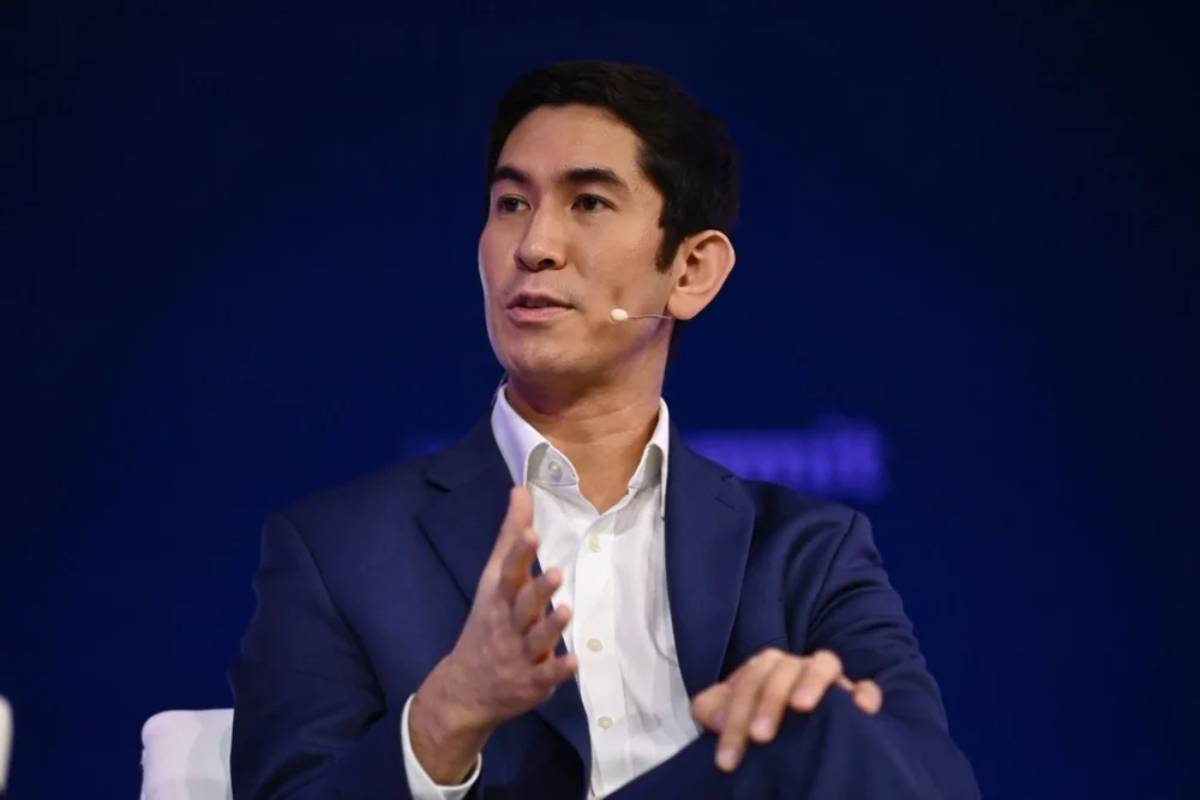
Former Big Tech Insider Launches Global AI Initiative

Hunter Torricke, who previously held senior communications roles at SpaceX and Google and has worked with the United Nations, unveiled a nonprofit dedicated to AI governance research and global coalition-building.

February 24, 2026
|

A significant development in global AI governance unfolded as former SpaceX and Google executive Dex Hunter-Torricke launched a new nonprofit focused on AI policy and international coordination. The initiative warns that governments, institutions, and markets remain structurally unprepared for advanced artificial intelligence systems.

Hunter-Torricke, who previously held senior communications roles at SpaceX and Google and has worked with the United Nations, unveiled a nonprofit dedicated to AI governance research and global coalition-building.

The organization aims to develop policy frameworks, foster cross-border collaboration, and provide strategic research on advanced AI risks and opportunities.

The launch comes amid accelerating AI deployment across sectors including defense, finance, healthcare, and education. The initiative seeks to bridge the widening gap between technological capability and institutional readiness, positioning itself as a neutral convening force for policymakers and industry leaders.

The development aligns with a broader trend across global markets where AI capabilities are advancing faster than regulatory and societal safeguards. Generative AI systems and autonomous agents are increasingly integrated into enterprise workflows, consumer applications, and national security strategies.

Governments worldwide are grappling with how to balance innovation with oversight. While some regions have introduced regulatory frameworks, others remain in exploratory phases, creating uneven standards and potential geopolitical friction.

Former insiders from major technology firms are increasingly entering the policy space, reflecting growing recognition that AI governance will shape economic competitiveness, digital sovereignty, and public trust. As advanced AI systems edge closer to widespread autonomy, calls for coordinated international frameworks have intensified.

Policy analysts argue that leadership from individuals with experience inside both Silicon Valley and multilateral institutions brings unique credibility. Hunter-Torricke’s background in corporate communications and global diplomacy may enable him to navigate complex stakeholder environments spanning governments, startups, and international bodies.

Experts suggest the nonprofit could serve as a bridge between technical AI developers and policymakers who often lack deep technical fluency.

Industry observers note that without cohesive global standards, fragmented regulatory regimes could increase compliance costs and create uncertainty for multinational corporations. A coordinated coalition-building effort may therefore appeal to executives seeking predictable operating environments.

At the same time, critics caution that nonprofit initiatives must maintain independence to avoid undue industry influence in shaping public policy. For global executives, the initiative underscores that AI governance is no longer peripheral it is central to strategic planning. Companies deploying advanced AI may face increased scrutiny around safety, transparency, and societal impact.

Investors are likely to track emerging governance frameworks as potential indicators of regulatory risk and long-term market stability.

Governments may view the nonprofit as a partner in crafting policy toolkits, particularly in emerging markets lacking institutional capacity. For multinational corporations, proactive engagement in coalition-building efforts could mitigate reputational and regulatory exposure.

The nonprofit’s influence will depend on its ability to convene diverse stakeholders and produce actionable frameworks rather than high-level principles. Decision-makers will watch whether it secures international partnerships and policy adoption.

As AI systems grow more capable, the governance debate will intensify making coordinated global action less an option and more a necessity.

Source: EdTech Innovation Hub
Date: February 2026

  • Featured tools
Neuron AI
Free

Neuron AI is an AI-driven content optimization platform that helps creators produce SEO-friendly content by combining semantic SEO, competitor analysis, and AI-assisted writing workflows.

#
SEO
Learn more
Copy Ai
Free

Copy AI is one of the most popular AI writing tools designed to help professionals create high-quality content quickly. Whether you are a product manager drafting feature descriptions or a marketer creating ad copy, Copy AI can save hours of work while maintaining creativity and tone.

#
Copywriting
Learn more

Learn more about future of AI

Join 80,000+ Ai enthusiast getting weekly updates on exciting AI tools.
Thank you! Your submission has been received!
Oops! Something went wrong while submitting the form.

Former Big Tech Insider Launches Global AI Initiative

February 24, 2026

Hunter Torricke, who previously held senior communications roles at SpaceX and Google and has worked with the United Nations, unveiled a nonprofit dedicated to AI governance research and global coalition-building.

A significant development in global AI governance unfolded as former SpaceX and Google executive Dex Hunter-Torricke launched a new nonprofit focused on AI policy and international coordination. The initiative warns that governments, institutions, and markets remain structurally unprepared for advanced artificial intelligence systems.

Hunter-Torricke, who previously held senior communications roles at SpaceX and Google and has worked with the United Nations, unveiled a nonprofit dedicated to AI governance research and global coalition-building.

The organization aims to develop policy frameworks, foster cross-border collaboration, and provide strategic research on advanced AI risks and opportunities.

The launch comes amid accelerating AI deployment across sectors including defense, finance, healthcare, and education. The initiative seeks to bridge the widening gap between technological capability and institutional readiness, positioning itself as a neutral convening force for policymakers and industry leaders.

The development aligns with a broader trend across global markets where AI capabilities are advancing faster than regulatory and societal safeguards. Generative AI systems and autonomous agents are increasingly integrated into enterprise workflows, consumer applications, and national security strategies.

Governments worldwide are grappling with how to balance innovation with oversight. While some regions have introduced regulatory frameworks, others remain in exploratory phases, creating uneven standards and potential geopolitical friction.

Former insiders from major technology firms are increasingly entering the policy space, reflecting growing recognition that AI governance will shape economic competitiveness, digital sovereignty, and public trust. As advanced AI systems edge closer to widespread autonomy, calls for coordinated international frameworks have intensified.

Policy analysts argue that leadership from individuals with experience inside both Silicon Valley and multilateral institutions brings unique credibility. Hunter-Torricke’s background in corporate communications and global diplomacy may enable him to navigate complex stakeholder environments spanning governments, startups, and international bodies.

Experts suggest the nonprofit could serve as a bridge between technical AI developers and policymakers who often lack deep technical fluency.

Industry observers note that without cohesive global standards, fragmented regulatory regimes could increase compliance costs and create uncertainty for multinational corporations. A coordinated coalition-building effort may therefore appeal to executives seeking predictable operating environments.

At the same time, critics caution that nonprofit initiatives must maintain independence to avoid undue industry influence in shaping public policy. For global executives, the initiative underscores that AI governance is no longer peripheral it is central to strategic planning. Companies deploying advanced AI may face increased scrutiny around safety, transparency, and societal impact.

Investors are likely to track emerging governance frameworks as potential indicators of regulatory risk and long-term market stability.

Governments may view the nonprofit as a partner in crafting policy toolkits, particularly in emerging markets lacking institutional capacity. For multinational corporations, proactive engagement in coalition-building efforts could mitigate reputational and regulatory exposure.

The nonprofit’s influence will depend on its ability to convene diverse stakeholders and produce actionable frameworks rather than high-level principles. Decision-makers will watch whether it secures international partnerships and policy adoption.

As AI systems grow more capable, the governance debate will intensify making coordinated global action less an option and more a necessity.

Source: EdTech Innovation Hub
Date: February 2026

Promote Your Tool

Copy Embed Code

Similar Blogs

February 24, 2026
|

Jamie Dimon Calms Markets, Downplays AI Disruption Risks

Dimon addressed concerns at a corporate briefing, emphasizing JPMorgan’s proactive adoption of AI for efficiency, compliance, and customer services.
Read more
February 24, 2026
|

Asian Markets Steady After Wall Street Rout in AI Exposed Stocks

Markets across Asia traded unevenly following a sharp US selloff in technology and legacy IT stocks exposed to AI disruption. Wall Street investors rotated out of companies perceived as vulnerable to automation.
Read more
February 24, 2026
|

Crypto Markets Slide as AI Jitters Trigger Sharp IBM Selloff

Cryptocurrency markets recorded deeper declines amid a broader tech-led selloff, reflecting risk-off sentiment among global investors. IBM shares plunged 11%, highlighting heightened sensitivity to earnings expectations.
Read more
February 24, 2026
|

Indian IT Stocks Extend Losses as AI Fears Trigger Global Repricing

Shares of major Indian IT services firms extended losses following global volatility in AI-linked equities.
Read more
February 24, 2026
|

AI Coding Platforms Threaten Freemium App Model Economics

Advances in generative AI coding assistants now allow users to create simple, task-specific applications through natural language prompts, reducing reliance on standalone freemium utilities.
Read more
February 24, 2026
|

AI Powered Body Scans Expand Across Health and Retail

AI-driven body scanning platforms are increasingly being deployed in gyms, wellness centers, medical clinics, and retail environments.
Read more