



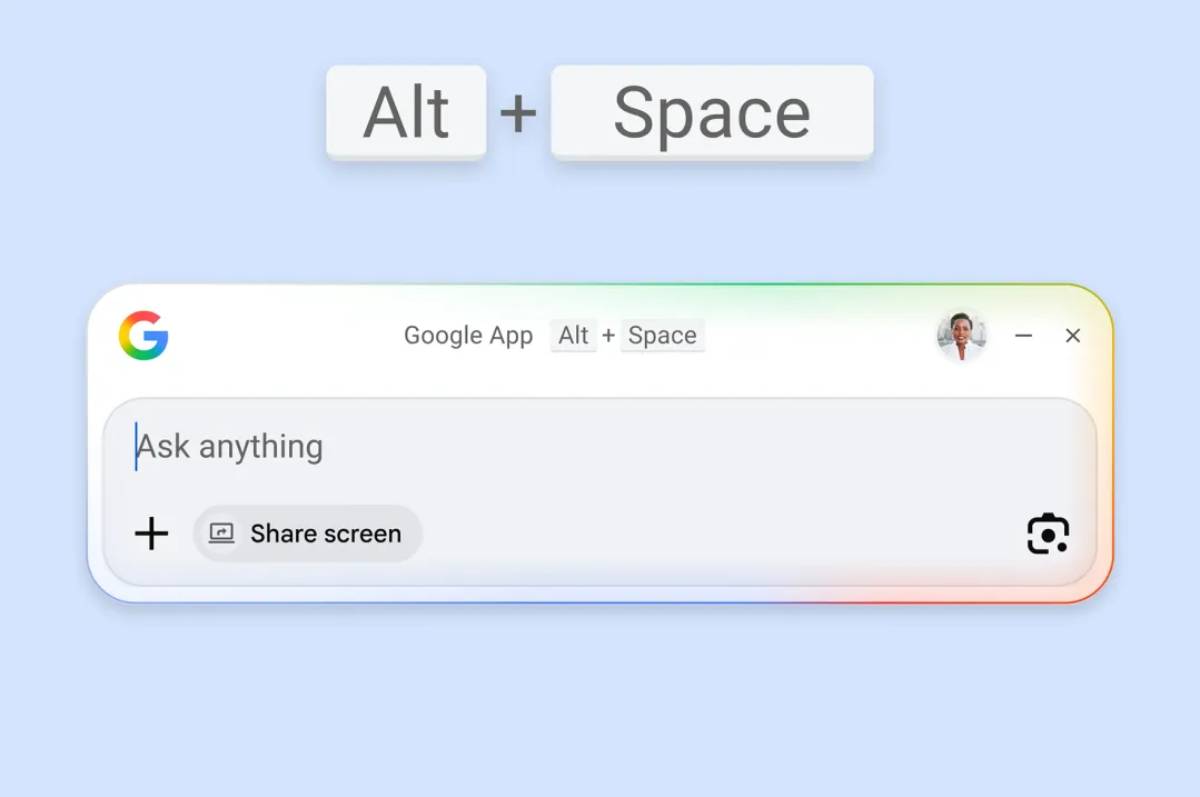
A major development unfolded as Google made its Spotlight-like desktop search application for Windows widely available, reinforcing its push into system-level productivity tools. The move strengthens Google’s presence on Microsoft’s operating system while signaling intensifying competition in desktop search, AI integration, and cross-platform user engagement.
Google has rolled out its desktop search application for Windows to a broader user base, enabling quick access to apps, files, web results, and AI-powered suggestions through a unified search interface.
The tool mirrors macOS Spotlight functionality, positioning itself as a productivity layer for Windows users. It integrates Google Search capabilities with local system navigation, aiming to reduce friction in everyday workflows.
The expansion follows earlier limited availability and reflects Google’s strategy to extend its ecosystem beyond browsers. It also places the company in closer functional overlap with Microsoft’s Windows-native search and Copilot-driven system integration.
Desktop search has increasingly become a strategic interface layer in modern operating systems, evolving from simple file indexing tools into AI-enhanced productivity hubs. Apple’s Spotlight and Microsoft’s Windows Search have long defined this category within their ecosystems.
Google’s move into Windows represents a significant cross-platform expansion, particularly as AI-driven assistants reshape how users interact with operating systems. Rather than relying solely on browser-based search, companies are embedding intelligence directly into the desktop experience.
This shift reflects a broader industry trend toward OS-level AI integration, where search, productivity, and assistance converge into a single interface. It also highlights growing competition between Google and Microsoft, both seeking to own the primary user entry point for information retrieval and task execution across devices.
Industry analysts view Google’s expansion into Windows desktop search as a strategic attempt to reclaim user interaction surfaces traditionally dominated by Microsoft. By embedding search deeper into the operating system layer, Google reduces dependency on the browser as the primary access point.
Technology strategists note that desktop-level AI interfaces are becoming critical in shaping user behavior, particularly in enterprise environments where speed and workflow efficiency matter. Google’s approach emphasizes search universality, while Microsoft focuses on deeply integrated AI assistance through Copilot.
Experts also suggest that this competition signals a broader convergence of search, AI, and operating system functionality. Over time, the distinction between search engines and system assistants may blur, creating unified productivity environments controlled by platform providers.
For businesses, the expansion of AI-enhanced desktop search tools increases productivity potential but also raises questions about data governance, cross-platform consistency, and enterprise IT policy alignment.
For platform providers, this intensifies competition over the primary user interface layer whether the browser, operating system, or AI assistant becomes the dominant entry point for digital tasks.
For regulators, the convergence of search and OS-level AI may prompt scrutiny over default service advantages, data access, and competitive fairness, particularly in markets where operating systems already exert significant platform control.
Expect further convergence between desktop search, AI assistants, and operating system functionality across major platforms. Google and Microsoft are likely to deepen integration of AI-driven workflows into Windows environments, while competition will increasingly focus on default positioning and user retention. The next phase of competition will center on who controls the “first interaction layer” of computing.
Source: The Verge
Date: April 16, 2026


