
GM Integrates Google Gemini for In Vehicle AI

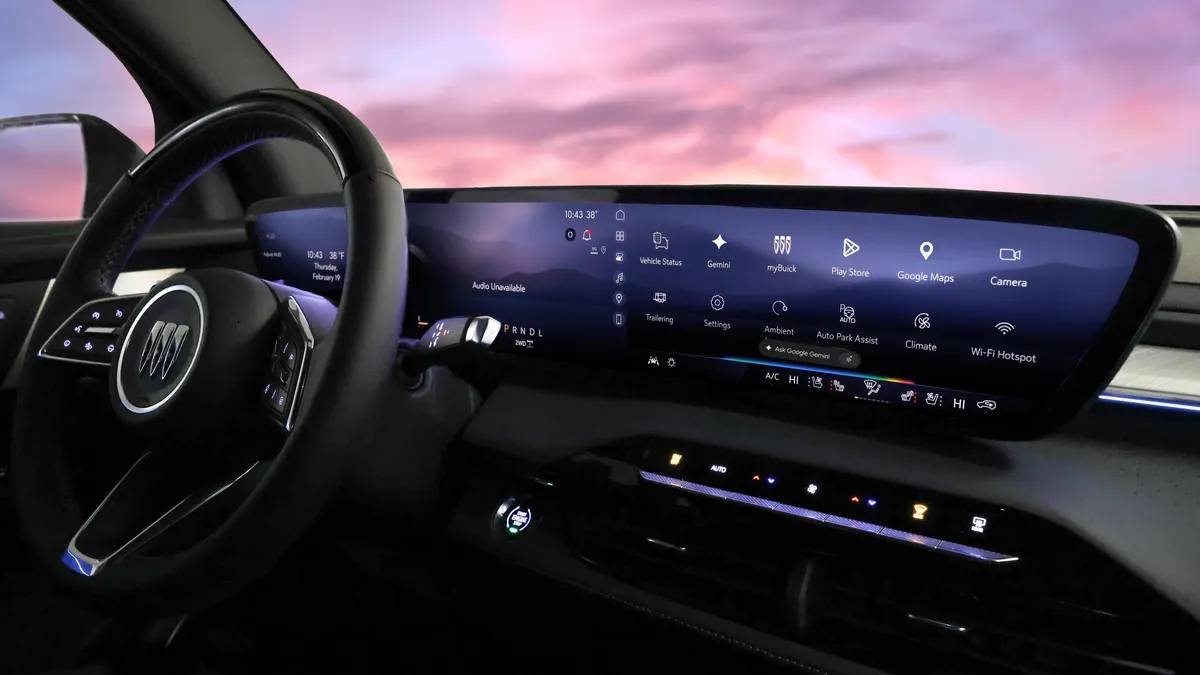
General Motors has announced the rollout of Google Gemini AI across its vehicle lineup, enabling drivers to interact with an advanced in-car assistant capable of handling navigation, communication.

May 4, 2026
|
Image Source: CNET

A strategic shift in automotive intelligence is underway as General Motors integrates Google’s Gemini AI into millions of vehicles. The collaboration signals a deeper convergence of mobility and generative AI, with implications for driver experience, automotive software ecosystems, and the future of connected transportation.

General Motors has announced the rollout of Google Gemini AI across its vehicle lineup, enabling drivers to interact with an advanced in-car assistant capable of handling navigation, communication, and contextual queries. The integration is expected to be deployed across millions of vehicles in the coming phases.

The system aims to enhance hands-free interaction, improve safety, and provide more personalized driving experiences. Key stakeholders include automotive consumers, software developers, and automotive suppliers.

The initiative reflects a broader industry shift toward software-defined vehicles, where AI systems increasingly play a central role in shaping user experience and vehicle functionality.

The development aligns with a broader trend across global markets where the automotive industry is rapidly transitioning toward connected, software-driven ecosystems. Vehicles are increasingly being redefined as digital platforms rather than purely mechanical systems.

This transformation has been accelerated by advancements in artificial intelligence, cloud computing, and voice-enabled interfaces. Automakers are partnering with major technology firms to integrate AI capabilities that enhance safety, convenience, and personalization.

Historically, automotive innovation has progressed through mechanical, electronic, and now digital phases. The integration of generative AI represents the next stage in this evolution, enabling more intuitive human-machine interaction. This shift also reflects competitive pressures within the industry as manufacturers seek differentiation through software and services rather than hardware alone.

Industry analysts suggest that integrating generative AI into vehicles could significantly enhance user experience by enabling more natural and contextual interactions between drivers and their vehicles. Experts note that voice-driven AI systems may reduce driver distraction and improve accessibility.

However, automotive technology specialists caution that safety, data privacy, and system reliability remain critical considerations. Ensuring that AI responses are accurate and contextually appropriate will be essential in real-world driving environments.

Market observers highlight that partnerships between automakers and technology firms are becoming increasingly strategic, as software capabilities emerge as key differentiators in the automotive sector. The collaboration between GM and Google reflects this broader convergence of mobility and digital intelligence.

For businesses, particularly in the automotive and technology sectors, the integration of AI assistants into vehicles could redefine competitive dynamics, shifting value creation toward software ecosystems and recurring digital services.

Investors may view this as a signal of accelerating transformation in the automotive industry, where long-term growth is increasingly tied to digital capabilities rather than traditional manufacturing alone.

From a policy perspective, regulators may need to address issues related to in-vehicle AI safety, data usage, and driver distraction standards. Establishing clear guidelines for AI-assisted driving environments will be critical as adoption scales globally.

As AI becomes embedded in vehicles at scale, attention will shift toward system reliability, user trust, and regulatory alignment. Decision-makers should monitor how drivers interact with AI assistants in real-world conditions and whether these systems deliver measurable safety and efficiency benefits.

The evolution of connected vehicles is expected to accelerate, with AI playing a central role in defining the future of mobility ecosystems.

Source: CNET
Date: 2026

  • Featured tools
Kreateable AI
Free

Kreateable AI is a white-label, AI-driven design platform that enables logo generation, social media posts, ads, and more for businesses, agencies, and service providers.

#
Logo Generator
Learn more
Hostinger Horizons
Freemium

Hostinger Horizons is an AI-powered platform that allows users to build and deploy custom web applications without writing code. It packs hosting, domain management and backend integration into a unified tool for rapid app creation.

#
Startup Tools
#
Coding
#
Project Management
Learn more

Learn more about future of AI

Join 80,000+ Ai enthusiast getting weekly updates on exciting AI tools.
Thank you! Your submission has been received!
Oops! Something went wrong while submitting the form.

GM Integrates Google Gemini for In Vehicle AI

May 4, 2026

General Motors has announced the rollout of Google Gemini AI across its vehicle lineup, enabling drivers to interact with an advanced in-car assistant capable of handling navigation, communication.

Image Source: CNET

A strategic shift in automotive intelligence is underway as General Motors integrates Google’s Gemini AI into millions of vehicles. The collaboration signals a deeper convergence of mobility and generative AI, with implications for driver experience, automotive software ecosystems, and the future of connected transportation.

General Motors has announced the rollout of Google Gemini AI across its vehicle lineup, enabling drivers to interact with an advanced in-car assistant capable of handling navigation, communication, and contextual queries. The integration is expected to be deployed across millions of vehicles in the coming phases.

The system aims to enhance hands-free interaction, improve safety, and provide more personalized driving experiences. Key stakeholders include automotive consumers, software developers, and automotive suppliers.

The initiative reflects a broader industry shift toward software-defined vehicles, where AI systems increasingly play a central role in shaping user experience and vehicle functionality.

The development aligns with a broader trend across global markets where the automotive industry is rapidly transitioning toward connected, software-driven ecosystems. Vehicles are increasingly being redefined as digital platforms rather than purely mechanical systems.

This transformation has been accelerated by advancements in artificial intelligence, cloud computing, and voice-enabled interfaces. Automakers are partnering with major technology firms to integrate AI capabilities that enhance safety, convenience, and personalization.

Historically, automotive innovation has progressed through mechanical, electronic, and now digital phases. The integration of generative AI represents the next stage in this evolution, enabling more intuitive human-machine interaction. This shift also reflects competitive pressures within the industry as manufacturers seek differentiation through software and services rather than hardware alone.

Industry analysts suggest that integrating generative AI into vehicles could significantly enhance user experience by enabling more natural and contextual interactions between drivers and their vehicles. Experts note that voice-driven AI systems may reduce driver distraction and improve accessibility.

However, automotive technology specialists caution that safety, data privacy, and system reliability remain critical considerations. Ensuring that AI responses are accurate and contextually appropriate will be essential in real-world driving environments.

Market observers highlight that partnerships between automakers and technology firms are becoming increasingly strategic, as software capabilities emerge as key differentiators in the automotive sector. The collaboration between GM and Google reflects this broader convergence of mobility and digital intelligence.

For businesses, particularly in the automotive and technology sectors, the integration of AI assistants into vehicles could redefine competitive dynamics, shifting value creation toward software ecosystems and recurring digital services.

Investors may view this as a signal of accelerating transformation in the automotive industry, where long-term growth is increasingly tied to digital capabilities rather than traditional manufacturing alone.

From a policy perspective, regulators may need to address issues related to in-vehicle AI safety, data usage, and driver distraction standards. Establishing clear guidelines for AI-assisted driving environments will be critical as adoption scales globally.

As AI becomes embedded in vehicles at scale, attention will shift toward system reliability, user trust, and regulatory alignment. Decision-makers should monitor how drivers interact with AI assistants in real-world conditions and whether these systems deliver measurable safety and efficiency benefits.

The evolution of connected vehicles is expected to accelerate, with AI playing a central role in defining the future of mobility ecosystems.

Source: CNET
Date: 2026

Promote Your Tool

Copy Embed Code

Similar Blogs

May 4, 2026
|

Apple M3 iPad Air Sees Price Cuts Surge

The discounts appear to be part of broader seasonal and inventory-clearance strategies, aimed at stimulating demand in a highly competitive tablet market.
Read more
May 4, 2026
|

MacOS Shortcuts Redefine Productivity Workflows

Apple’s Apple operating system, macOS, continues to emphasize productivity features through advanced keyboard shortcut integration. Users can streamline navigation, text editing.
Read more
May 4, 2026
|

Amazon Expands AI Price Tracking Coverage

Amazon has expanded its built-in AI-driven price tracking system to show up to 12 months of historical pricing data across a wider range of products.
Read more
May 4, 2026
|

Microsoft Tests Windows 11 Run Menu Redesign

Microsoft has begun testing a redesigned version of the Windows 11 Run dialog, part of ongoing interface refinements within the operating system.
Read more
May 4, 2026
|

Retro Computers Return as Handheld Devices

Gaming hardware maker Blaze Entertainment has introduced handheld devices inspired by Commodore 64 and ZX Spectrum, reimagining iconic 1980s computing platforms in modern portable formats.
Read more
May 4, 2026
|

Smart Glasses Face Utility Adoption Gap

The latest reviews of smart glasses across multiple brands including AI-enabled and display-focused modelsbindicate a consistent problem: limited real-world utility.
Read more