
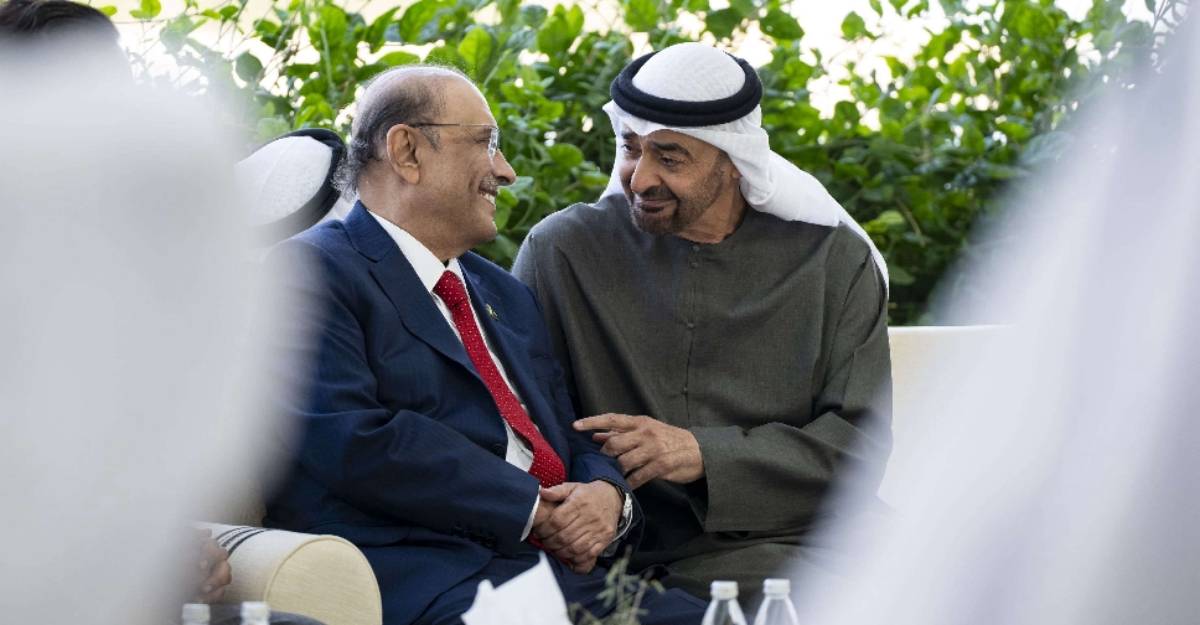
UAE and Switzerland Explore Strategic Economic & AI Partnerships

The presidents discussed expanding cooperation in artificial intelligence, digital infrastructure, sustainable finance, and high-tech industries. Key agreements included exploring joint AI research programs.

February 24, 2026
|

A major development unfolded today as UAE President Sheikh Mohamed bin Zayed and Swiss President Alain Berset engaged in high-level talks to strengthen bilateral economic collaboration and advance AI initiatives. The discussions signal a strategic effort to align innovation, trade, and investment policies, impacting business sectors, AI research, and cross-border corporate partnerships across both nations.

The presidents discussed expanding cooperation in artificial intelligence, digital infrastructure, sustainable finance, and high-tech industries. Key agreements included exploring joint AI research programs, data-sharing initiatives, and investment frameworks to accelerate innovation-led growth.

Officials highlighted potential collaborations in smart cities, energy technologies, and fintech. The discussions also included strengthening trade and investment flows, with Swiss companies encouraged to deepen operations in the UAE, and Emirati investors eyeing Swiss technology ventures.

Analysts note that these talks could redefine regional AI ecosystems, positioning both countries as innovation hubs while influencing European and Middle Eastern business networks.

The development aligns with a broader trend of global leaders leveraging AI and innovation to strengthen economic resilience and geopolitical influence. The UAE has invested heavily in AI, smart cities, and digital governance as part of its 2031 National AI Strategy, while Switzerland maintains a strong reputation for precision engineering, fintech, and AI research excellence.

Previous bilateral engagements have focused on trade, finance, and technology partnerships. These discussions mark a strategic pivot toward deepening AI and high-tech collaborations, reflecting the growing importance of innovation diplomacy.

Executives and investors view these talks as an opportunity to integrate cross-border AI development with practical business applications, while governments explore frameworks to facilitate knowledge transfer, investment security, and regulatory alignment between the Middle East and Europe.

Analysts emphasize that the UAE-Switzerland dialogue signals a proactive approach to shaping AI and economic ecosystems. “These discussions could catalyze joint AI research, attracting global talent and investment to both regions,” noted a senior international trade analyst.

Officials from both nations underscored mutual benefits, citing AI’s potential to optimize energy, healthcare, and logistics sectors. Industry leaders highlighted that enhanced collaboration could streamline market access, reduce barriers to technology transfer, and accelerate commercial deployment of AI innovations.

Geopolitical observers note that the partnership positions the UAE as a regional innovation hub and Switzerland as a gateway for European high-tech markets. Strategists expect increased public-private partnerships, joint venture formations, and policy dialogues shaping AI governance standards globally.

For global executives, the UAE-Swiss alignment could redefine operational strategies across AI, fintech, and high-tech sectors. Businesses may gain early access to cutting-edge AI applications, research collaborations, and investment opportunities.

Investors could benefit from cross-border diversification and preferential access to emerging innovation markets. Markets may see growth in AI-driven products and services, while consumers could experience enhanced technology adoption.

Policymakers may consider harmonizing AI regulations, data governance frameworks, and investment treaties to sustain collaboration. Analysts caution that companies should monitor geopolitical dynamics, regulatory shifts, and bilateral trade policies to navigate emerging opportunities effectively.

Decision-makers should watch for formalized joint ventures, AI research agreements, and regulatory alignments. Key uncertainties include global AI policy shifts, investment risks, and technology adoption timelines. Successful execution of these discussions could position both the UAE and Switzerland as influential AI innovation hubs, attracting global talent and capital while fostering sustainable economic growth across strategic sectors.

Source & Date

Source: Dubai Eye 1038
Date: February 4, 2026

  • Featured tools
Wonder AI
Free

Wonder AI is a versatile AI-powered creative platform that generates text, images, and audio with minimal input, designed for fast storytelling, visual creation, and audio content generation

#
Art Generator
Learn more
Hostinger Website Builder
Paid

Hostinger Website Builder is a drag-and-drop website creator bundled with hosting and AI-powered tools, designed for businesses, blogs and small shops with minimal technical effort.It makes launching a site fast and affordable, with templates, responsive design and built-in hosting all in one.

#
Productivity
#
Startup Tools
#
Ecommerce
Learn more

Learn more about future of AI

Join 80,000+ Ai enthusiast getting weekly updates on exciting AI tools.
Thank you! Your submission has been received!
Oops! Something went wrong while submitting the form.

UAE and Switzerland Explore Strategic Economic & AI Partnerships

February 24, 2026

The presidents discussed expanding cooperation in artificial intelligence, digital infrastructure, sustainable finance, and high-tech industries. Key agreements included exploring joint AI research programs.

A major development unfolded today as UAE President Sheikh Mohamed bin Zayed and Swiss President Alain Berset engaged in high-level talks to strengthen bilateral economic collaboration and advance AI initiatives. The discussions signal a strategic effort to align innovation, trade, and investment policies, impacting business sectors, AI research, and cross-border corporate partnerships across both nations.

The presidents discussed expanding cooperation in artificial intelligence, digital infrastructure, sustainable finance, and high-tech industries. Key agreements included exploring joint AI research programs, data-sharing initiatives, and investment frameworks to accelerate innovation-led growth.

Officials highlighted potential collaborations in smart cities, energy technologies, and fintech. The discussions also included strengthening trade and investment flows, with Swiss companies encouraged to deepen operations in the UAE, and Emirati investors eyeing Swiss technology ventures.

Analysts note that these talks could redefine regional AI ecosystems, positioning both countries as innovation hubs while influencing European and Middle Eastern business networks.

The development aligns with a broader trend of global leaders leveraging AI and innovation to strengthen economic resilience and geopolitical influence. The UAE has invested heavily in AI, smart cities, and digital governance as part of its 2031 National AI Strategy, while Switzerland maintains a strong reputation for precision engineering, fintech, and AI research excellence.

Previous bilateral engagements have focused on trade, finance, and technology partnerships. These discussions mark a strategic pivot toward deepening AI and high-tech collaborations, reflecting the growing importance of innovation diplomacy.

Executives and investors view these talks as an opportunity to integrate cross-border AI development with practical business applications, while governments explore frameworks to facilitate knowledge transfer, investment security, and regulatory alignment between the Middle East and Europe.

Analysts emphasize that the UAE-Switzerland dialogue signals a proactive approach to shaping AI and economic ecosystems. “These discussions could catalyze joint AI research, attracting global talent and investment to both regions,” noted a senior international trade analyst.

Officials from both nations underscored mutual benefits, citing AI’s potential to optimize energy, healthcare, and logistics sectors. Industry leaders highlighted that enhanced collaboration could streamline market access, reduce barriers to technology transfer, and accelerate commercial deployment of AI innovations.

Geopolitical observers note that the partnership positions the UAE as a regional innovation hub and Switzerland as a gateway for European high-tech markets. Strategists expect increased public-private partnerships, joint venture formations, and policy dialogues shaping AI governance standards globally.

For global executives, the UAE-Swiss alignment could redefine operational strategies across AI, fintech, and high-tech sectors. Businesses may gain early access to cutting-edge AI applications, research collaborations, and investment opportunities.

Investors could benefit from cross-border diversification and preferential access to emerging innovation markets. Markets may see growth in AI-driven products and services, while consumers could experience enhanced technology adoption.

Policymakers may consider harmonizing AI regulations, data governance frameworks, and investment treaties to sustain collaboration. Analysts caution that companies should monitor geopolitical dynamics, regulatory shifts, and bilateral trade policies to navigate emerging opportunities effectively.

Decision-makers should watch for formalized joint ventures, AI research agreements, and regulatory alignments. Key uncertainties include global AI policy shifts, investment risks, and technology adoption timelines. Successful execution of these discussions could position both the UAE and Switzerland as influential AI innovation hubs, attracting global talent and capital while fostering sustainable economic growth across strategic sectors.

Source & Date

Source: Dubai Eye 1038
Date: February 4, 2026

Promote Your Tool

Copy Embed Code

Similar Blogs

March 18, 2026
|

Micron Set for Earnings Surge from AI Demand

Micron is set to report its Q1 2026 earnings next week, with analysts forecasting substantial year-over-year growth due to heightened demand for DRAM and NAND memory in AI applications.
Read more
March 18, 2026
|

Meta Manus Expands AI Agent Desktop Reach

Meta’s Manus desktop app allows users to deploy the AI agent outside cloud-only environments, enhancing speed, personalization, and offline capabilities.
Read more
March 18, 2026
|

AI Advertising Crackdown Bans “Remove Anything” Claims

The ruling by the Advertising Standards Authority determined that the ad’s claims were misleading and could exaggerate the app’s capabilities.
Read more
March 18, 2026
|

Court Ruling Boosts Perplexity AI Competition

A court decision has halted efforts by Amazon to ban or limit AI agents developed by Perplexity AI on its platform. The ruling allows continued deployment and operation of these AI tools, at least temporarily.
Read more
March 18, 2026
|

Compute Divide Intensifies US China AI Rivalry

The growing disparity in computing power driven by access to advanced semiconductors and large-scale data centers is becoming central to AI competitiveness.
Read more
March 18, 2026
|

Samsung Signals AI Driven Chip Boom Into 2026

An executive at Samsung Electronics indicated that demand for AI-related semiconductors is expected to remain robust through 2026, driven by expanding use cases in data.
Read more