
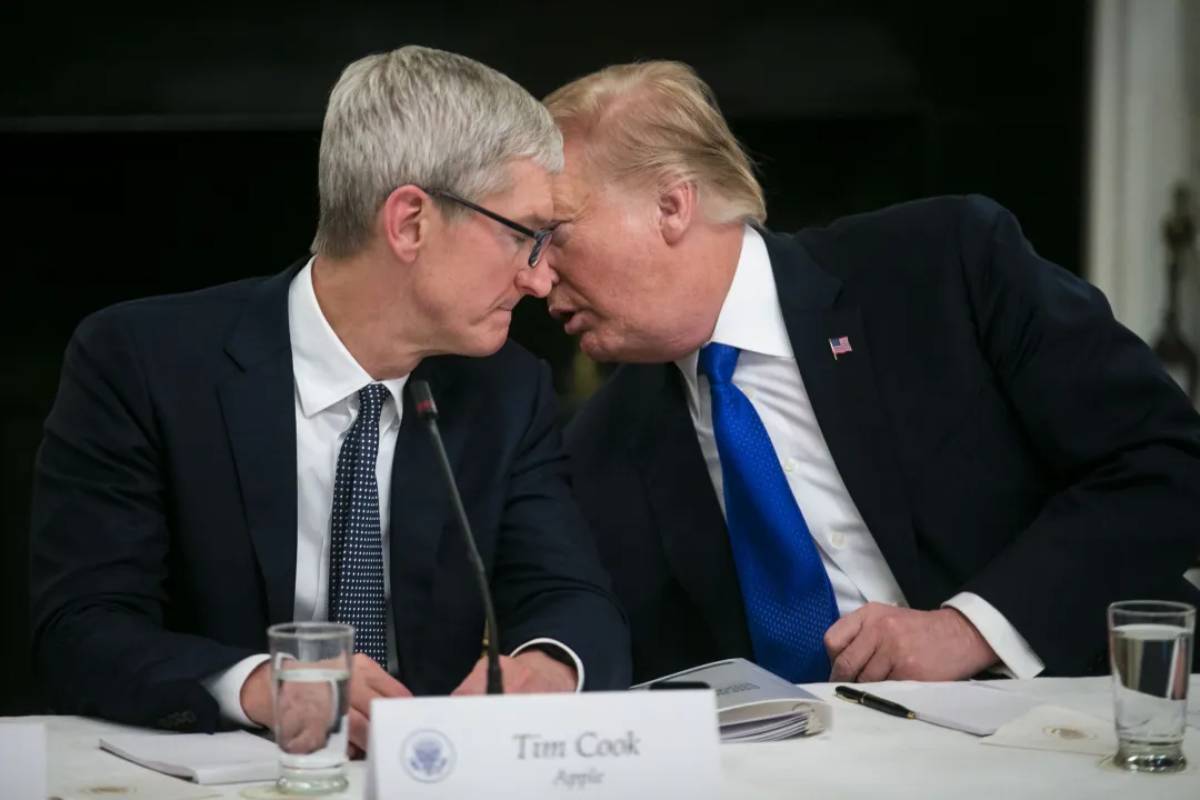
Tim Cook’s Influence Signals Apple Role in US Tech Policy

Reports suggest that Tim Cook will continue to serve as a key intermediary between Apple and U.S. political leadership, including engagement with policymakers linked to the Trump administration.

April 21, 2026
|
Image Source: The Verge

Tim Cook is expected to retain significant influence in U.S. policy circles even amid leadership transition discussions at Apple, underscoring the company’s enduring role in shaping technology regulation. His continued engagement with political leadership highlights the intersection of corporate strategy and geopolitical technology governance.

Reports suggest that Tim Cook will continue to serve as a key intermediary between Apple and U.S. political leadership, including engagement with policymakers linked to the Trump administration. His role is expected to extend beyond operational leadership into strategic policy influence, particularly on issues involving trade, regulation, and technology governance.

Apple has historically maintained close engagement with U.S. administrations to navigate regulatory frameworks affecting privacy, taxation, and global supply chains. Cook’s continued presence in a senior or advisory capacity reinforces Apple’s strategic positioning in Washington amid evolving geopolitical and technological competition. The development comes as Big Tech faces heightened regulatory scrutiny across multiple jurisdictions.

The situation aligns with a broader trend across global markets where major technology firms are increasingly embedded in geopolitical and policy ecosystems. Companies such as Apple, Microsoft, and Google have become central stakeholders in discussions around data governance, national security, and digital competition.

Historically, Apple has maintained a pragmatic approach to political engagement, balancing regulatory compliance with global business expansion. Tim Cook’s tenure has been marked by strategic diplomacy with multiple administrations, particularly on issues such as manufacturing tariffs, privacy laws, and antitrust concerns.

As technology becomes more deeply intertwined with national strategy, corporate leaders are increasingly functioning as quasi-diplomatic figures. This evolution reflects the growing importance of tech companies in shaping economic and geopolitical outcomes.

Policy analysts suggest that Tim Cook’s continued involvement in political engagement reflects Apple’s long-term strategy of maintaining stable regulatory relationships. Experts note that such influence can help companies navigate complex policy environments, particularly in the United States and China.

Industry observers highlight that Apple’s ability to engage across political administrations has historically contributed to its operational resilience. Analysts also emphasize that tech executives increasingly play dual roles as business leaders and policy influencers.

Governance experts caution, however, that close ties between corporate leadership and political figures may attract scrutiny regarding regulatory neutrality and competitive fairness. Nonetheless, many agree that sustained dialogue between technology firms and governments is now a structural feature of the global digital economy.

For global executives, the development reinforces the importance of political engagement as a core component of technology strategy. Companies operating at scale may need to invest further in policy relations to navigate regulatory complexity.

Investors are likely to view sustained leadership influence positively, as regulatory stability can reduce operational risk for major technology firms. However, increasing scrutiny of Big Tech influence in policymaking could introduce reputational and compliance considerations.

From a policy perspective, the relationship between corporate leaders and government officials may continue to evolve, potentially prompting calls for clearer boundaries and transparency in tech-sector lobbying and advisory roles.

Looking ahead, Tim Cook’s ongoing influence in policy discussions will likely depend on Apple’s strategic priorities and regulatory developments in key markets. Stakeholders should watch for shifts in U.S. tech policy, antitrust enforcement, and international trade negotiations.

As the boundaries between corporate leadership and policy engagement continue to blur, Apple’s role in shaping technology governance is expected to remain significant.

Source: The Verge
Date: April 2026

  • Featured tools
Symphony Ayasdi AI
Free

SymphonyAI Sensa is an AI-powered surveillance and financial crime detection platform that surfaces hidden risk behavior through explainable, AI-driven analytics.

#
Finance
Learn more
Copy Ai
Free

Copy AI is one of the most popular AI writing tools designed to help professionals create high-quality content quickly. Whether you are a product manager drafting feature descriptions or a marketer creating ad copy, Copy AI can save hours of work while maintaining creativity and tone.

#
Copywriting
Learn more

Learn more about future of AI

Join 80,000+ Ai enthusiast getting weekly updates on exciting AI tools.
Thank you! Your submission has been received!
Oops! Something went wrong while submitting the form.

Tim Cook’s Influence Signals Apple Role in US Tech Policy

April 21, 2026

Reports suggest that Tim Cook will continue to serve as a key intermediary between Apple and U.S. political leadership, including engagement with policymakers linked to the Trump administration.

Image Source: The Verge

Tim Cook is expected to retain significant influence in U.S. policy circles even amid leadership transition discussions at Apple, underscoring the company’s enduring role in shaping technology regulation. His continued engagement with political leadership highlights the intersection of corporate strategy and geopolitical technology governance.

Reports suggest that Tim Cook will continue to serve as a key intermediary between Apple and U.S. political leadership, including engagement with policymakers linked to the Trump administration. His role is expected to extend beyond operational leadership into strategic policy influence, particularly on issues involving trade, regulation, and technology governance.

Apple has historically maintained close engagement with U.S. administrations to navigate regulatory frameworks affecting privacy, taxation, and global supply chains. Cook’s continued presence in a senior or advisory capacity reinforces Apple’s strategic positioning in Washington amid evolving geopolitical and technological competition. The development comes as Big Tech faces heightened regulatory scrutiny across multiple jurisdictions.

The situation aligns with a broader trend across global markets where major technology firms are increasingly embedded in geopolitical and policy ecosystems. Companies such as Apple, Microsoft, and Google have become central stakeholders in discussions around data governance, national security, and digital competition.

Historically, Apple has maintained a pragmatic approach to political engagement, balancing regulatory compliance with global business expansion. Tim Cook’s tenure has been marked by strategic diplomacy with multiple administrations, particularly on issues such as manufacturing tariffs, privacy laws, and antitrust concerns.

As technology becomes more deeply intertwined with national strategy, corporate leaders are increasingly functioning as quasi-diplomatic figures. This evolution reflects the growing importance of tech companies in shaping economic and geopolitical outcomes.

Policy analysts suggest that Tim Cook’s continued involvement in political engagement reflects Apple’s long-term strategy of maintaining stable regulatory relationships. Experts note that such influence can help companies navigate complex policy environments, particularly in the United States and China.

Industry observers highlight that Apple’s ability to engage across political administrations has historically contributed to its operational resilience. Analysts also emphasize that tech executives increasingly play dual roles as business leaders and policy influencers.

Governance experts caution, however, that close ties between corporate leadership and political figures may attract scrutiny regarding regulatory neutrality and competitive fairness. Nonetheless, many agree that sustained dialogue between technology firms and governments is now a structural feature of the global digital economy.

For global executives, the development reinforces the importance of political engagement as a core component of technology strategy. Companies operating at scale may need to invest further in policy relations to navigate regulatory complexity.

Investors are likely to view sustained leadership influence positively, as regulatory stability can reduce operational risk for major technology firms. However, increasing scrutiny of Big Tech influence in policymaking could introduce reputational and compliance considerations.

From a policy perspective, the relationship between corporate leaders and government officials may continue to evolve, potentially prompting calls for clearer boundaries and transparency in tech-sector lobbying and advisory roles.

Looking ahead, Tim Cook’s ongoing influence in policy discussions will likely depend on Apple’s strategic priorities and regulatory developments in key markets. Stakeholders should watch for shifts in U.S. tech policy, antitrust enforcement, and international trade negotiations.

As the boundaries between corporate leadership and policy engagement continue to blur, Apple’s role in shaping technology governance is expected to remain significant.

Source: The Verge
Date: April 2026

Promote Your Tool

Copy Embed Code

Similar Blogs

April 21, 2026
|

User Control Over AI Personalization Gains Momentum

The focus is on user-level controls that allow individuals to restrict or disable AI-powered features within major platforms. These tools are being positioned as part of broader privacy and customization settings that let users reduce algorithmic personalization in search, productivity.
Read more
April 21, 2026
|

AI Identity Verification Fuels Bot-Authentication Arms Race

The discussion centers on evolving verification systems designed to confirm whether online users are human, as AI-generated responses become harder to detect.
Read more
April 21, 2026
|

Plugable USB C Hub Deal Boosts Multi-Device Workflows

he Plugable USB-C hub 10-in-1 is being offered at a reduced price of approximately $52, positioning it as a cost-effective solution for users managing multiple peripherals.
Read more
April 21, 2026
|

Insta360 Adds Screens to Wireless Mics for Creators

The upcoming wireless microphone system from Insta360 introduces integrated display panels designed to show branding elements, custom visuals, and user-generated content directly on-device.
Read more
April 21, 2026
|

WhatsApp ‘Plus’ Test Signals Paid Messaging Shift

The test phase of WhatsApp’s “Plus” subscription introduces paid features including expanded sticker libraries, personalization options, and potential future productivity tools.
Read more
April 21, 2026
|

Samsung Galaxy Tab A11+ Price Cut Fuels Tablet Competition

The Samsung Galaxy Tab A11 Plus has seen a price cut of approximately $40 on Amazon, positioning it further within the ultra-affordable tablet category.
Read more