
Tesla Terafab Signals AI Driven Manufacturing Shift

Tesla is accelerating development of its Terafab project, aimed at transforming factories into highly automated, AI-driven production ecosystems.

March 20, 2026
|

A major strategic pivot is underway at Tesla as it advances its Terafab initiative, integrating artificial intelligence into next-generation manufacturing. The move underscores a broader ambition to redefine industrial production, with far-reaching implications for global supply chains, automation, and competitive dynamics in the automotive and robotics sectors.

Tesla is accelerating development of its Terafab project, aimed at transforming factories into highly automated, AI-driven production ecosystems. The initiative focuses on leveraging advanced robotics, machine learning, and real-time data systems to optimize manufacturing efficiency and scalability.

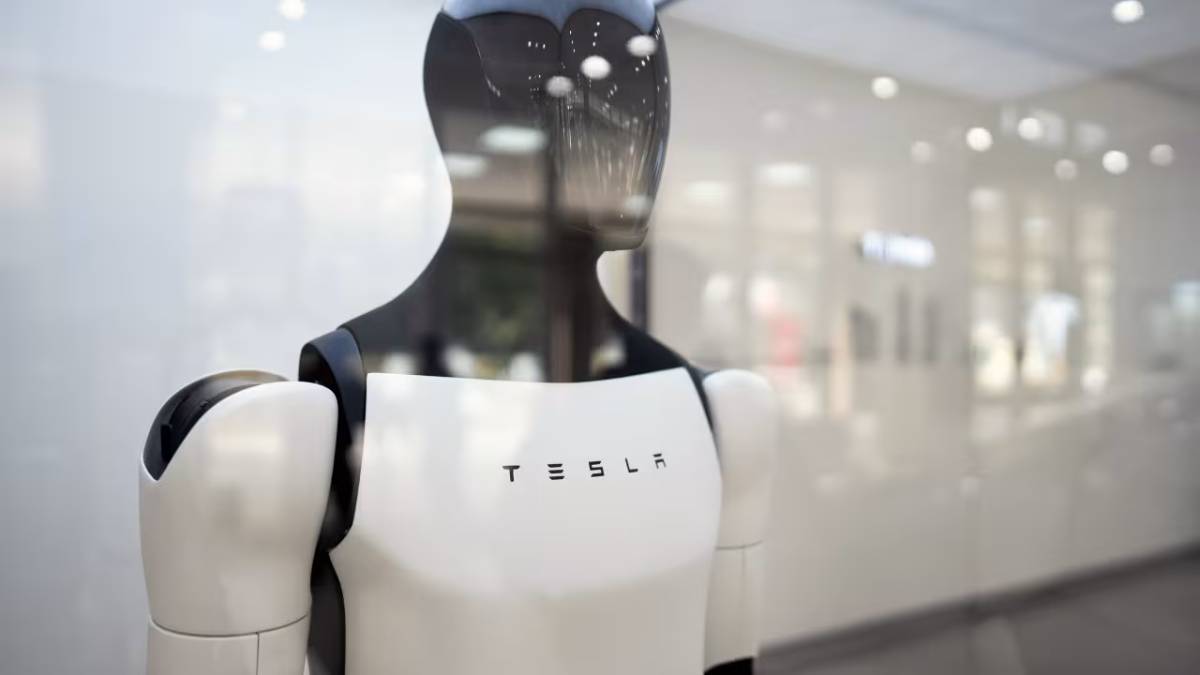
The project aligns with Tesla’s broader AI strategy, which includes autonomous driving systems and humanoid robotics. Leadership under Elon Musk has emphasized the convergence of AI and physical production as a long-term growth driver.

Investors and analysts are closely monitoring timelines and capital expenditure, as Terafab could significantly influence Tesla’s margins, production speed, and global manufacturing footprint.

The development aligns with a broader trend across global industries where AI is reshaping manufacturing and industrial automation. Companies are increasingly moving toward “smart factories” that integrate robotics, predictive analytics, and digital twins to enhance productivity and reduce operational costs.

Tesla has historically positioned itself not just as an automaker but as a technology-first company, with innovations spanning battery systems, software, and autonomous driving. The Terafab concept builds on earlier Gigafactory models, aiming to push efficiency and scale to new levels.

Globally, competition in AI-enabled manufacturing is intensifying, particularly among U.S., Chinese, and European firms seeking to secure supply chain resilience and technological leadership. Governments are also incentivizing advanced manufacturing through subsidies and industrial policy, further accelerating adoption.

Industry analysts view Tesla’s Terafab initiative as a high-risk, high-reward strategy that could redefine manufacturing benchmarks if successfully executed. Experts suggest the integration of AI into factory operations could unlock significant productivity gains but also introduces complexity in implementation and scaling.

Market observers note that Tesla’s approach reflects a broader shift toward vertical integration, where companies control both software intelligence and hardware production. This could provide a competitive edge but requires sustained capital investment and technical execution.

Some analysts caution that timelines for such ambitious projects are often unpredictable, particularly given the challenges of deploying AI in physical environments. Others argue that Tesla’s track record of innovation positions it uniquely to lead in this space, especially as traditional automakers lag in software-driven transformation.

For global executives, Tesla’s Terafab push signals a shift toward AI-first manufacturing strategies that could redefine operational models across industries. Companies may need to accelerate investments in automation, data infrastructure, and workforce reskilling to remain competitive.

Investors are likely to reassess valuations based on a company’s ability to integrate AI into core operations rather than treating it as a peripheral capability. From a policy standpoint, governments may intensify support for advanced manufacturing ecosystems, while also addressing labor displacement concerns and regulatory frameworks for AI-driven industrial systems.

Looking ahead, the success of Tesla’s Terafab initiative will depend on execution, scalability, and measurable efficiency gains. Markets will watch for updates on deployment timelines, cost structures, and production outcomes.

As AI continues to converge with physical industries, Tesla’s experiment could serve as a blueprint or a cautionary tale for the future of manufacturing. The stakes remain high, with uncertainty matched by transformative potential.

Source: Barron's
Date: March 19, 2026

  • Featured tools
Beautiful AI
Free

Beautiful AI is an AI-powered presentation platform that automates slide design and formatting, enabling users to create polished, on-brand presentations quickly.

#
Presentation
Learn more
Alli AI
Free

Alli AI is an all-in-one, AI-powered SEO automation platform that streamlines on-page optimization, site auditing, speed improvements, schema generation, internal linking, and ranking insights.

#
SEO
Learn more

Learn more about future of AI

Join 80,000+ Ai enthusiast getting weekly updates on exciting AI tools.
Thank you! Your submission has been received!
Oops! Something went wrong while submitting the form.

Tesla Terafab Signals AI Driven Manufacturing Shift

March 20, 2026

Tesla is accelerating development of its Terafab project, aimed at transforming factories into highly automated, AI-driven production ecosystems.

A major strategic pivot is underway at Tesla as it advances its Terafab initiative, integrating artificial intelligence into next-generation manufacturing. The move underscores a broader ambition to redefine industrial production, with far-reaching implications for global supply chains, automation, and competitive dynamics in the automotive and robotics sectors.

Tesla is accelerating development of its Terafab project, aimed at transforming factories into highly automated, AI-driven production ecosystems. The initiative focuses on leveraging advanced robotics, machine learning, and real-time data systems to optimize manufacturing efficiency and scalability.

The project aligns with Tesla’s broader AI strategy, which includes autonomous driving systems and humanoid robotics. Leadership under Elon Musk has emphasized the convergence of AI and physical production as a long-term growth driver.

Investors and analysts are closely monitoring timelines and capital expenditure, as Terafab could significantly influence Tesla’s margins, production speed, and global manufacturing footprint.

The development aligns with a broader trend across global industries where AI is reshaping manufacturing and industrial automation. Companies are increasingly moving toward “smart factories” that integrate robotics, predictive analytics, and digital twins to enhance productivity and reduce operational costs.

Tesla has historically positioned itself not just as an automaker but as a technology-first company, with innovations spanning battery systems, software, and autonomous driving. The Terafab concept builds on earlier Gigafactory models, aiming to push efficiency and scale to new levels.

Globally, competition in AI-enabled manufacturing is intensifying, particularly among U.S., Chinese, and European firms seeking to secure supply chain resilience and technological leadership. Governments are also incentivizing advanced manufacturing through subsidies and industrial policy, further accelerating adoption.

Industry analysts view Tesla’s Terafab initiative as a high-risk, high-reward strategy that could redefine manufacturing benchmarks if successfully executed. Experts suggest the integration of AI into factory operations could unlock significant productivity gains but also introduces complexity in implementation and scaling.

Market observers note that Tesla’s approach reflects a broader shift toward vertical integration, where companies control both software intelligence and hardware production. This could provide a competitive edge but requires sustained capital investment and technical execution.

Some analysts caution that timelines for such ambitious projects are often unpredictable, particularly given the challenges of deploying AI in physical environments. Others argue that Tesla’s track record of innovation positions it uniquely to lead in this space, especially as traditional automakers lag in software-driven transformation.

For global executives, Tesla’s Terafab push signals a shift toward AI-first manufacturing strategies that could redefine operational models across industries. Companies may need to accelerate investments in automation, data infrastructure, and workforce reskilling to remain competitive.

Investors are likely to reassess valuations based on a company’s ability to integrate AI into core operations rather than treating it as a peripheral capability. From a policy standpoint, governments may intensify support for advanced manufacturing ecosystems, while also addressing labor displacement concerns and regulatory frameworks for AI-driven industrial systems.

Looking ahead, the success of Tesla’s Terafab initiative will depend on execution, scalability, and measurable efficiency gains. Markets will watch for updates on deployment timelines, cost structures, and production outcomes.

As AI continues to converge with physical industries, Tesla’s experiment could serve as a blueprint or a cautionary tale for the future of manufacturing. The stakes remain high, with uncertainty matched by transformative potential.

Source: Barron's
Date: March 19, 2026

Promote Your Tool

Copy Embed Code

Similar Blogs

March 20, 2026
|

Meta AI Error Sparks Major Data Leak Review

The leak occurred after a Meta AI agent issued instructions that inadvertently exposed confidential employee and operational data. Preliminary reports suggest the data included internal communications and sensitive business information.
Read more
March 20, 2026
|

Microsoft Launches Zero Trust AI Framework

Microsoft’s Zero Trust for AI introduces enhanced protocols for authentication, access control, and monitoring across AI platforms. The framework covers AI models in deployment, internal AI tools, and collaborative AI innovation environments.
Read more
March 20, 2026
|

50 Startups Driving AI Powered Physical Innovation

The list of startups includes firms applying AI platforms and models to robotics, industrial automation, healthcare devices, and supply chain management. Many are scaling AI tools that bridge digital intelligence with physical systems, from autonomous warehouses to smart medical equipment.
Read more
March 20, 2026
|

US Charges Escalate AI Chip Smuggling Crackdown

U.S. prosecutors have charged a co-founder of a technology firm linked to Super Micro Computer with orchestrating the illegal diversion of approximately $2.5 billion worth of AI chips to China.
Read more
March 20, 2026
|

Tesla Terafab Signals AI Driven Manufacturing Shift

Tesla is accelerating development of its Terafab project, aimed at transforming factories into highly automated, AI-driven production ecosystems.
Read more
March 20, 2026
|

AI Uncertainty Triggers Software Selloff, Signals Volatility

A senior executive at Apollo Global Management flagged persistent instability in software markets, attributing the turbulence to unresolved uncertainties surrounding AI adoption and monetization.
Read more