
Social Catfish AI Expands AI-Driven Identity Verification as Fraud Rises

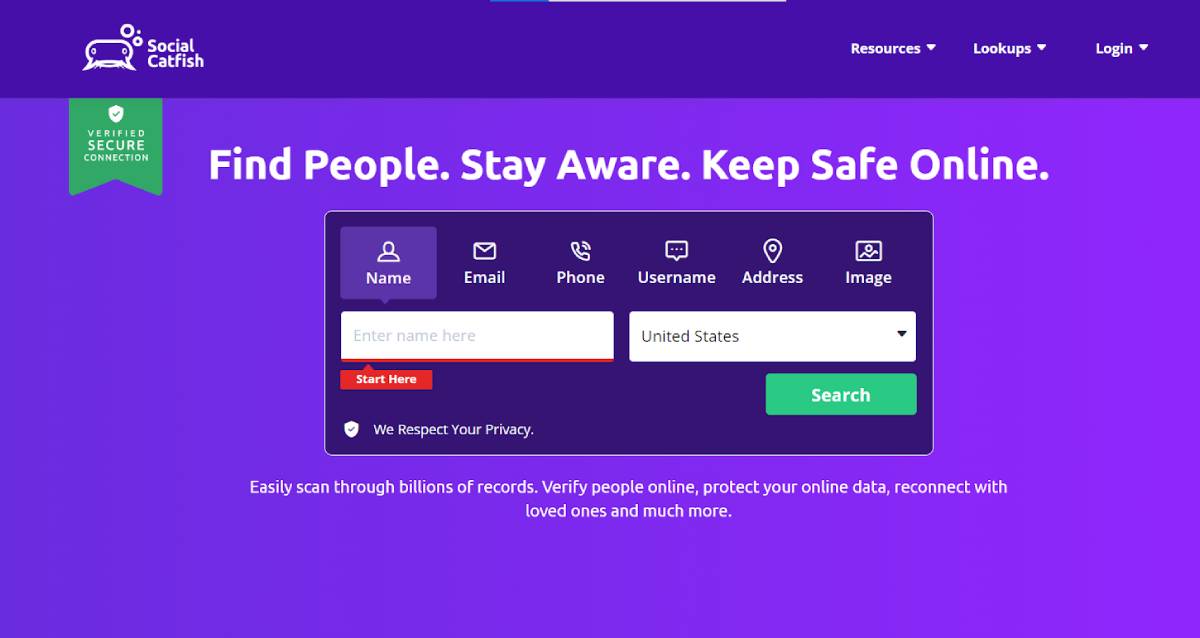
Social Catfish provides reverse image search, email and phone lookup, username tracing, and background checks designed to verify digital identities.

March 4, 2026
|

Online investigation platform Social Catfish is positioning itself at the forefront of digital identity verification as fraud, impersonation, and romance scams surge globally. Its people-search and reverse-lookup tools reflect a growing demand for AI-powered trust solutions across social media, e-commerce, and online marketplaces.

Social Catfish provides reverse image search, email and phone lookup, username tracing, and background checks designed to verify digital identities. The platform targets individuals, businesses, and online daters seeking protection against impersonation and scam activity. Its tools aggregate publicly available data and apply AI-driven matching systems to detect inconsistencies and fraudulent behavior.

The service has grown alongside rising reports of online deception, particularly across social platforms and dating apps. As cybercrime evolves, identity-verification providers are becoming essential stakeholders in digital risk management ecosystems. The company’s offerings highlight how trust-tech solutions are scaling to meet mounting global fraud threats.

The development aligns with a broader surge in digital fraud as online interactions replace in-person transactions. Global e-commerce expansion, remote work adoption, and social media proliferation have created fertile ground for impersonation schemes. Romance scams, identity theft, and synthetic persona fraud have increased in frequency and financial impact, prompting demand for verification tools.

Governments and regulators worldwide are tightening compliance requirements around identity authentication, particularly in fintech, dating platforms, and online marketplaces. At the same time, AI technologies have made both fraud creation and fraud detection more sophisticated. For executives and policymakers, platforms like Social Catfish illustrate how private-sector innovation is filling trust gaps in a rapidly digitizing economy where identity assurance is becoming a core pillar of digital infrastructure.

Cybersecurity analysts note that identity fraud now represents one of the fastest-growing categories of online crime. Experts argue that consumer-facing verification tools serve as an additional defense layer, complementing enterprise-grade cybersecurity systems. Digital risk consultants emphasize that reputation protection and brand trust are increasingly tied to effective fraud mitigation.

Industry observers caution, however, that privacy considerations remain critical, as identity-search services must balance transparency with data protection laws. Spokespersons for Social Catfish emphasize responsible data usage, adherence to compliance frameworks, and continuous system refinement to reduce false positives. Market analysts suggest long-term growth in this sector will depend on regulatory alignment, cross-platform integrations, and public awareness around digital safety practices.

For businesses, identity verification tools reduce exposure to reputational and financial risks associated with impersonation scams. Online marketplaces and dating platforms may increasingly integrate third-party verification services to enhance user safety.

Investors could view trust-tech platforms as high-growth segments within cybersecurity and AI-enabled services. Consumers benefit from improved digital transparency, though privacy concerns must be carefully managed. From a policy standpoint, regulators may expand oversight of identity verification standards while encouraging innovation that strengthens digital trust ecosystems.

Executives should proactively assess fraud prevention strategies as identity assurance becomes central to customer experience and compliance frameworks. As digital interactions intensify, demand for identity verification is expected to grow across sectors. Decision-makers should monitor regulatory shifts, AI advancements in fraud detection, and evolving data privacy standards. Social Catfish’s trajectory underscores a broader structural trend: in the digital economy, trust is no longer optional it is a competitive differentiator and strategic necessity.

Source: Social Catfish
Date: March 4, 2026

  • Featured tools
Writesonic AI
Free

Writesonic AI is a versatile AI writing platform designed for marketers, entrepreneurs, and content creators. It helps users create blog posts, ad copies, product descriptions, social media posts, and more with ease. With advanced AI models and user-friendly tools, Writesonic streamlines content production and saves time for busy professionals.

#
Copywriting
Learn more
Symphony Ayasdi AI
Free

SymphonyAI Sensa is an AI-powered surveillance and financial crime detection platform that surfaces hidden risk behavior through explainable, AI-driven analytics.

#
Finance
Learn more

Learn more about future of AI

Join 80,000+ Ai enthusiast getting weekly updates on exciting AI tools.
Thank you! Your submission has been received!
Oops! Something went wrong while submitting the form.

Social Catfish AI Expands AI-Driven Identity Verification as Fraud Rises

March 4, 2026

Social Catfish provides reverse image search, email and phone lookup, username tracing, and background checks designed to verify digital identities.

Online investigation platform Social Catfish is positioning itself at the forefront of digital identity verification as fraud, impersonation, and romance scams surge globally. Its people-search and reverse-lookup tools reflect a growing demand for AI-powered trust solutions across social media, e-commerce, and online marketplaces.

Social Catfish provides reverse image search, email and phone lookup, username tracing, and background checks designed to verify digital identities. The platform targets individuals, businesses, and online daters seeking protection against impersonation and scam activity. Its tools aggregate publicly available data and apply AI-driven matching systems to detect inconsistencies and fraudulent behavior.

The service has grown alongside rising reports of online deception, particularly across social platforms and dating apps. As cybercrime evolves, identity-verification providers are becoming essential stakeholders in digital risk management ecosystems. The company’s offerings highlight how trust-tech solutions are scaling to meet mounting global fraud threats.

The development aligns with a broader surge in digital fraud as online interactions replace in-person transactions. Global e-commerce expansion, remote work adoption, and social media proliferation have created fertile ground for impersonation schemes. Romance scams, identity theft, and synthetic persona fraud have increased in frequency and financial impact, prompting demand for verification tools.

Governments and regulators worldwide are tightening compliance requirements around identity authentication, particularly in fintech, dating platforms, and online marketplaces. At the same time, AI technologies have made both fraud creation and fraud detection more sophisticated. For executives and policymakers, platforms like Social Catfish illustrate how private-sector innovation is filling trust gaps in a rapidly digitizing economy where identity assurance is becoming a core pillar of digital infrastructure.

Cybersecurity analysts note that identity fraud now represents one of the fastest-growing categories of online crime. Experts argue that consumer-facing verification tools serve as an additional defense layer, complementing enterprise-grade cybersecurity systems. Digital risk consultants emphasize that reputation protection and brand trust are increasingly tied to effective fraud mitigation.

Industry observers caution, however, that privacy considerations remain critical, as identity-search services must balance transparency with data protection laws. Spokespersons for Social Catfish emphasize responsible data usage, adherence to compliance frameworks, and continuous system refinement to reduce false positives. Market analysts suggest long-term growth in this sector will depend on regulatory alignment, cross-platform integrations, and public awareness around digital safety practices.

For businesses, identity verification tools reduce exposure to reputational and financial risks associated with impersonation scams. Online marketplaces and dating platforms may increasingly integrate third-party verification services to enhance user safety.

Investors could view trust-tech platforms as high-growth segments within cybersecurity and AI-enabled services. Consumers benefit from improved digital transparency, though privacy concerns must be carefully managed. From a policy standpoint, regulators may expand oversight of identity verification standards while encouraging innovation that strengthens digital trust ecosystems.

Executives should proactively assess fraud prevention strategies as identity assurance becomes central to customer experience and compliance frameworks. As digital interactions intensify, demand for identity verification is expected to grow across sectors. Decision-makers should monitor regulatory shifts, AI advancements in fraud detection, and evolving data privacy standards. Social Catfish’s trajectory underscores a broader structural trend: in the digital economy, trust is no longer optional it is a competitive differentiator and strategic necessity.

Source: Social Catfish
Date: March 4, 2026

Promote Your Tool

Copy Embed Code

Similar Blogs

March 4, 2026
|

Alibaba Qwen Leadership Exit Signals Strategic AI Reset

The tech lead behind Alibaba’s Qwen large language model project departed after overseeing a major rollout of AI capabilities across the company’s cloud and enterprise ecosystem.
Read more
March 4, 2026
|

OpenAI Revises US Military AI Deal Amid Backlash

The controversy erupted after reports revealed that OpenAI had entered into a partnership framework allowing its models, including ChatGPT, to be used in certain U.S. defense-related projects.
Read more
March 4, 2026
|

Pentagon Anthropic Rift Exposes AI Governance Gaps in Military

A major development unfolded in the U.S. defense technology landscape as a reported dispute between the Pentagon and Anthropic drew attention to the role of generative AI in military operations.
Read more
March 4, 2026
|

Google Unveils Gemini 3.1 Flash-Lite for Enterprise AI

Gemini 3.1 Flash-Lite is positioned as an optimized variant within Google’s Gemini family, engineered for low-latency tasks and large-scale production environments.
Read more
March 4, 2026
|

Anthropic Claude Reportedly Deployed in US Military Operations

A major development unfolded in the defense technology landscape as sources told CBS News that the U.S. military has been using Claude, developed by Anthropic, in operations linked to the Iran conflict.
Read more
March 4, 2026
|

Vidwud Accelerates AI Video Platform in Automation Race

Vidwud offers browser-based AI tools that convert text prompts, scripts, and images into short-form videos with automated editing, transitions, and visual effects.
Read more