
AI Filmmaking Enters Mainstream at Tribeca

The film, reportedly produced with a budget of just $2,000, leverages generative AI tools for scripting, visuals, and post-production workflows.

May 29, 2026
|
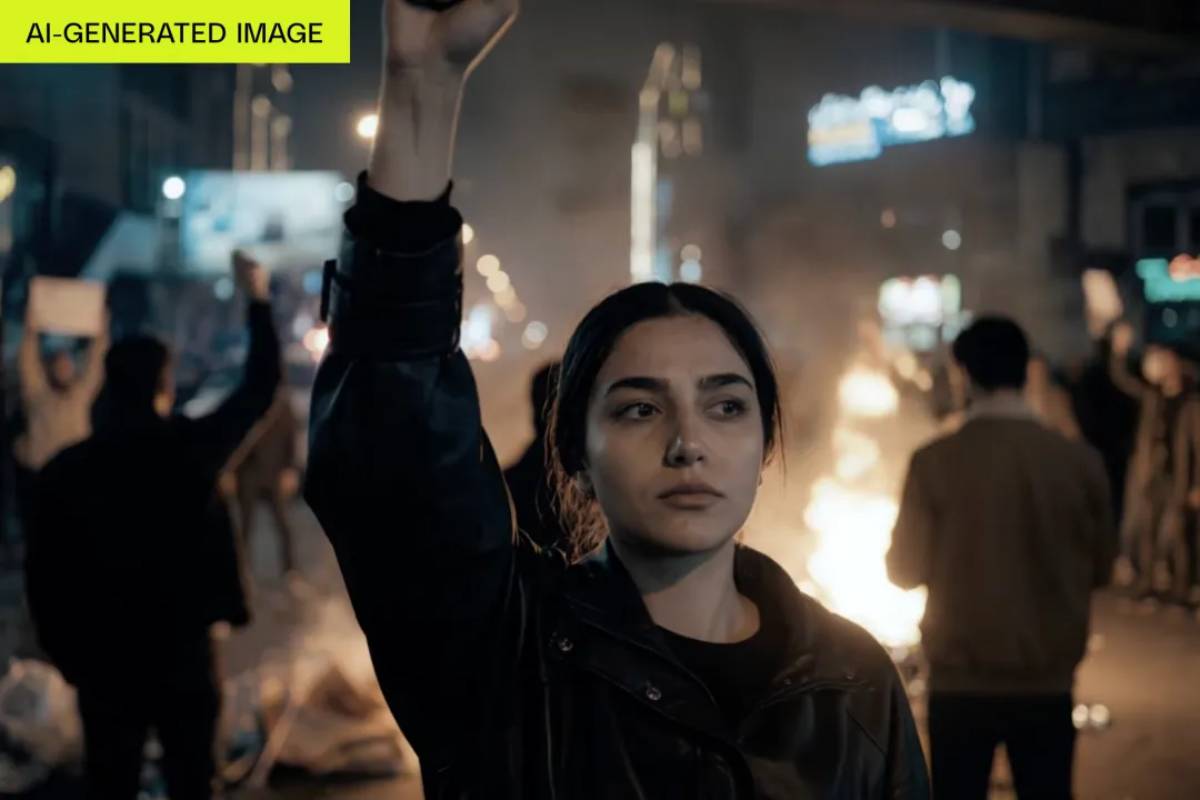
Image Source: The Verge

A $2,000 AI-generated film is set to premiere at the Tribeca Festival, marking a milestone in ultra-low-budget, machine-assisted filmmaking. The debut signals a structural shift in the creative industry, where generative AI tools are rapidly lowering production barriers and reshaping how films are conceived, produced, and financed globally.

The film, reportedly produced with a budget of just $2,000, leverages generative AI tools for scripting, visuals, and post-production workflows. Its selection for Tribeca places AI-assisted storytelling firmly within mainstream cinematic discourse.

Key stakeholders include independent filmmakers, AI tool developers, and festival organizers increasingly open to experimental production formats. The project demonstrates how generative AI can compress traditional production timelines and costs, enabling creators to bypass conventional studio infrastructures. Industry observers note that such projects could disrupt indie film financing models and challenge traditional definitions of authorship and creative labor in entertainment.

The film industry has historically been capital-intensive, with production budgets often serving as a barrier to entry for independent creators. Over the past decade, digital tools have gradually democratized filmmaking, but generative AI represents a far more disruptive leap by automating core creative processes such as scriptwriting, scene generation, and visual effects.

Film festivals like Tribeca have increasingly positioned themselves as platforms for experimental storytelling formats, including virtual production and AI-assisted media. This shift reflects a broader cultural transition where technology-driven creativity is becoming normalized in mainstream artistic institutions.

At the same time, debates around intellectual property, authorship, and artistic authenticity are intensifying. The rise of AI-generated media is forcing the entertainment industry to reconsider long-standing production hierarchies and creative ownership frameworks.

Film scholars and digital media analysts argue that AI-assisted filmmaking represents both an opportunity and a disruption for the entertainment ecosystem. On one hand, it democratizes access, allowing creators without major studio backing to produce visually complex narratives. On the other, it raises questions about originality, credit attribution, and the role of human creativity in storytelling.

Industry commentators suggest that festivals like Tribeca are increasingly serving as testing grounds for new media paradigms, where technological experimentation is as important as narrative quality. While some traditional filmmakers express concern over creative dilution, others view AI as a collaborative tool that expands artistic possibilities rather than replacing human direction.

For the film industry, ultra-low-cost AI production models could disrupt financing structures, reducing reliance on studios and traditional funding pipelines. Streaming platforms and distributors may need to reassess content valuation frameworks if production costs no longer correlate with output complexity.

For investors, the emergence of AI-native media creation tools signals a potential expansion of the creator economy into high-production-value domains. Policymakers may face growing pressure to define copyright ownership in AI-generated works, particularly around training data and creative attribution.

The shift also raises labor market questions for visual effects artists, writers, and production crews as automation expands deeper into creative workflows. The Tribeca debut is likely to accelerate experimentation with AI-native filmmaking across independent studios and digital creators. Future festivals may feature dedicated AI categories as production tools become more widespread. The key uncertainty lies in regulatory and legal frameworks governing authorship and intellectual property, which will ultimately shape how far AI-driven storytelling can scale within mainstream entertainment ecosystems.

Source: The Verge
Date: May 29, 2026

  • Featured tools
Upscayl AI
Free

Upscayl AI is a free, open-source AI-powered tool that enhances and upscales images to higher resolutions. It transforms blurry or low-quality visuals into sharp, detailed versions with ease.

#
Productivity
Learn more
Copy Ai
Free

Copy AI is one of the most popular AI writing tools designed to help professionals create high-quality content quickly. Whether you are a product manager drafting feature descriptions or a marketer creating ad copy, Copy AI can save hours of work while maintaining creativity and tone.

#
Copywriting
Learn more

Learn more about future of AI

Join 80,000+ Ai enthusiast getting weekly updates on exciting AI tools.
Thank you! Your submission has been received!
Oops! Something went wrong while submitting the form.

AI Filmmaking Enters Mainstream at Tribeca

May 29, 2026

The film, reportedly produced with a budget of just $2,000, leverages generative AI tools for scripting, visuals, and post-production workflows.

Image Source: The Verge

A $2,000 AI-generated film is set to premiere at the Tribeca Festival, marking a milestone in ultra-low-budget, machine-assisted filmmaking. The debut signals a structural shift in the creative industry, where generative AI tools are rapidly lowering production barriers and reshaping how films are conceived, produced, and financed globally.

The film, reportedly produced with a budget of just $2,000, leverages generative AI tools for scripting, visuals, and post-production workflows. Its selection for Tribeca places AI-assisted storytelling firmly within mainstream cinematic discourse.

Key stakeholders include independent filmmakers, AI tool developers, and festival organizers increasingly open to experimental production formats. The project demonstrates how generative AI can compress traditional production timelines and costs, enabling creators to bypass conventional studio infrastructures. Industry observers note that such projects could disrupt indie film financing models and challenge traditional definitions of authorship and creative labor in entertainment.

The film industry has historically been capital-intensive, with production budgets often serving as a barrier to entry for independent creators. Over the past decade, digital tools have gradually democratized filmmaking, but generative AI represents a far more disruptive leap by automating core creative processes such as scriptwriting, scene generation, and visual effects.

Film festivals like Tribeca have increasingly positioned themselves as platforms for experimental storytelling formats, including virtual production and AI-assisted media. This shift reflects a broader cultural transition where technology-driven creativity is becoming normalized in mainstream artistic institutions.

At the same time, debates around intellectual property, authorship, and artistic authenticity are intensifying. The rise of AI-generated media is forcing the entertainment industry to reconsider long-standing production hierarchies and creative ownership frameworks.

Film scholars and digital media analysts argue that AI-assisted filmmaking represents both an opportunity and a disruption for the entertainment ecosystem. On one hand, it democratizes access, allowing creators without major studio backing to produce visually complex narratives. On the other, it raises questions about originality, credit attribution, and the role of human creativity in storytelling.

Industry commentators suggest that festivals like Tribeca are increasingly serving as testing grounds for new media paradigms, where technological experimentation is as important as narrative quality. While some traditional filmmakers express concern over creative dilution, others view AI as a collaborative tool that expands artistic possibilities rather than replacing human direction.

For the film industry, ultra-low-cost AI production models could disrupt financing structures, reducing reliance on studios and traditional funding pipelines. Streaming platforms and distributors may need to reassess content valuation frameworks if production costs no longer correlate with output complexity.

For investors, the emergence of AI-native media creation tools signals a potential expansion of the creator economy into high-production-value domains. Policymakers may face growing pressure to define copyright ownership in AI-generated works, particularly around training data and creative attribution.

The shift also raises labor market questions for visual effects artists, writers, and production crews as automation expands deeper into creative workflows. The Tribeca debut is likely to accelerate experimentation with AI-native filmmaking across independent studios and digital creators. Future festivals may feature dedicated AI categories as production tools become more widespread. The key uncertainty lies in regulatory and legal frameworks governing authorship and intellectual property, which will ultimately shape how far AI-driven storytelling can scale within mainstream entertainment ecosystems.

Source: The Verge
Date: May 29, 2026

Promote Your Tool

Copy Embed Code

Similar Blogs

May 29, 2026
|

YouTube AI Personalization Redefines Scrolling

The new AI system introduces customized content feeds that respond to user prompts and behavior, dynamically adjusting recommendations beyond traditional algorithmic ranking.
Read more
May 29, 2026
|

Google Chrome AI Download Raises Questions

Reports indicate that certain Chrome installations may have quietly fetched a substantial AI model in the background as part of new browser capabilities tied to on-device intelligence.
Read more
May 29, 2026
|

Apple iOS 27 Transforms Siri AI Assistant

Apple’s iOS 27 is reportedly set to introduce a deeply upgraded version of Siri, integrating more advanced AI capabilities, improved contextual understanding, and tighter system-level functionality.
Read more
May 29, 2026
|

Affordable AI PCs Emerge Globally

The Snapdragon C processors are aimed at budget-friendly laptops optimized for basic productivity and AI-assisted tasks such as content summarization and lightweight generative applications.
Read more
May 29, 2026
|

Water Ready Drones Signal New Robotics Frontier

The HoverAir Aqua introduces waterproofing capabilities that allow stable flight and operation in wet conditions, including takeoff and landing near water surfaces. Early hands-on demonstrations suggest improvements in stability, automated tracking.
Read more
May 29, 2026
|

AI Filmmaking Enters Mainstream at Tribeca

The film, reportedly produced with a budget of just $2,000, leverages generative AI tools for scripting, visuals, and post-production workflows.
Read more