
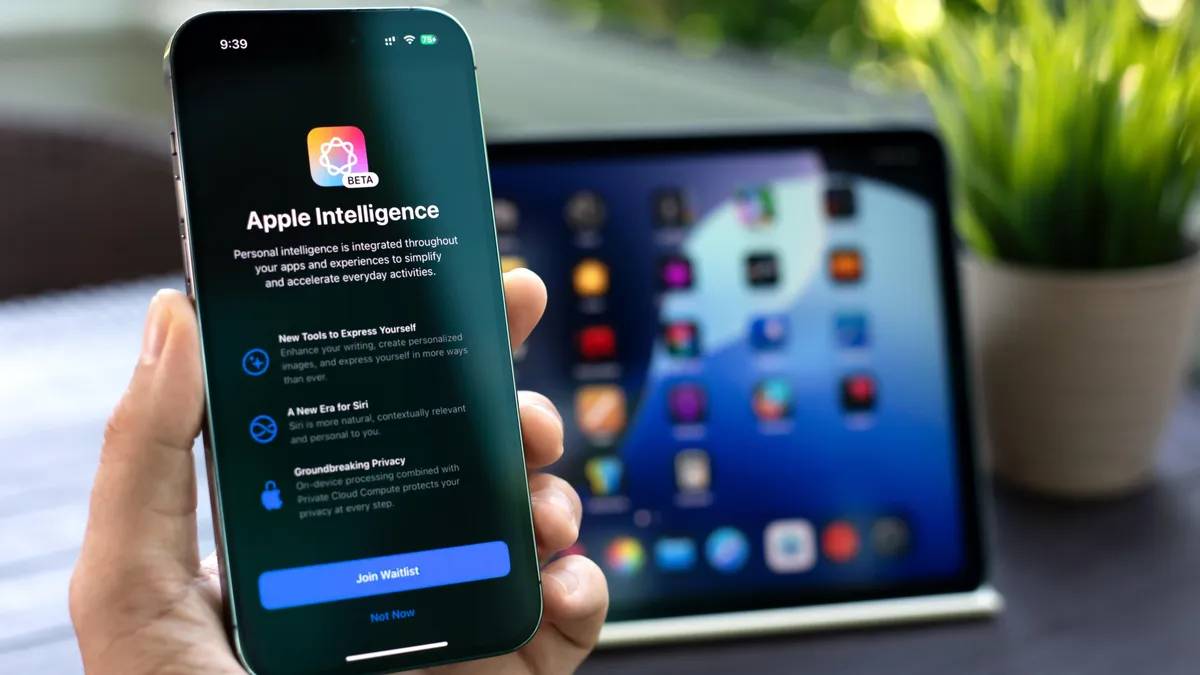
Apple iOS 27 Transforms Siri AI Assistant

Apple’s iOS 27 is reportedly set to introduce a deeply upgraded version of Siri, integrating more advanced AI capabilities, improved contextual understanding, and tighter system-level functionality.

May 29, 2026
|
Image Source: CNET

Apple is preparing a major overhaul of Siri as part of its iOS 27 roadmap, aiming to reposition the assistant as a competitive AI-powered interface in a rapidly evolving mobile ecosystem. The shift underscores intensifying pressure on Apple to match rivals in generative AI, impacting device users, developers, and the broader smartphone market.

Apple’s iOS 27 is reportedly set to introduce a deeply upgraded version of Siri, integrating more advanced AI capabilities, improved contextual understanding, and tighter system-level functionality. The update follows years of criticism over Siri’s lagging performance compared to competitors like Google Assistant and ChatGPT-style models.

The rollout is expected to begin after internal testing phases in late development cycles, with Apple positioning the upgrade as a core pillar of its AI strategy. Key stakeholders include Apple’s software division, third-party app developers, and enterprise users relying on Apple’s ecosystem. The upgrade signals Apple’s intent to defend its premium ecosystem amid accelerating AI competition.

The move comes as the global smartphone industry transitions from app-centric usage to AI-first interaction models. Competitors such as Google and Samsung have already embedded generative AI features across their devices, raising expectations for real-time, context-aware assistants.

Apple has historically taken a slower, more controlled approach to AI deployment, prioritizing privacy and on-device processing. However, the emergence of multimodal AI systems and cloud-based reasoning engines has reshaped consumer expectations.

Siri, once a category-defining innovation, has struggled to maintain relevance in this new landscape. iOS 27 is therefore viewed as a strategic reset rather than a routine upgrade. The development also aligns with broader market dynamics where platform owners are racing to lock users into AI-native ecosystems that extend beyond traditional app frameworks.

Industry analysts suggest Apple’s challenge is not only technical but architectural requiring a shift from rule-based voice commands to large-scale AI reasoning systems. Some experts believe Apple may adopt a hybrid model combining on-device intelligence with secure cloud computation to balance performance and privacy.

Technology strategists note that Apple’s strength lies in ecosystem integration rather than first-mover advantage. “If Apple successfully embeds AI deeply into iOS, it could redefine user interaction across its entire product line,” one analyst observed.

Meanwhile, developer communities are closely watching how Siri’s upgrade may expose new APIs or constraints. Any expansion of Siri’s capabilities could significantly influence third-party app behavior, monetization models, and platform dependency within Apple’s ecosystem.

For enterprises, iOS 27 could reshape mobile-first workflows, particularly in productivity, customer service, and enterprise mobility applications. A more capable Siri may reduce reliance on third-party AI tools while increasing Apple’s control over AI distribution channels.

Investors are likely to interpret the move as a defensive yet necessary step in maintaining Apple’s ecosystem dominance. For developers, tighter AI integration could either unlock new opportunities or increase platform dependency risks.

From a policy perspective, deeper AI integration at the OS level may also intensify regulatory scrutiny around data privacy, model transparency, and platform monopolization. Businesses operating within Apple’s ecosystem may need to reassess long-term digital strategy alignment.

The success of iOS 27 will depend on whether Apple can close the functionality gap with AI-first competitors while preserving its privacy-centric brand positioning. Early developer adoption and user response to Siri’s new capabilities will be critical indicators. If executed effectively, the update could mark Apple’s most significant AI pivot in a decade, reshaping the competitive balance in mobile operating systems.

Source: CNET
Date: May 2026

  • Featured tools
Symphony Ayasdi AI
Free

SymphonyAI Sensa is an AI-powered surveillance and financial crime detection platform that surfaces hidden risk behavior through explainable, AI-driven analytics.

#
Finance
Learn more
Copy Ai
Free

Copy AI is one of the most popular AI writing tools designed to help professionals create high-quality content quickly. Whether you are a product manager drafting feature descriptions or a marketer creating ad copy, Copy AI can save hours of work while maintaining creativity and tone.

#
Copywriting
Learn more

Learn more about future of AI

Join 80,000+ Ai enthusiast getting weekly updates on exciting AI tools.
Thank you! Your submission has been received!
Oops! Something went wrong while submitting the form.

Apple iOS 27 Transforms Siri AI Assistant

May 29, 2026

Apple’s iOS 27 is reportedly set to introduce a deeply upgraded version of Siri, integrating more advanced AI capabilities, improved contextual understanding, and tighter system-level functionality.

Image Source: CNET

Apple is preparing a major overhaul of Siri as part of its iOS 27 roadmap, aiming to reposition the assistant as a competitive AI-powered interface in a rapidly evolving mobile ecosystem. The shift underscores intensifying pressure on Apple to match rivals in generative AI, impacting device users, developers, and the broader smartphone market.

Apple’s iOS 27 is reportedly set to introduce a deeply upgraded version of Siri, integrating more advanced AI capabilities, improved contextual understanding, and tighter system-level functionality. The update follows years of criticism over Siri’s lagging performance compared to competitors like Google Assistant and ChatGPT-style models.

The rollout is expected to begin after internal testing phases in late development cycles, with Apple positioning the upgrade as a core pillar of its AI strategy. Key stakeholders include Apple’s software division, third-party app developers, and enterprise users relying on Apple’s ecosystem. The upgrade signals Apple’s intent to defend its premium ecosystem amid accelerating AI competition.

The move comes as the global smartphone industry transitions from app-centric usage to AI-first interaction models. Competitors such as Google and Samsung have already embedded generative AI features across their devices, raising expectations for real-time, context-aware assistants.

Apple has historically taken a slower, more controlled approach to AI deployment, prioritizing privacy and on-device processing. However, the emergence of multimodal AI systems and cloud-based reasoning engines has reshaped consumer expectations.

Siri, once a category-defining innovation, has struggled to maintain relevance in this new landscape. iOS 27 is therefore viewed as a strategic reset rather than a routine upgrade. The development also aligns with broader market dynamics where platform owners are racing to lock users into AI-native ecosystems that extend beyond traditional app frameworks.

Industry analysts suggest Apple’s challenge is not only technical but architectural requiring a shift from rule-based voice commands to large-scale AI reasoning systems. Some experts believe Apple may adopt a hybrid model combining on-device intelligence with secure cloud computation to balance performance and privacy.

Technology strategists note that Apple’s strength lies in ecosystem integration rather than first-mover advantage. “If Apple successfully embeds AI deeply into iOS, it could redefine user interaction across its entire product line,” one analyst observed.

Meanwhile, developer communities are closely watching how Siri’s upgrade may expose new APIs or constraints. Any expansion of Siri’s capabilities could significantly influence third-party app behavior, monetization models, and platform dependency within Apple’s ecosystem.

For enterprises, iOS 27 could reshape mobile-first workflows, particularly in productivity, customer service, and enterprise mobility applications. A more capable Siri may reduce reliance on third-party AI tools while increasing Apple’s control over AI distribution channels.

Investors are likely to interpret the move as a defensive yet necessary step in maintaining Apple’s ecosystem dominance. For developers, tighter AI integration could either unlock new opportunities or increase platform dependency risks.

From a policy perspective, deeper AI integration at the OS level may also intensify regulatory scrutiny around data privacy, model transparency, and platform monopolization. Businesses operating within Apple’s ecosystem may need to reassess long-term digital strategy alignment.

The success of iOS 27 will depend on whether Apple can close the functionality gap with AI-first competitors while preserving its privacy-centric brand positioning. Early developer adoption and user response to Siri’s new capabilities will be critical indicators. If executed effectively, the update could mark Apple’s most significant AI pivot in a decade, reshaping the competitive balance in mobile operating systems.

Source: CNET
Date: May 2026

Promote Your Tool

Copy Embed Code

Similar Blogs

June 22, 2026
|

Switzerland Tests Digital Sovereignty Limits

The analysis examines Switzerland’s dependence on major global technology providers across cloud computing, productivity software, search infrastructure, and digital communications.
Read more
June 22, 2026
|

Switzerland Faces Larger Emissions Gap

The report indicates that Switzerland’s actual emissions gap defined as the difference between current emission levels and targeted climate reduction pathways may be significantly larger than previously disclosed in official assessments.
Read more
June 22, 2026
|

Switzerland AI Jobs Surge Amid Digital Demand

A new labor market analysis indicates a record level of AI-related job postings and employment growth in Switzerland. Demand spans roles in machine learning engineering, data science.
Read more
June 22, 2026
|

Global Leaders Scrutinize AI Risks

The Geneva counter-summit brought together policymakers, academics, and technology governance experts to evaluate the risks associated with rapidly advancing artificial intelligence systems.
Read more
June 22, 2026
|

AI Reliability Crisis Deepens Amid Errors

The KPMG report, intended to analyze the benefits and risks of artificial intelligence adoption, reportedly included factual inconsistencies attributed to AI-generated content.
Read more
June 22, 2026
|

Skene Raises €800K for Agents

Skene has raised €800,000 in pre-seed funding to advance its AI-driven “code-reading agents” designed to help software products automatically teach users how to use them.
Read more