



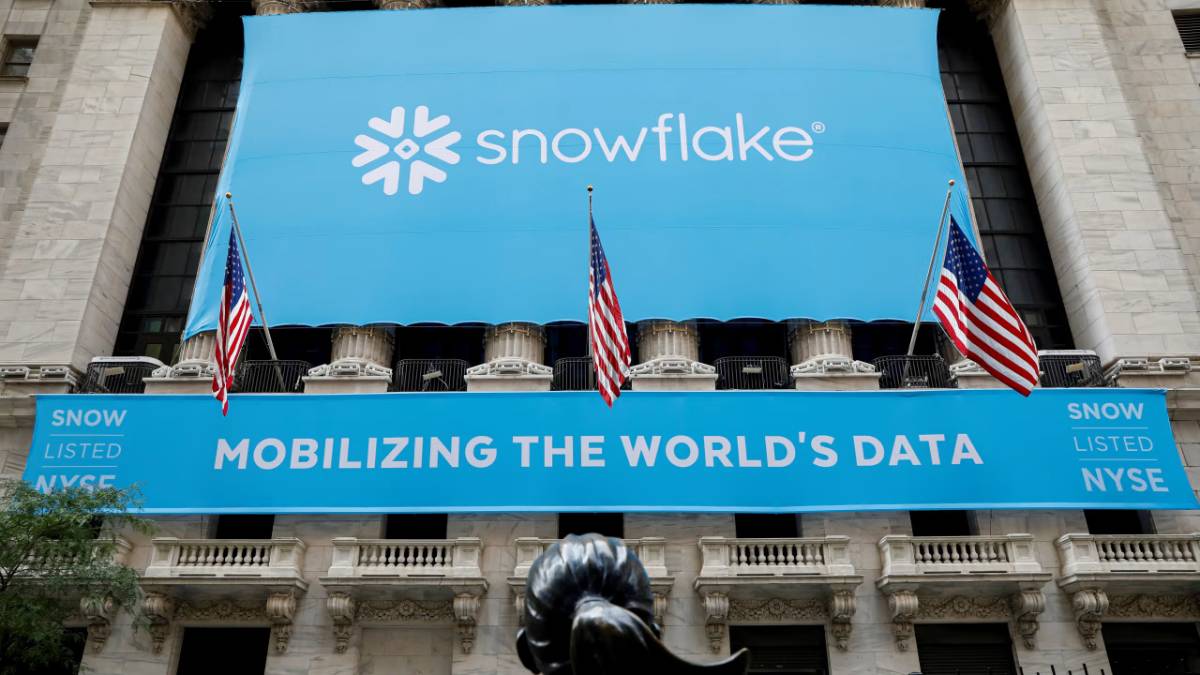
Snowflake reported rising revenue as enterprise adoption of artificial intelligence tools accelerates, reinforcing the strategic role of cloud data platforms in the AI economy. The earnings update signals sustained demand for scalable data infrastructure as businesses expand AI-driven analytics and automation initiatives.
Snowflake posted year-over-year revenue growth, driven by increased customer spending on data storage, analytics, and AI-enabled workloads. The company highlighted expanding adoption of its AI-related services, including tools that allow enterprises to build and deploy machine learning applications directly within its data cloud platform.
Customer growth and net revenue retention rates remained key indicators of platform stickiness. Management emphasized enterprise demand for integrated AI and data solutions, particularly across financial services, retail, and healthcare sectors. Investors closely monitored forward guidance to assess whether AI-driven consumption trends can offset broader macroeconomic uncertainties in IT budgets.
The development aligns with a broader global trend in which data platforms have become foundational infrastructure for AI deployment. Generative AI and advanced analytics require large volumes of structured and unstructured data, making cloud-native data warehouses central to enterprise strategy.
Snowflake has positioned itself as a neutral data layer enabling interoperability across major cloud providers. As AI adoption scales, enterprises increasingly seek unified platforms that combine data management, governance, and AI model integration.
The competitive landscape includes hyperscalers and specialized analytics providers, intensifying the race to embed AI capabilities directly into cloud ecosystems. Historically, cloud revenue growth has correlated with digital transformation cycles. Today, AI expansion represents the next wave of that transformation, elevating the importance of robust data architecture.
Company leadership underscored that AI workloads are driving incremental consumption within existing customer accounts. Industry analysts note that Snowflake’s usage-based pricing model allows it to benefit directly from increased data processing tied to AI experimentation and deployment. Market strategists highlight that strong net revenue retention suggests enterprises are scaling AI initiatives rather than limiting them to pilot programs.
Technology observers caution that competitive pressures from integrated cloud platforms could challenge pricing dynamics over time. However, many analysts view Snowflake’s ecosystem partnerships and cross-cloud compatibility as durable strategic advantages. Overall, expert commentary reflects confidence that AI adoption is reinforcing, rather than cannibalizing, cloud data platform growth.
For enterprise leaders, the results reinforce the necessity of aligning data strategy with AI ambitions. Organizations lacking scalable data infrastructure may struggle to extract value from AI investments.
Investors may interpret Snowflake’s performance as validation of sustained AI-related cloud spending.
From a policy perspective, growing reliance on centralized data platforms raises questions about data sovereignty, compliance, and cybersecurity standards. The convergence of AI and cloud infrastructure also intensifies scrutiny around market concentration in digital ecosystems.
For C-suite executives, data architecture is increasingly a strategic, not merely operational, priority. Markets will focus on Snowflake’s forward guidance and customer expansion trends in upcoming quarters.
Executives should monitor how AI workloads influence cloud consumption patterns and pricing models. Macroeconomic uncertainty remains a variable in enterprise IT budgeting. If AI-driven data consumption continues accelerating, Snowflake could remain a key beneficiary of the next phase of digital transformation across global industries.
Source: The Wall Street Journal
Date: February 26, 2026


