
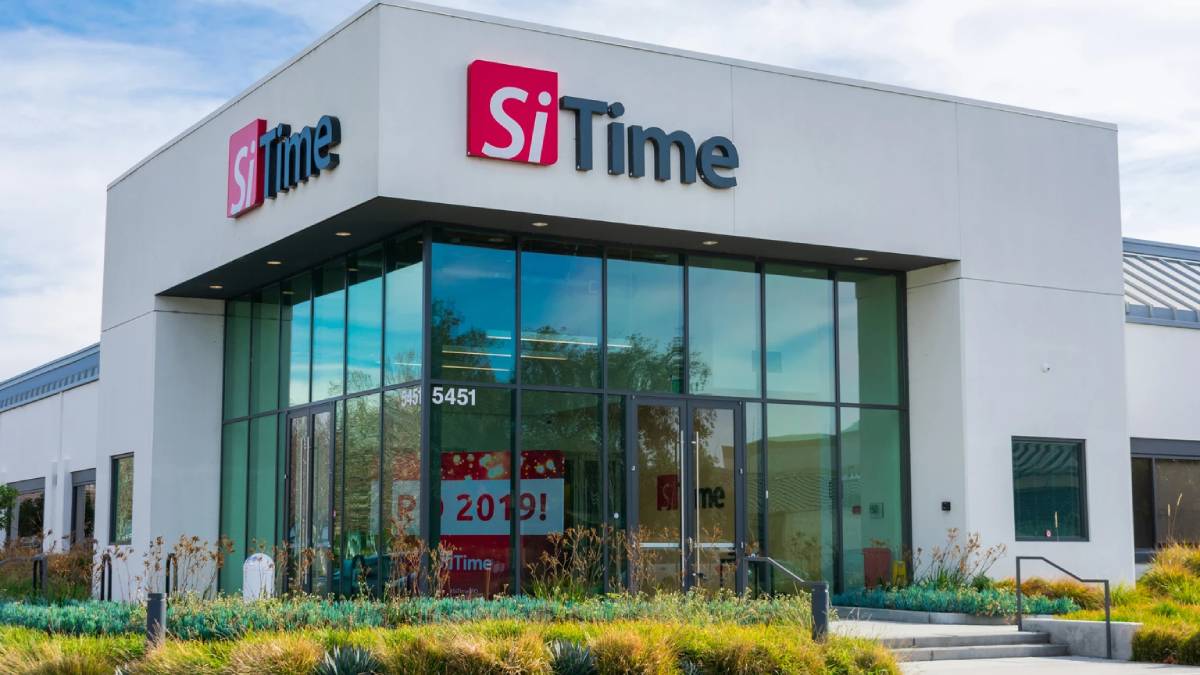
SiTime Bets $2.9 Billion on Precision Timing for AI

SiTime confirmed it will acquire Renesas’ timing assets in a $2.9 billion transaction, significantly expanding its footprint in high-performance clocking and synchronisation solutions.

February 24, 2026
|

A major development unfolded as SiTime announced a $2.9 billion acquisition of Renesas’ timing business, underscoring how critical semiconductor infrastructure is becoming in the AI era. The deal sharpens focus on precision timing an often-overlooked layer powering data centres, AI accelerators, and next-generation digital systems.

SiTime confirmed it will acquire Renesas’ timing assets in a $2.9 billion transaction, significantly expanding its footprint in high-performance clocking and synchronisation solutions. The deal transfers a mature portfolio of timing products, engineering talent, and customer relationships into SiTime’s ecosystem.

The acquisition is strategically aimed at fast-growing AI workloads, where precise timing is essential to synchronise massive data flows across processors, memory, and networks. For Renesas, the divestment reflects a portfolio streamlining effort, while SiTime gains immediate scale and diversification across data centres, automotive, industrial, and communications markets.

The development aligns with a broader trend across global semiconductor markets where foundational technologies are gaining renewed strategic importance due to AI. While GPUs and accelerators dominate headlines, timing and synchronisation components quietly underpin performance, reliability, and energy efficiency in AI systems.

As AI clusters grow larger and more distributed, even nanosecond-level inaccuracies can degrade system performance or increase power consumption. This has elevated precision timing from a niche component to a mission-critical enabler.

Historically, timing solutions were viewed as commoditised. However, the rise of hyperscale data centres, 5G networks, autonomous systems, and AI-driven infrastructure has transformed the category into a high-value segment. SiTime’s move reflects how semiconductor firms are repositioning around infrastructure bottlenecks created by AI’s explosive growth.

Industry analysts view the acquisition as a bold but logical consolidation play. Experts note that AI hardware performance increasingly depends on system-level optimisation, where timing accuracy directly affects throughput and latency.

Market observers suggest SiTime’s analog and MEMS-based timing expertise complements Renesas’ established customer base, creating a more comprehensive platform for advanced computing environments. Analysts also point out that owning timing IP gives suppliers greater pricing power as customers prioritise reliability over cost.

Corporate commentary around the deal has emphasised long-term growth rather than short-term margin impact, signalling confidence that AI-driven demand will absorb integration costs. Industry leaders broadly interpret the move as validation that “invisible” semiconductor layers are becoming strategic assets in the AI value chain.

For technology companies, the deal highlights the need to secure critical infrastructure components as AI systems scale. Enterprises building AI data centres may face tighter supplier ecosystems and higher costs for specialised components like precision timing.

Investors are likely to see the transaction as a signal that second-order AI beneficiaries beyond GPUs offer durable growth opportunities. From a policy perspective, the deal reinforces concerns around semiconductor concentration and supply-chain resilience, particularly as governments push for domestic control over strategic chip technologies tied to national digital infrastructure.

Looking ahead, attention will focus on how quickly SiTime integrates the acquired assets and converts AI demand into sustained revenue growth. Decision-makers will watch customer retention, pricing power, and execution in hyperscale markets. As AI systems become larger and more interconnected, precision timing may emerge as a quiet but decisive battleground in the semiconductor race.

Source: Tech Funding News
Date: February 2026

  • Featured tools
Copy Ai
Free

Copy AI is one of the most popular AI writing tools designed to help professionals create high-quality content quickly. Whether you are a product manager drafting feature descriptions or a marketer creating ad copy, Copy AI can save hours of work while maintaining creativity and tone.

#
Copywriting
Learn more
Murf Ai
Free

Murf AI Review – Advanced AI Voice Generator for Realistic Voiceovers

#
Text to Speech
Learn more

Learn more about future of AI

Join 80,000+ Ai enthusiast getting weekly updates on exciting AI tools.
Thank you! Your submission has been received!
Oops! Something went wrong while submitting the form.

SiTime Bets $2.9 Billion on Precision Timing for AI

February 24, 2026

SiTime confirmed it will acquire Renesas’ timing assets in a $2.9 billion transaction, significantly expanding its footprint in high-performance clocking and synchronisation solutions.

A major development unfolded as SiTime announced a $2.9 billion acquisition of Renesas’ timing business, underscoring how critical semiconductor infrastructure is becoming in the AI era. The deal sharpens focus on precision timing an often-overlooked layer powering data centres, AI accelerators, and next-generation digital systems.

SiTime confirmed it will acquire Renesas’ timing assets in a $2.9 billion transaction, significantly expanding its footprint in high-performance clocking and synchronisation solutions. The deal transfers a mature portfolio of timing products, engineering talent, and customer relationships into SiTime’s ecosystem.

The acquisition is strategically aimed at fast-growing AI workloads, where precise timing is essential to synchronise massive data flows across processors, memory, and networks. For Renesas, the divestment reflects a portfolio streamlining effort, while SiTime gains immediate scale and diversification across data centres, automotive, industrial, and communications markets.

The development aligns with a broader trend across global semiconductor markets where foundational technologies are gaining renewed strategic importance due to AI. While GPUs and accelerators dominate headlines, timing and synchronisation components quietly underpin performance, reliability, and energy efficiency in AI systems.

As AI clusters grow larger and more distributed, even nanosecond-level inaccuracies can degrade system performance or increase power consumption. This has elevated precision timing from a niche component to a mission-critical enabler.

Historically, timing solutions were viewed as commoditised. However, the rise of hyperscale data centres, 5G networks, autonomous systems, and AI-driven infrastructure has transformed the category into a high-value segment. SiTime’s move reflects how semiconductor firms are repositioning around infrastructure bottlenecks created by AI’s explosive growth.

Industry analysts view the acquisition as a bold but logical consolidation play. Experts note that AI hardware performance increasingly depends on system-level optimisation, where timing accuracy directly affects throughput and latency.

Market observers suggest SiTime’s analog and MEMS-based timing expertise complements Renesas’ established customer base, creating a more comprehensive platform for advanced computing environments. Analysts also point out that owning timing IP gives suppliers greater pricing power as customers prioritise reliability over cost.

Corporate commentary around the deal has emphasised long-term growth rather than short-term margin impact, signalling confidence that AI-driven demand will absorb integration costs. Industry leaders broadly interpret the move as validation that “invisible” semiconductor layers are becoming strategic assets in the AI value chain.

For technology companies, the deal highlights the need to secure critical infrastructure components as AI systems scale. Enterprises building AI data centres may face tighter supplier ecosystems and higher costs for specialised components like precision timing.

Investors are likely to see the transaction as a signal that second-order AI beneficiaries beyond GPUs offer durable growth opportunities. From a policy perspective, the deal reinforces concerns around semiconductor concentration and supply-chain resilience, particularly as governments push for domestic control over strategic chip technologies tied to national digital infrastructure.

Looking ahead, attention will focus on how quickly SiTime integrates the acquired assets and converts AI demand into sustained revenue growth. Decision-makers will watch customer retention, pricing power, and execution in hyperscale markets. As AI systems become larger and more interconnected, precision timing may emerge as a quiet but decisive battleground in the semiconductor race.

Source: Tech Funding News
Date: February 2026

Promote Your Tool

Copy Embed Code

Similar Blogs

February 26, 2026
|

Google, Samsung Outpace Apple with Advanced AI Features

Google introduced Gemini-powered AI features on its Pixel series, offering real-time language translation, personalized task management, and proactive suggestions based on user habits.
Read more
February 26, 2026
|

Perplexity Enters Autonomous AI Market, Challenges OpenClaw Agent

Perplexity officially introduced its managed AI agent platform this week, aiming to automate complex computer tasks and streamline enterprise workflows.
Read more
February 26, 2026
|

Micron and Sandisk Face 2026 AI Memory Stock Battle

Micron Technology has reported strong demand for DRAM and high-bandwidth memory, driven by AI server deployments and enterprise computing expansion.
Read more
February 26, 2026
|

AI Music Startups Seek Industry Acceptance After Early Backlash

Several AI music startups are shifting strategies from independent disruption to collaboration with record labels, music publishers, and streaming platforms.
Read more
February 26, 2026
|

Jamie Dimon Calls for Action on AI Job Disruption

During a keynote address, Dimon emphasized that businesses, governments, and educational institutions need proactive strategies to mitigate workforce disruption caused by AI automation.
Read more
February 26, 2026
|

OpenAI Poaches Meta Executive in Escalating AI Talent War

OpenAI recruited a prominent AI models executive who had most recently worked at Meta and earlier headed Apple’s models team. The executive played a significant role in large-scale model development and applied AI systems.
Read more