



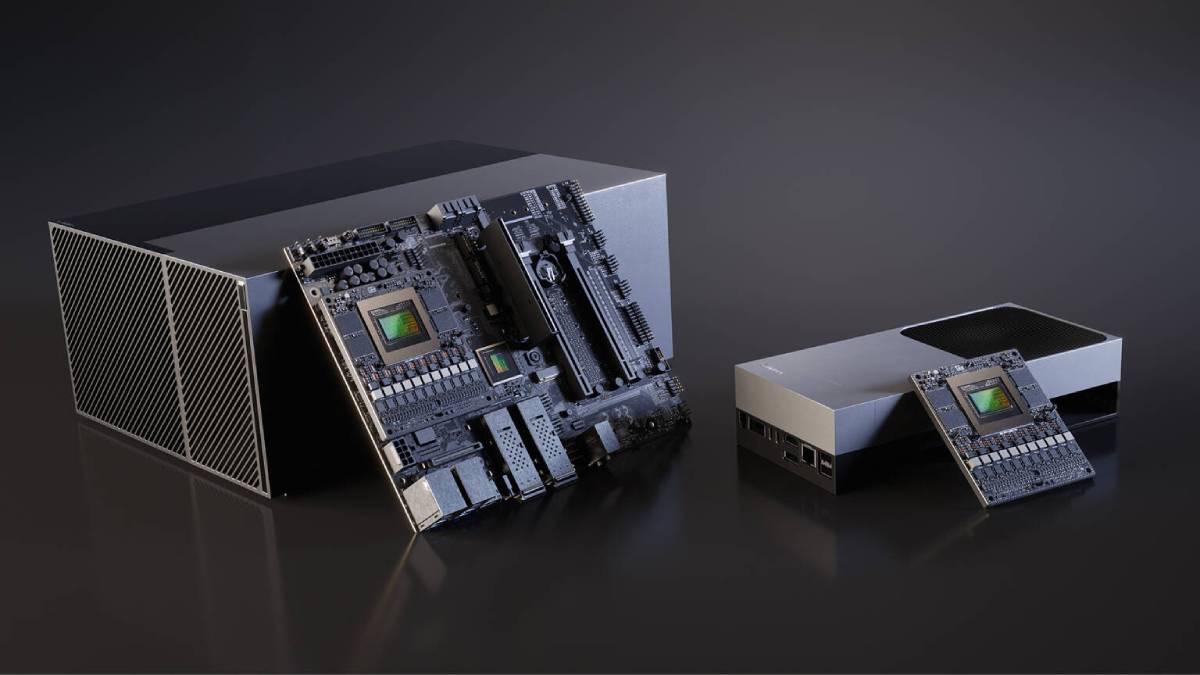
A major development unfolded as Nvidia unveiled its IGX Thor platform, targeting industrial automation, healthcare, and robotics at the edge. The move signals a strategic expansion beyond data centers, with implications for real-time computing, enterprise transformation, and global competition in next-generation intelligent systems.
Nvidia introduced IGX Thor as a high-performance edge computing platform designed for mission-critical environments such as hospitals, factories, and autonomous machines. The platform integrates advanced GPU capabilities with secure, real-time processing to support applications requiring low latency and high reliability. It is aimed at sectors including medical imaging, robotic surgery, industrial inspection, and autonomous robotics.
Nvidia emphasized enterprise-grade safety, cybersecurity, and long lifecycle support, positioning IGX Thor as a foundational layer for edge deployments. The launch reflects growing demand for decentralized computing, where data processing occurs closer to the source rather than in centralized cloud infrastructure.
The development aligns with a broader trend across global markets where edge computing is emerging as a critical complement to cloud-based architectures. As industries digitize operations, the need for real-time decision-making has intensified, particularly in sectors where latency and reliability are mission-critical.
Nvidia has steadily expanded beyond its core data center business into edge and embedded systems, building on platforms like Jetson and IGX. This shift reflects the growing importance of deploying AI capabilities directly within physical environments factories, hospitals, and transportation systems.
Geopolitically, edge computing is also gaining importance as nations prioritize data sovereignty and localized processing. By enabling on-site computation, companies can reduce reliance on cross-border data flows and improve security compliance. Nvidia’s IGX Thor thus positions the company to capture a significant share of this rapidly evolving infrastructure layer.
Industry analysts view Nvidia’s IGX Thor launch as a strategic move to extend its dominance from centralized data centers to distributed computing environments. Experts note that edge AI systems require not only raw performance but also deterministic reliability, safety certifications, and robust security frameworks.
Market observers suggest that Nvidia’s ability to combine hardware acceleration with integrated software ecosystems gives it a competitive edge in regulated industries like healthcare and manufacturing. Corporate leaders in robotics and industrial automation are expected to benefit from standardized platforms that reduce development complexity and deployment timelines.
At the same time, experts caution that adoption may depend on cost structures, interoperability with legacy systems, and regulatory approvals—particularly in medical applications where compliance requirements are stringent.
For global executives, the shift toward edge computing platforms like IGX Thor could redefine operational strategies across manufacturing, healthcare, and logistics. Businesses may increasingly invest in localized infrastructure to enable real-time analytics and automation.
Investors are likely to see expanded revenue opportunities in edge hardware, software integration, and industry-specific solutions. Meanwhile, governments may prioritize policies that support edge deployments to enhance national resilience, cybersecurity, and data governance.
Regulators will also need to address safety and compliance frameworks, especially in sectors where edge AI systems directly interact with humans, such as medical devices and autonomous robotics.
Looking ahead, Nvidia’s success with IGX Thor will depend on enterprise adoption across key industries and its ability to build strong ecosystem partnerships. As edge computing demand accelerates, competition is expected to intensify from both semiconductor firms and specialized hardware providers.
Decision-makers should monitor integration challenges, regulatory developments, and evolving use cases. The next phase of computing will increasingly be defined by how effectively intelligence moves from the cloud to the edge.
Source: Nvidia Developer Blog
Date: March 24, 2026


