
Logitech Redefines Gaming Hybrid Keyboard Innovation

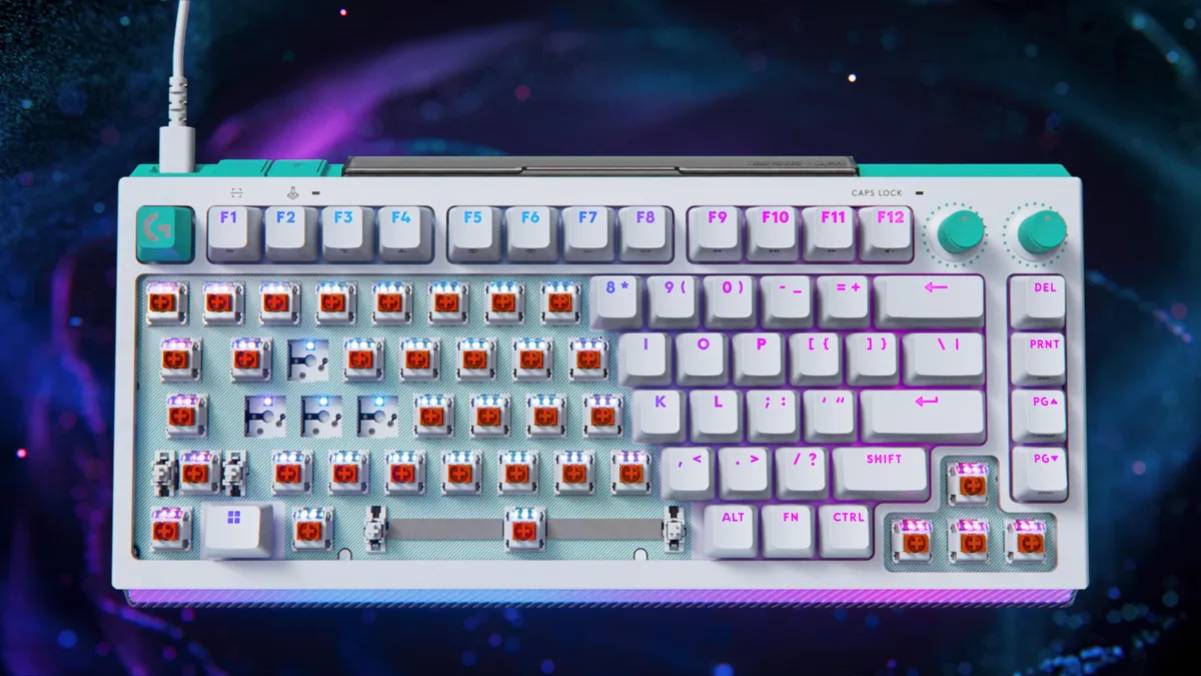
The Logitech G512 X gaming keyboard integrates a hybrid switch architecture combining mechanical responsiveness with analog-level input control.

April 29, 2026
|
Image Source: CNET

A notable shift in gaming peripherals is emerging as Logitech introduces a hybrid input system through its Logitech G512 X. The device blends analog and mechanical switch technologies, signaling a new direction in competitive gaming hardware design with implications for esports performance, user customization, and input precision standards globally.

The Logitech G512 X gaming keyboard integrates a hybrid switch architecture combining mechanical responsiveness with analog-level input control. This allows users to fine-tune actuation sensitivity, enabling more precise in-game movements and customizable response curves.

The product targets competitive gamers and high-performance users who demand low-latency input systems. Logitech continues to expand its G-series lineup as part of a broader strategy to dominate the premium gaming peripherals segment.

Key stakeholders include esports professionals, gaming enthusiasts, and PC hardware manufacturers. The launch reflects increasing competition in advanced input devices, where differentiation is shifting toward adaptability, speed, and software-driven customization rather than purely mechanical improvements.

The development aligns with a broader evolution in gaming hardware, where traditional mechanical keyboards are being enhanced with digital intelligence and analog input capabilities. Over the past decade, esports has transformed gaming peripherals into precision tools, similar to professional-grade sports equipment.

Manufacturers such as Razer and SteelSeries have also invested heavily in customizable switches, latency reduction, and software-controlled input systems. Logitech’s hybrid approach reflects an industry-wide push toward greater control fidelity and user-specific tuning.

Historically, mechanical keyboards dominated due to durability and tactile feedback. However, the rise of competitive gaming and streaming ecosystems has created demand for devices that go beyond fixed input behavior. This shift is also influenced by advancements in sensor technology and firmware-level customization, enabling hardware to adapt dynamically to user behavior and application context.

Industry analysts view hybrid keyboard systems as the next phase in competitive gaming input design, bridging the gap between mechanical reliability and analog precision. Experts suggest that variable actuation could provide measurable advantages in esports titles requiring rapid movement control and nuanced input sensitivity.

Technology commentators note that Logitech’s strategy reflects a broader trend toward software-defined hardware, where performance is increasingly shaped by firmware and companion applications rather than physical components alone.

Esports professionals are expected to evaluate such devices based on competitive advantage, particularly in genres like first-person shooters and racing simulations. Analysts also highlight that widespread adoption will depend on software stability, user learning curves, and standardization across gaming titles. Industry voices emphasize that innovation in peripherals is becoming as important as GPU and CPU advancements in shaping gaming performance.

For businesses, hybrid input devices open new opportunities in the gaming hardware ecosystem, particularly in premium product segmentation and subscription-based customization software. Peripheral manufacturers may increasingly compete on software ecosystems rather than just hardware specifications.

Investors are likely to view this segment as part of the expanding high-margin gaming accessories market, driven by esports growth and creator economy demand. For consumers, these innovations offer greater personalization but may also increase complexity in setup and optimization.

From a policy standpoint, the expansion of high-performance gaming ecosystems raises questions around digital accessibility and standardization, particularly as competitive gaming continues to professionalize globally.

As hybrid input technologies mature, competition among peripheral manufacturers is expected to intensify, with a stronger emphasis on adaptive hardware ecosystems. Decision-makers should monitor adoption rates among esports professionals, as they often influence broader consumer trends.

The next phase of gaming peripherals will likely be defined by deeper integration between hardware responsiveness and software-driven customization, positioning devices like the G512 X at the forefront of this transition.

Source: CNET
Date: April 2026

  • Featured tools
Copy Ai
Free

Copy AI is one of the most popular AI writing tools designed to help professionals create high-quality content quickly. Whether you are a product manager drafting feature descriptions or a marketer creating ad copy, Copy AI can save hours of work while maintaining creativity and tone.

#
Copywriting
Learn more
WellSaid Ai
Free

WellSaid AI is an advanced text-to-speech platform that transforms written text into lifelike, human-quality voiceovers.

#
Text to Speech
Learn more

Learn more about future of AI

Join 80,000+ Ai enthusiast getting weekly updates on exciting AI tools.
Thank you! Your submission has been received!
Oops! Something went wrong while submitting the form.

Logitech Redefines Gaming Hybrid Keyboard Innovation

April 29, 2026

The Logitech G512 X gaming keyboard integrates a hybrid switch architecture combining mechanical responsiveness with analog-level input control.

Image Source: CNET

A notable shift in gaming peripherals is emerging as Logitech introduces a hybrid input system through its Logitech G512 X. The device blends analog and mechanical switch technologies, signaling a new direction in competitive gaming hardware design with implications for esports performance, user customization, and input precision standards globally.

The Logitech G512 X gaming keyboard integrates a hybrid switch architecture combining mechanical responsiveness with analog-level input control. This allows users to fine-tune actuation sensitivity, enabling more precise in-game movements and customizable response curves.

The product targets competitive gamers and high-performance users who demand low-latency input systems. Logitech continues to expand its G-series lineup as part of a broader strategy to dominate the premium gaming peripherals segment.

Key stakeholders include esports professionals, gaming enthusiasts, and PC hardware manufacturers. The launch reflects increasing competition in advanced input devices, where differentiation is shifting toward adaptability, speed, and software-driven customization rather than purely mechanical improvements.

The development aligns with a broader evolution in gaming hardware, where traditional mechanical keyboards are being enhanced with digital intelligence and analog input capabilities. Over the past decade, esports has transformed gaming peripherals into precision tools, similar to professional-grade sports equipment.

Manufacturers such as Razer and SteelSeries have also invested heavily in customizable switches, latency reduction, and software-controlled input systems. Logitech’s hybrid approach reflects an industry-wide push toward greater control fidelity and user-specific tuning.

Historically, mechanical keyboards dominated due to durability and tactile feedback. However, the rise of competitive gaming and streaming ecosystems has created demand for devices that go beyond fixed input behavior. This shift is also influenced by advancements in sensor technology and firmware-level customization, enabling hardware to adapt dynamically to user behavior and application context.

Industry analysts view hybrid keyboard systems as the next phase in competitive gaming input design, bridging the gap between mechanical reliability and analog precision. Experts suggest that variable actuation could provide measurable advantages in esports titles requiring rapid movement control and nuanced input sensitivity.

Technology commentators note that Logitech’s strategy reflects a broader trend toward software-defined hardware, where performance is increasingly shaped by firmware and companion applications rather than physical components alone.

Esports professionals are expected to evaluate such devices based on competitive advantage, particularly in genres like first-person shooters and racing simulations. Analysts also highlight that widespread adoption will depend on software stability, user learning curves, and standardization across gaming titles. Industry voices emphasize that innovation in peripherals is becoming as important as GPU and CPU advancements in shaping gaming performance.

For businesses, hybrid input devices open new opportunities in the gaming hardware ecosystem, particularly in premium product segmentation and subscription-based customization software. Peripheral manufacturers may increasingly compete on software ecosystems rather than just hardware specifications.

Investors are likely to view this segment as part of the expanding high-margin gaming accessories market, driven by esports growth and creator economy demand. For consumers, these innovations offer greater personalization but may also increase complexity in setup and optimization.

From a policy standpoint, the expansion of high-performance gaming ecosystems raises questions around digital accessibility and standardization, particularly as competitive gaming continues to professionalize globally.

As hybrid input technologies mature, competition among peripheral manufacturers is expected to intensify, with a stronger emphasis on adaptive hardware ecosystems. Decision-makers should monitor adoption rates among esports professionals, as they often influence broader consumer trends.

The next phase of gaming peripherals will likely be defined by deeper integration between hardware responsiveness and software-driven customization, positioning devices like the G512 X at the forefront of this transition.

Source: CNET
Date: April 2026

Promote Your Tool

Copy Embed Code

Similar Blogs

June 24, 2026
|

Denmark Launches €7M AI Lab

The Danish government has committed €7 million to establish a national AI Lab focused on accelerating real-world AI adoption.
Read more
June 24, 2026
|

Avrea Emerges With CI/CD Bet

Avrea has raised $4.7 million in pre-seed funding to modernize continuous integration and continuous deployment (CI/CD) systems for environments dominated by AI-generated code.
Read more
June 24, 2026
|

Atech Backs Lovable Hardware Moment

Atech is advocating a new approach to hardware development where AI tools streamline design, prototyping, and iteration cycles.
Read more
June 24, 2026
|

A16z Backs Endra Engineering Automation

Endra’s $50 million Series A round, led by Andreessen Horowitz, marks one of the largest early-stage investments in AI-driven engineering design tools in Europe.
Read more
June 24, 2026
|

Netcompany Expands Smart Airport Play

Netcompany’s acquisition of full control over Smarter Airports marks a strategic expansion into intelligent aviation infrastructure systems. The platform, integrated with AIRHART technology, is already being deployed at major hubs.
Read more
June 24, 2026
|

Swiss VC Market Enters Maturity Phase

The Swiss venture landscape is showing increased exit momentum through acquisitions and secondary sales, indicating healthier liquidity cycles for early-stage investors.
Read more