
Netus AI Launch Sparks Debate Over Detection Evasion

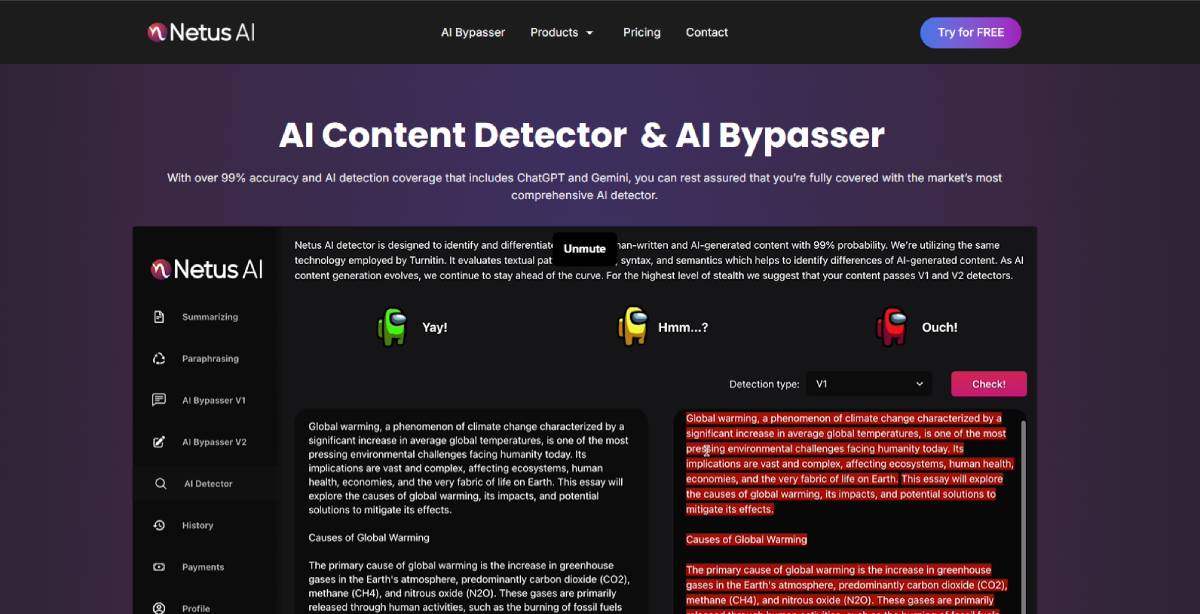
Netus AI positions itself as a platform that rewrites or paraphrases AI-generated text to make it less detectable by automated AI-content detection systems.

March 30, 2026
|

A new development in the generative AI ecosystem is drawing attention as Netus AI introduces an AI-powered paraphrasing and rewriting platform designed to transform machine-generated text into more human-like content. The launch highlights a rapidly intensifying global debate around AI detection tools, authenticity standards, and the future of automated content production.

Netus AI positions itself as a platform that rewrites or paraphrases AI-generated text to make it less detectable by automated AI-content detection systems. The tool offers features including multi-language rewriting, tone adjustments, and automated paraphrasing designed for content creators, marketers, and academic users.

The platform claims its algorithm can significantly modify sentence structures and vocabulary while maintaining the core meaning of original content. This allows users to refine drafts produced by large language models or automated writing tools.

The rise of platforms like Netus AI comes amid growing adoption of generative AI systems such as ChatGPT and Claude, which are increasingly used for research, marketing, and content creation workflows.

The emergence of AI paraphrasing tools reflects a broader technological arms race between generative AI content production and AI detection systems. As companies, universities, and governments seek ways to identify machine-generated content, developers are simultaneously building tools designed to evade or circumvent these detection systems.

Across industries, generative AI adoption has accelerated dramatically since the public launch of models like ChatGPT and enterprise AI platforms developed by companies including OpenAI and Anthropic. This surge has transformed how marketing teams, publishers, and creators produce digital content.

However, it has also raised concerns about authenticity, misinformation, and academic integrity. Educational institutions, for example, increasingly rely on AI-detection software to monitor potential misuse of automated writing tools.

Against this backdrop, AI rewriting platforms such as Netus AI highlight the growing complexity of regulating AI-generated content while maintaining innovation across the global digital economy.

Technology analysts say the emergence of AI bypass tools underscores the fast-evolving dynamics of the generative AI ecosystem. “We are witnessing a classic technology cycle where detection technologies and evasion technologies develop simultaneously,” said a digital governance researcher based in London.

Industry experts note that paraphrasing tools can serve legitimate purposes, including improving clarity, translating ideas, or adapting tone for different audiences. However, they also raise ethical and regulatory questions when used to conceal automated authorship.

A spokesperson for Netus AI indicates that the platform aims to support productivity and creativity by enabling users to refine AI-generated drafts. Meanwhile, policy analysts emphasize that organizations must develop clearer guidelines governing AI-assisted writing, particularly in academic, journalistic, and corporate communications contexts.

For businesses and content creators, AI rewriting tools could significantly streamline editorial workflows by refining machine-generated drafts into polished outputs suitable for publication. Marketing teams, publishers, and freelancers may benefit from improved productivity and content scalability.

However, the technology also introduces reputational and compliance risks for organizations that rely heavily on AI-generated materials. Companies may need transparent disclosure policies and stronger editorial oversight to maintain credibility.

From a regulatory standpoint, policymakers face growing pressure to establish frameworks that balance innovation with accountability. As AI-generated content becomes more widespread, governments and institutions may implement clearer standards around authorship transparency, copyright protection, and digital authenticity.

Looking ahead, the contest between AI detection technologies and AI paraphrasing tools is likely to intensify. Advances in generative AI models and rewriting algorithms will continue to reshape digital publishing, education, and marketing industries.

For executives and policymakers, the challenge will be crafting governance models that encourage innovation while protecting trust in digital information ecosystems. The trajectory of tools like Netus AI may ultimately shape global norms for AI-assisted communication.

Source: Netus AI
Date: March 9, 2026

  • Featured tools
Wonder AI
Free

Wonder AI is a versatile AI-powered creative platform that generates text, images, and audio with minimal input, designed for fast storytelling, visual creation, and audio content generation

#
Art Generator
Learn more
Hostinger Horizons
Freemium

Hostinger Horizons is an AI-powered platform that allows users to build and deploy custom web applications without writing code. It packs hosting, domain management and backend integration into a unified tool for rapid app creation.

#
Startup Tools
#
Coding
#
Project Management
Learn more

Learn more about future of AI

Join 80,000+ Ai enthusiast getting weekly updates on exciting AI tools.
Thank you! Your submission has been received!
Oops! Something went wrong while submitting the form.

Netus AI Launch Sparks Debate Over Detection Evasion

March 30, 2026

Netus AI positions itself as a platform that rewrites or paraphrases AI-generated text to make it less detectable by automated AI-content detection systems.

A new development in the generative AI ecosystem is drawing attention as Netus AI introduces an AI-powered paraphrasing and rewriting platform designed to transform machine-generated text into more human-like content. The launch highlights a rapidly intensifying global debate around AI detection tools, authenticity standards, and the future of automated content production.

Netus AI positions itself as a platform that rewrites or paraphrases AI-generated text to make it less detectable by automated AI-content detection systems. The tool offers features including multi-language rewriting, tone adjustments, and automated paraphrasing designed for content creators, marketers, and academic users.

The platform claims its algorithm can significantly modify sentence structures and vocabulary while maintaining the core meaning of original content. This allows users to refine drafts produced by large language models or automated writing tools.

The rise of platforms like Netus AI comes amid growing adoption of generative AI systems such as ChatGPT and Claude, which are increasingly used for research, marketing, and content creation workflows.

The emergence of AI paraphrasing tools reflects a broader technological arms race between generative AI content production and AI detection systems. As companies, universities, and governments seek ways to identify machine-generated content, developers are simultaneously building tools designed to evade or circumvent these detection systems.

Across industries, generative AI adoption has accelerated dramatically since the public launch of models like ChatGPT and enterprise AI platforms developed by companies including OpenAI and Anthropic. This surge has transformed how marketing teams, publishers, and creators produce digital content.

However, it has also raised concerns about authenticity, misinformation, and academic integrity. Educational institutions, for example, increasingly rely on AI-detection software to monitor potential misuse of automated writing tools.

Against this backdrop, AI rewriting platforms such as Netus AI highlight the growing complexity of regulating AI-generated content while maintaining innovation across the global digital economy.

Technology analysts say the emergence of AI bypass tools underscores the fast-evolving dynamics of the generative AI ecosystem. “We are witnessing a classic technology cycle where detection technologies and evasion technologies develop simultaneously,” said a digital governance researcher based in London.

Industry experts note that paraphrasing tools can serve legitimate purposes, including improving clarity, translating ideas, or adapting tone for different audiences. However, they also raise ethical and regulatory questions when used to conceal automated authorship.

A spokesperson for Netus AI indicates that the platform aims to support productivity and creativity by enabling users to refine AI-generated drafts. Meanwhile, policy analysts emphasize that organizations must develop clearer guidelines governing AI-assisted writing, particularly in academic, journalistic, and corporate communications contexts.

For businesses and content creators, AI rewriting tools could significantly streamline editorial workflows by refining machine-generated drafts into polished outputs suitable for publication. Marketing teams, publishers, and freelancers may benefit from improved productivity and content scalability.

However, the technology also introduces reputational and compliance risks for organizations that rely heavily on AI-generated materials. Companies may need transparent disclosure policies and stronger editorial oversight to maintain credibility.

From a regulatory standpoint, policymakers face growing pressure to establish frameworks that balance innovation with accountability. As AI-generated content becomes more widespread, governments and institutions may implement clearer standards around authorship transparency, copyright protection, and digital authenticity.

Looking ahead, the contest between AI detection technologies and AI paraphrasing tools is likely to intensify. Advances in generative AI models and rewriting algorithms will continue to reshape digital publishing, education, and marketing industries.

For executives and policymakers, the challenge will be crafting governance models that encourage innovation while protecting trust in digital information ecosystems. The trajectory of tools like Netus AI may ultimately shape global norms for AI-assisted communication.

Source: Netus AI
Date: March 9, 2026

Promote Your Tool

Copy Embed Code

Similar Blogs

March 30, 2026
|

Meta Court Setbacks Signal Stricter AI Scrutiny

Meta faced multiple legal losses related to its AI initiatives, particularly around training data usage, algorithmic transparency, and consumer protection obligations. Courts questioned the company’s safeguards, emphasizing risks of bias, privacy violations, and misinformation.
Read more
March 30, 2026
|

Anthropic Pushes Back Against Pentagon Pressure

Anthropic, a leading AI firm, resisted Pentagon pressure to weaken or remove safeguards designed to prevent misuse of its AI systems. The confrontation escalated after Hegseth urged faster deployment of AI capabilities without certain safety constraints.
Read more
March 30, 2026
|

Digital Twin Meets AI in Mining Transformation

MineScape 2026 introduces enhanced capabilities combining AI-powered analytics with digital twin simulations to optimize mine planning and operations.
Read more
March 30, 2026
|

AI Moves Beyond Earth With Space Data Centers

Nvidia has introduced a concept for deploying AI data center hardware in space, leveraging satellite platforms and orbital infrastructure to process data closer to its source. The initiative aligns with rising demand for real-time analytics from Earth observation, telecommunications, and defense sectors.
Read more
March 30, 2026
|

AI Becomes Frontline Defense Against Spam Calls

The development aligns with a broader trend across global markets where AI is being used both to enable and combat digital fraud. Spam calls have become a widespread issue, costing consumers and businesses billions annually.
Read more
March 30, 2026
|

Bluesky Unveils AI Driven Feed Customization

The integration of AI into feed customization represents a convergence of personalization and decentralization. Historically, social media has prioritized engagement metrics over user choice.
Read more