
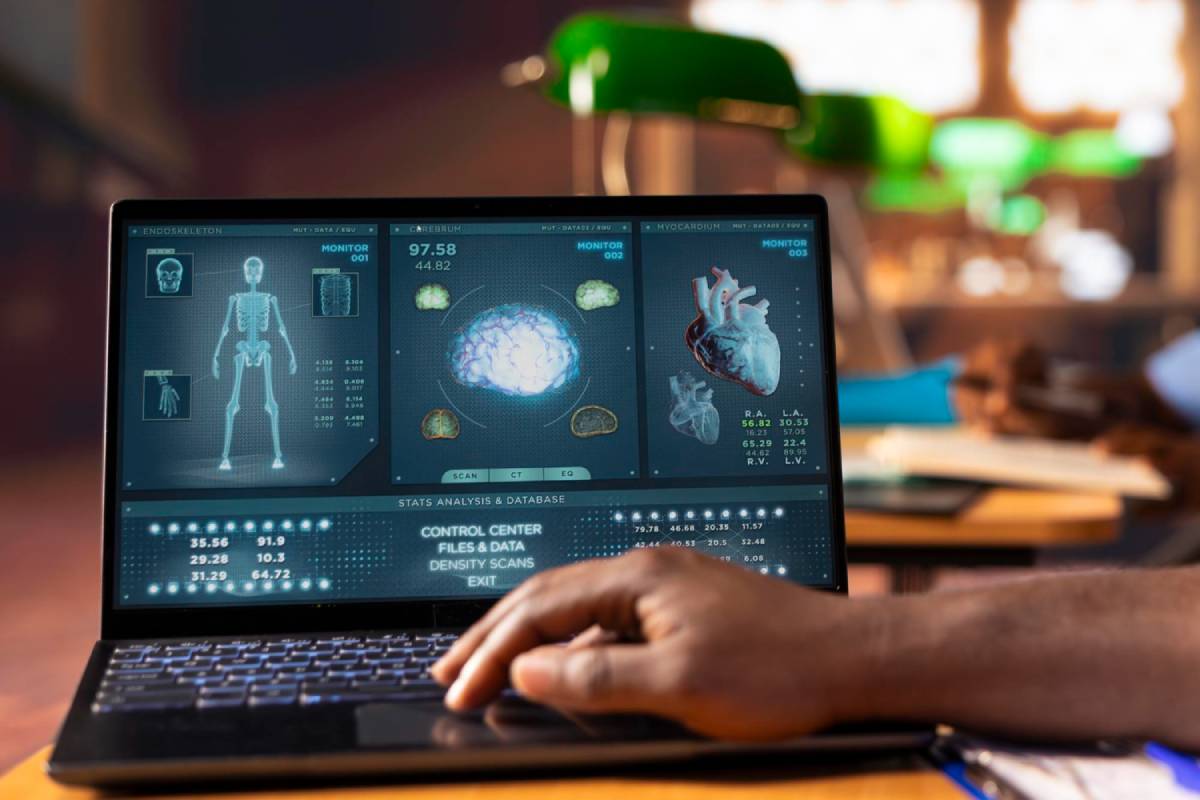
MIT Unveils AI Breakthrough Mapping Critical Brain Pathways

Researchers at MIT introduced a machine-learning algorithm designed to map complex white matter tracts within the brainstem an area historically difficult to analyze due to dense neural structures.

February 24, 2026
|

A major scientific breakthrough has emerged as MIT researchers developed an AI algorithm capable of accurately tracking vital white matter pathways in the brainstem. The innovation could transform neurological diagnostics and surgical planning, with significant implications for healthcare systems, medical technology firms, and global neuroscience research.

Researchers at MIT introduced a machine-learning algorithm designed to map complex white matter tracts within the brainstem an area historically difficult to analyze due to dense neural structures.

The system enhances diffusion MRI imaging, enabling more precise identification of neural pathways linked to motor function, respiration, and other critical biological processes. The research team validated the algorithm using advanced imaging datasets and anatomical benchmarks. The development addresses long-standing limitations in neuroimaging accuracy, particularly in high-risk surgical zones.

The breakthrough could support neurosurgeons, radiologists, and researchers by providing clearer visualizations of pathways that were previously challenging to isolate. The advancement reflects growing convergence between AI and medical imaging technologies.

The development aligns with a broader global push to integrate AI into healthcare diagnostics and imaging. White matter pathways are essential for transmitting signals across different brain regions, and damage to these tracts can lead to severe neurological disorders.

The brainstem, which regulates critical life functions such as breathing and heart rate, has traditionally been one of the most complex regions to study using conventional imaging methods. Inaccurate mapping increases surgical risk and limits treatment precision.

Globally, AI-powered imaging tools are rapidly gaining regulatory approvals and commercial adoption. Health systems facing rising neurological disease burdens—including stroke, Parkinson’s disease, and traumatic brain injuries are investing heavily in advanced diagnostic technologies.

For healthcare executives and investors, the intersection of AI and neuroimaging represents a high-growth frontier within digital health and precision medicine.

Neuroscience experts suggest that improved tractography in the brainstem could significantly reduce surgical complications by enabling better preoperative planning. Medical imaging analysts note that AI’s ability to refine diffusion MRI interpretation marks a pivotal shift from generalized pattern recognition to highly specialized anatomical modeling.

Clinical researchers emphasize that such tools may accelerate research into degenerative disorders by providing clearer structural insights. Industry observers highlight that AI-driven imaging innovations are increasingly attracting venture capital and partnerships between academic institutions and medical device manufacturers.

From a policy standpoint, the integration of AI into critical diagnostic workflows will require clear regulatory standards, particularly concerning validation, bias mitigation, and patient safety. The breakthrough reinforces AI’s role not merely as an automation tool, but as a precision-enhancing instrument in complex medical environments.

For medical technology firms, the ai innovation signals opportunities in next-generation imaging software and AI-enabled diagnostic platforms. Hospitals and health systems may need to reassess capital allocation strategies to integrate advanced AI tools into radiology and neurosurgical departments. Investors tracking digital health markets will view such breakthroughs as catalysts for growth in neurotechnology startups and AI-driven imaging companies.

Regulators will face increased pressure to streamline approval pathways while maintaining rigorous clinical validation standards. For policymakers, the challenge lies in ensuring equitable access to advanced diagnostic tools while safeguarding patient data and maintaining oversight of AI deployment in critical care settings.

The next phase will likely focus on clinical trials, broader validation across patient populations, and potential commercialization partnerships. Adoption will depend on regulatory clearance and integration into hospital imaging workflows. As AI continues to penetrate high-stakes medical domains, precision neuroimaging may become a cornerstone of next-generation neurological care.

Source: MIT News
Date: February 10, 2026

  • Featured tools
Writesonic AI
Free

Writesonic AI is a versatile AI writing platform designed for marketers, entrepreneurs, and content creators. It helps users create blog posts, ad copies, product descriptions, social media posts, and more with ease. With advanced AI models and user-friendly tools, Writesonic streamlines content production and saves time for busy professionals.

#
Copywriting
Learn more
WellSaid Ai
Free

WellSaid AI is an advanced text-to-speech platform that transforms written text into lifelike, human-quality voiceovers.

#
Text to Speech
Learn more

Learn more about future of AI

Join 80,000+ Ai enthusiast getting weekly updates on exciting AI tools.
Thank you! Your submission has been received!
Oops! Something went wrong while submitting the form.

MIT Unveils AI Breakthrough Mapping Critical Brain Pathways

February 24, 2026

Researchers at MIT introduced a machine-learning algorithm designed to map complex white matter tracts within the brainstem an area historically difficult to analyze due to dense neural structures.

A major scientific breakthrough has emerged as MIT researchers developed an AI algorithm capable of accurately tracking vital white matter pathways in the brainstem. The innovation could transform neurological diagnostics and surgical planning, with significant implications for healthcare systems, medical technology firms, and global neuroscience research.

Researchers at MIT introduced a machine-learning algorithm designed to map complex white matter tracts within the brainstem an area historically difficult to analyze due to dense neural structures.

The system enhances diffusion MRI imaging, enabling more precise identification of neural pathways linked to motor function, respiration, and other critical biological processes. The research team validated the algorithm using advanced imaging datasets and anatomical benchmarks. The development addresses long-standing limitations in neuroimaging accuracy, particularly in high-risk surgical zones.

The breakthrough could support neurosurgeons, radiologists, and researchers by providing clearer visualizations of pathways that were previously challenging to isolate. The advancement reflects growing convergence between AI and medical imaging technologies.

The development aligns with a broader global push to integrate AI into healthcare diagnostics and imaging. White matter pathways are essential for transmitting signals across different brain regions, and damage to these tracts can lead to severe neurological disorders.

The brainstem, which regulates critical life functions such as breathing and heart rate, has traditionally been one of the most complex regions to study using conventional imaging methods. Inaccurate mapping increases surgical risk and limits treatment precision.

Globally, AI-powered imaging tools are rapidly gaining regulatory approvals and commercial adoption. Health systems facing rising neurological disease burdens—including stroke, Parkinson’s disease, and traumatic brain injuries are investing heavily in advanced diagnostic technologies.

For healthcare executives and investors, the intersection of AI and neuroimaging represents a high-growth frontier within digital health and precision medicine.

Neuroscience experts suggest that improved tractography in the brainstem could significantly reduce surgical complications by enabling better preoperative planning. Medical imaging analysts note that AI’s ability to refine diffusion MRI interpretation marks a pivotal shift from generalized pattern recognition to highly specialized anatomical modeling.

Clinical researchers emphasize that such tools may accelerate research into degenerative disorders by providing clearer structural insights. Industry observers highlight that AI-driven imaging innovations are increasingly attracting venture capital and partnerships between academic institutions and medical device manufacturers.

From a policy standpoint, the integration of AI into critical diagnostic workflows will require clear regulatory standards, particularly concerning validation, bias mitigation, and patient safety. The breakthrough reinforces AI’s role not merely as an automation tool, but as a precision-enhancing instrument in complex medical environments.

For medical technology firms, the ai innovation signals opportunities in next-generation imaging software and AI-enabled diagnostic platforms. Hospitals and health systems may need to reassess capital allocation strategies to integrate advanced AI tools into radiology and neurosurgical departments. Investors tracking digital health markets will view such breakthroughs as catalysts for growth in neurotechnology startups and AI-driven imaging companies.

Regulators will face increased pressure to streamline approval pathways while maintaining rigorous clinical validation standards. For policymakers, the challenge lies in ensuring equitable access to advanced diagnostic tools while safeguarding patient data and maintaining oversight of AI deployment in critical care settings.

The next phase will likely focus on clinical trials, broader validation across patient populations, and potential commercialization partnerships. Adoption will depend on regulatory clearance and integration into hospital imaging workflows. As AI continues to penetrate high-stakes medical domains, precision neuroimaging may become a cornerstone of next-generation neurological care.

Source: MIT News
Date: February 10, 2026

Promote Your Tool

Copy Embed Code

Similar Blogs

May 8, 2026
|

Google Rebrands Fitbit App Integration

The Fitbit app is being phased into a new identity under Google’s broader health and fitness ecosystem, accompanied by updated features designed to enhance user tracking, analytics.
Read more
May 8, 2026
|

AI Tools Boost Workforce Productivity

AI-powered tools are being widely adopted to streamline everyday work tasks such as scheduling, email drafting, research, and workflow organization.
Read more
May 8, 2026
|

Global Tech Faces RAMageddon Crisis

Technology companies across hardware, cloud computing, and artificial intelligence sectors are reporting rising concerns over a shortage of RAM (random-access memory).
Read more
May 8, 2026
|

Huawei Launches Ultra-Thin Premium Tablet

Huawei has launched its latest premium tablet, positioned as a direct competitor to Apple’s high-end iPad Pro series.
Read more
May 8, 2026
|

Cloudflare AI Shift Cuts Workforce

Cloudflare has announced plans to cut approximately 20% of its workforce, equating to more than 1,100 jobs, as it restructures operations around AI-driven efficiency models.
Read more
May 8, 2026
|

OpenAI Advances Cybersecurity AI Race

OpenAI has reportedly rolled out a new AI model tailored for cybersecurity applications, aimed at strengthening threat detection, vulnerability analysis, and automated defense mechanisms.
Read more