
Microsoft Positions Copilot as Core AI Companion

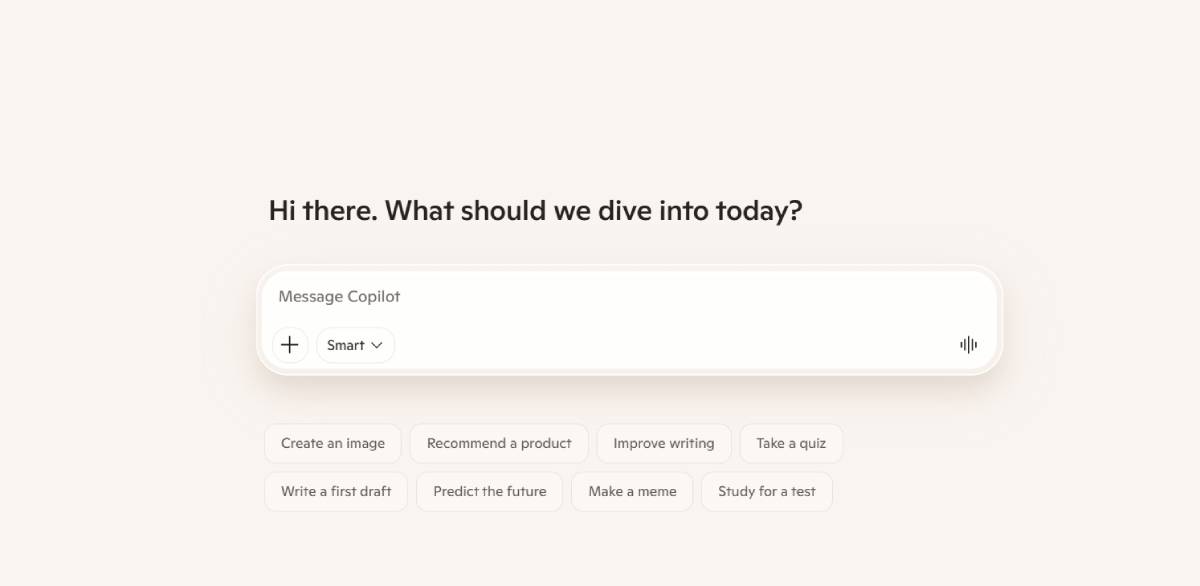
Microsoft Copilot is being positioned as an AI-powered assistant designed to support users across productivity, communication, and enterprise workflows. Integrated across Microsoft’s ecosystem.

April 15, 2026
|

A major development in enterprise artificial intelligence has emerged as Microsoft advances its Copilot platform as a central AI companion across productivity and workflow ecosystems. The initiative signals a strategic shift toward deeply integrated AI assistance, with implications for enterprise productivity, software ecosystems, and global digital transformation strategies.

Microsoft Copilot is being positioned as an AI-powered assistant designed to support users across productivity, communication, and enterprise workflows. Integrated across Microsoft’s ecosystem, including Office tools, cloud services, and developer platforms, Copilot enables natural language-driven task execution.

The platform leverages advanced generative AI models to assist with content creation, data analysis, coding support, and workflow automation. The rollout reflects Microsoft’s broader strategy of embedding AI into every layer of its software stack. The initiative is part of an ongoing expansion of AI-first productivity tools aimed at both individual users and enterprise clients seeking efficiency gains and automation at scale.

The development aligns with a broader global trend where major technology companies are transforming traditional software into AI-native ecosystems. Over the past few years, productivity platforms have shifted from static tools to intelligent systems capable of assisting users in real time.

Microsoft has been at the forefront of this transition, integrating generative AI into widely used enterprise products such as Word, Excel, and Teams. This strategy builds on its partnership and investments in large-scale AI model development.

Historically, productivity software was primarily tool-based, requiring manual input for most tasks. The emergence of generative AI has fundamentally altered this model, enabling systems to proactively assist, suggest, and execute tasks.

This shift is part of a broader enterprise transformation where organizations are increasingly adopting AI to improve efficiency, reduce operational costs, and enhance decision-making processes across departments.

Industry analysts suggest that Microsoft Copilot represents a foundational shift in how enterprises interact with software. Experts note that embedding AI directly into productivity tools could significantly reduce time spent on repetitive tasks while improving decision-making quality.

Technology commentators emphasize that Copilot’s strength lies in its deep integration across enterprise systems, allowing it to access context-rich data and provide more relevant outputs compared to standalone AI tools.

Market observers highlight that AI assistants are becoming a key competitive battleground among major technology firms, with companies such as Google and Apple also expanding their AI ecosystems. Analysts caution, however, that issues such as data security, hallucination risks, and enterprise governance will remain critical challenges. The broader consensus is that AI copilots are transitioning from experimental features to core enterprise infrastructure.

For global executives, Microsoft Copilot signals a shift toward AI-augmented workplaces where routine tasks are increasingly automated. Organizations may need to rethink workforce structures, productivity benchmarks, and digital infrastructure strategies.

Investors are likely to view AI-integrated productivity platforms as long-term growth drivers for enterprise software revenue. Meanwhile, businesses may experience efficiency gains in areas such as documentation, analytics, and communication workflows.

However, policymakers and regulators may increase scrutiny over data privacy, AI decision transparency, and enterprise-level governance frameworks. Ensuring responsible deployment will be critical as AI becomes deeply embedded in workplace systems.

Looking ahead, Microsoft Copilot’s evolution will depend on enterprise adoption, regulatory clarity, and continued model improvements. Decision-makers should monitor integration depth across industries and measurable productivity gains.

As AI becomes central to workplace infrastructure, Copilot and similar systems are expected to redefine how knowledge work is performed, shifting organizations toward more automated, intelligence-driven operational models.

Source: Microsoft Copilot Official Site
Date: April 2026

  • Featured tools
Copy Ai
Free

Copy AI is one of the most popular AI writing tools designed to help professionals create high-quality content quickly. Whether you are a product manager drafting feature descriptions or a marketer creating ad copy, Copy AI can save hours of work while maintaining creativity and tone.

#
Copywriting
Learn more
Wonder AI
Free

Wonder AI is a versatile AI-powered creative platform that generates text, images, and audio with minimal input, designed for fast storytelling, visual creation, and audio content generation

#
Art Generator
Learn more

Learn more about future of AI

Join 80,000+ Ai enthusiast getting weekly updates on exciting AI tools.
Thank you! Your submission has been received!
Oops! Something went wrong while submitting the form.

Microsoft Positions Copilot as Core AI Companion

April 15, 2026

Microsoft Copilot is being positioned as an AI-powered assistant designed to support users across productivity, communication, and enterprise workflows. Integrated across Microsoft’s ecosystem.

A major development in enterprise artificial intelligence has emerged as Microsoft advances its Copilot platform as a central AI companion across productivity and workflow ecosystems. The initiative signals a strategic shift toward deeply integrated AI assistance, with implications for enterprise productivity, software ecosystems, and global digital transformation strategies.

Microsoft Copilot is being positioned as an AI-powered assistant designed to support users across productivity, communication, and enterprise workflows. Integrated across Microsoft’s ecosystem, including Office tools, cloud services, and developer platforms, Copilot enables natural language-driven task execution.

The platform leverages advanced generative AI models to assist with content creation, data analysis, coding support, and workflow automation. The rollout reflects Microsoft’s broader strategy of embedding AI into every layer of its software stack. The initiative is part of an ongoing expansion of AI-first productivity tools aimed at both individual users and enterprise clients seeking efficiency gains and automation at scale.

The development aligns with a broader global trend where major technology companies are transforming traditional software into AI-native ecosystems. Over the past few years, productivity platforms have shifted from static tools to intelligent systems capable of assisting users in real time.

Microsoft has been at the forefront of this transition, integrating generative AI into widely used enterprise products such as Word, Excel, and Teams. This strategy builds on its partnership and investments in large-scale AI model development.

Historically, productivity software was primarily tool-based, requiring manual input for most tasks. The emergence of generative AI has fundamentally altered this model, enabling systems to proactively assist, suggest, and execute tasks.

This shift is part of a broader enterprise transformation where organizations are increasingly adopting AI to improve efficiency, reduce operational costs, and enhance decision-making processes across departments.

Industry analysts suggest that Microsoft Copilot represents a foundational shift in how enterprises interact with software. Experts note that embedding AI directly into productivity tools could significantly reduce time spent on repetitive tasks while improving decision-making quality.

Technology commentators emphasize that Copilot’s strength lies in its deep integration across enterprise systems, allowing it to access context-rich data and provide more relevant outputs compared to standalone AI tools.

Market observers highlight that AI assistants are becoming a key competitive battleground among major technology firms, with companies such as Google and Apple also expanding their AI ecosystems. Analysts caution, however, that issues such as data security, hallucination risks, and enterprise governance will remain critical challenges. The broader consensus is that AI copilots are transitioning from experimental features to core enterprise infrastructure.

For global executives, Microsoft Copilot signals a shift toward AI-augmented workplaces where routine tasks are increasingly automated. Organizations may need to rethink workforce structures, productivity benchmarks, and digital infrastructure strategies.

Investors are likely to view AI-integrated productivity platforms as long-term growth drivers for enterprise software revenue. Meanwhile, businesses may experience efficiency gains in areas such as documentation, analytics, and communication workflows.

However, policymakers and regulators may increase scrutiny over data privacy, AI decision transparency, and enterprise-level governance frameworks. Ensuring responsible deployment will be critical as AI becomes deeply embedded in workplace systems.

Looking ahead, Microsoft Copilot’s evolution will depend on enterprise adoption, regulatory clarity, and continued model improvements. Decision-makers should monitor integration depth across industries and measurable productivity gains.

As AI becomes central to workplace infrastructure, Copilot and similar systems are expected to redefine how knowledge work is performed, shifting organizations toward more automated, intelligence-driven operational models.

Source: Microsoft Copilot Official Site
Date: April 2026

Promote Your Tool

Copy Embed Code

Similar Blogs

April 17, 2026
|

Cybertruck-Style E-Bike Targets Urban Mobility

The newly introduced e-bike, often described as the “Cybertruck of e-bikes,” is designed with a rugged, futuristic aesthetic and enhanced performance capabilities aimed at replacing short car commutes.
Read more
April 17, 2026
|

Casely Reissues Power Bank Recall Over Safety

Casely has officially reannounced a recall of its portable power bank products originally flagged in 2025, following confirmation of a fatality associated with battery malfunction.
Read more
April 17, 2026
|

Telegram Scrutiny Over $21B Crypto Scam

Investigations highlight that Telegram has remained a hosting channel for a sprawling crypto scam ecosystem despite prior sanctions and enforcement actions targeting related entities.
Read more
April 17, 2026
|

Europe Launches Online Age Verification App

European regulators have rolled out a new age verification app designed to help online platforms confirm user eligibility for age-restricted content and services.
Read more
April 17, 2026
|

Meta Raises Quest 3 Prices on Supply Strain

Meta has officially raised prices on its Quest 3 and Quest 3S VR headsets, citing increased memory (RAM) costs amid global supply constraints.
Read more
April 17, 2026
|

Ozlo Sleepbuds See 30% Price Cut

Ozlo Sleepbuds, designed for noise-masking and sleep optimization, are currently being offered at nearly 30% off their standard retail price in a limited-time promotional campaign aligned with Mother’s Day gifting demand.
Read more