
Manufacturing AI Market Accelerates Toward $155 Billion by 2030 as Industrial Leaders Deploy Autonomous Systems to Capture 5% Profit Gains

December 15, 2025
|

The global artificial intelligence in manufacturing market is projected to expand from $34.18 billion in 2025 to $155.04 billion by 2030, reflecting a compound annual growth rate of 35.3% Ainvest. IDC predicts nearly half of manufacturers will be using AI at scale by next year, unlocking up to a 5% boost in profit or revenue Cryptopolitan, as enterprises transition from experimental pilots toward comprehensive deployment of autonomous agents, predictive analytics, and physical AI systems across production environments.

The AI in manufacturing market was valued at $5.32 billion in 2024 and is projected to reach $47.88 billion by 2030 Yahoo Finance according to alternative market assessments, with adoption accelerating across automotive, semiconductor, energy, and heavy machinery sectors. Companies reaching the highest AI maturity levels will see agents work alongside people as trusted digital colleagues, fundamentally changing how factories operate daily Cryptopolitan.

Leading manufacturers including Siemens, Airbus, Sandvik, and Lockheed Martin have deployed AI systems for predictive maintenance, quality optimization, and autonomous production control. Maple Leaf Foods reported a 10-12% gross profit increase by applying advanced analytics to Manufacturing Execution Systems Tekedia, demonstrating tangible returns on AI infrastructure investments despite significant upfront capital requirements.

Research reveals AI introduction frequently leads to measurable but temporary performance decline followed by stronger growth in output, revenue, and employment, following a J-curve trajectory Thriveholdings. This phenomenon helps explain why economic impact has sometimes disappointed despite transformative potential AI systems require investments in data infrastructure, staff training, and workflow redesign, and without those complementary pieces in place, even advanced technologies can underdeliver or create new bottlenecks Thriveholdings.

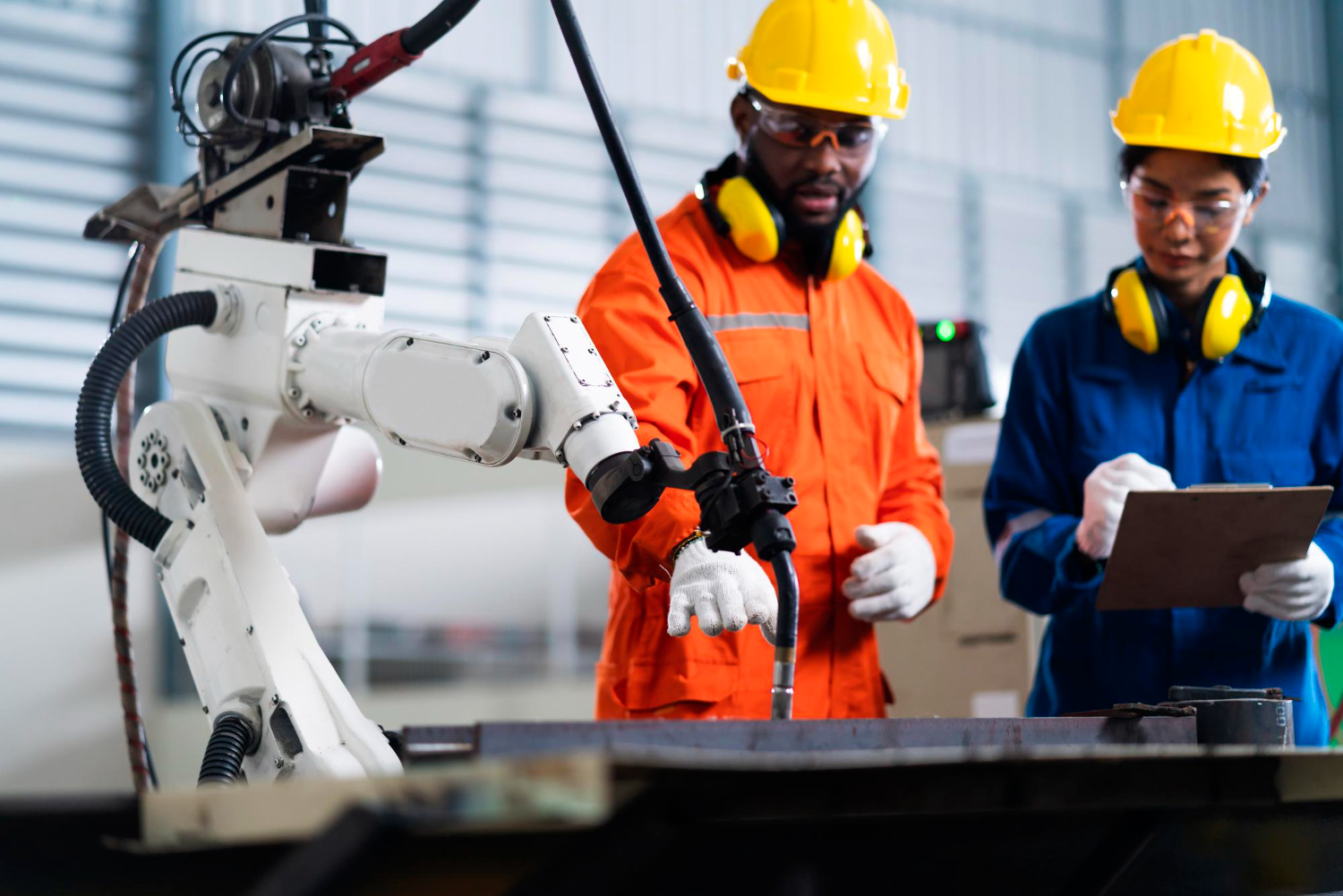
Manufacturers today navigate challenging environments shaped by rising raw material costs, energy prices, wages, workforce shortages, and growing skills gaps, while customer expectations demand more customization, faster delivery, and sustainability OpenAI. Modern AI techniques including image synthesis and machine learning help create innovative designs, improve production techniques, and optimize processes by minimizing repetitive tasks and streamlining operations IT Pro. The evolution toward Industry 5.0 emphasizes human-AI collaboration rather than full automation, addressing concerns about workforce displacement while capturing efficiency gains.

University of Toronto professor Kristina McElheran stated: "AI isn't plug-and-play. It requires systemic change, and that process introduces friction. Once firms work through the adjustment costs, they tend to experience stronger growth" Thriveholdings, highlighting that the initial performance dip is real but temporary for organizations that persist through implementation challenges.

McKinsey's latest survey reveals AI high performers representing about 6% of respondents who attribute EBIT impact of 5% or more to AI use report pushing for transformative innovation via AI, redesigning workflows, and scaling faster while implementing best practices for transformation Artificial Intelligence News. These organizations are nearly three times as likely as others to fundamentally redesign individual workflows rather than pursuing incremental improvements.

Microsoft's research with frontier manufacturing firms demonstrates that companies treating AI as part of how they operate, not just a bolt-on, paired with people working alongside AI agents as trusted digital teammates, consistently outperform competitors

Manufacturing executives face critical governance decisions determining which processes can be delegated to autonomous AI agents, which require human oversight, and which must remain entirely human-controlled. AI must prove its worth in measurable results if it doesn't improve performance, reduce waste, or grow revenue, it's not doing its job Yahoo Finance.

Organizations see biggest returns through fewer production stoppages with smoother workflows, lower maintenance bills with less scrap and smarter energy use, quicker product launches with faster market response, and better defect detection leading to fewer returns and happier customers Yahoo Finance. However, rising upfront infrastructure costs, data privacy concerns from integrating new systems, and shortages of technologically skilled individuals capable of managing AI deployments complicate adoption IT Pro, requiring comprehensive workforce upskilling strategies alongside technology investments.

While AI tools are now commonplace, most organizations have not yet embedded them deeply enough into workflows and processes to realize material enterprise-level benefits, with the transition from pilots to scaled impact remaining a work in progress Artificial Intelligence News. Decision-makers should monitor whether physical AI systems combining robotics, computer vision, and autonomous decision-making deliver sustained competitive advantages, as successful implementations will establish new industry standards for operational excellence. The path forward requires balancing short-term adjustment costs against long-term transformation potential while addressing workforce transition challenges systematically.

Source & Date

Source: Microsoft Industry Blogs, World Economic Forum, McKinsey Global Survey, MIT Sloan Management Review, Fortune Business Insights, MarketsandMarkets
Date: December 2025

  • Featured tools
Hostinger Horizons
Freemium

Hostinger Horizons is an AI-powered platform that allows users to build and deploy custom web applications without writing code. It packs hosting, domain management and backend integration into a unified tool for rapid app creation.

#
Startup Tools
#
Coding
#
Project Management
Learn more
Scalenut AI
Free

Scalenut AI is an all-in-one SEO content platform that combines AI-driven writing, keyword research, competitor insights, and optimization tools to help you plan, create, and rank content.

#
SEO
Learn more

Learn more about future of AI

Join 80,000+ Ai enthusiast getting weekly updates on exciting AI tools.
Thank you! Your submission has been received!
Oops! Something went wrong while submitting the form.

Manufacturing AI Market Accelerates Toward $155 Billion by 2030 as Industrial Leaders Deploy Autonomous Systems to Capture 5% Profit Gains

December 15, 2025

The global artificial intelligence in manufacturing market is projected to expand from $34.18 billion in 2025 to $155.04 billion by 2030, reflecting a compound annual growth rate of 35.3% Ainvest. IDC predicts nearly half of manufacturers will be using AI at scale by next year, unlocking up to a 5% boost in profit or revenue Cryptopolitan, as enterprises transition from experimental pilots toward comprehensive deployment of autonomous agents, predictive analytics, and physical AI systems across production environments.

The AI in manufacturing market was valued at $5.32 billion in 2024 and is projected to reach $47.88 billion by 2030 Yahoo Finance according to alternative market assessments, with adoption accelerating across automotive, semiconductor, energy, and heavy machinery sectors. Companies reaching the highest AI maturity levels will see agents work alongside people as trusted digital colleagues, fundamentally changing how factories operate daily Cryptopolitan.

Leading manufacturers including Siemens, Airbus, Sandvik, and Lockheed Martin have deployed AI systems for predictive maintenance, quality optimization, and autonomous production control. Maple Leaf Foods reported a 10-12% gross profit increase by applying advanced analytics to Manufacturing Execution Systems Tekedia, demonstrating tangible returns on AI infrastructure investments despite significant upfront capital requirements.

Research reveals AI introduction frequently leads to measurable but temporary performance decline followed by stronger growth in output, revenue, and employment, following a J-curve trajectory Thriveholdings. This phenomenon helps explain why economic impact has sometimes disappointed despite transformative potential AI systems require investments in data infrastructure, staff training, and workflow redesign, and without those complementary pieces in place, even advanced technologies can underdeliver or create new bottlenecks Thriveholdings.

Manufacturers today navigate challenging environments shaped by rising raw material costs, energy prices, wages, workforce shortages, and growing skills gaps, while customer expectations demand more customization, faster delivery, and sustainability OpenAI. Modern AI techniques including image synthesis and machine learning help create innovative designs, improve production techniques, and optimize processes by minimizing repetitive tasks and streamlining operations IT Pro. The evolution toward Industry 5.0 emphasizes human-AI collaboration rather than full automation, addressing concerns about workforce displacement while capturing efficiency gains.

University of Toronto professor Kristina McElheran stated: "AI isn't plug-and-play. It requires systemic change, and that process introduces friction. Once firms work through the adjustment costs, they tend to experience stronger growth" Thriveholdings, highlighting that the initial performance dip is real but temporary for organizations that persist through implementation challenges.

McKinsey's latest survey reveals AI high performers representing about 6% of respondents who attribute EBIT impact of 5% or more to AI use report pushing for transformative innovation via AI, redesigning workflows, and scaling faster while implementing best practices for transformation Artificial Intelligence News. These organizations are nearly three times as likely as others to fundamentally redesign individual workflows rather than pursuing incremental improvements.

Microsoft's research with frontier manufacturing firms demonstrates that companies treating AI as part of how they operate, not just a bolt-on, paired with people working alongside AI agents as trusted digital teammates, consistently outperform competitors

Manufacturing executives face critical governance decisions determining which processes can be delegated to autonomous AI agents, which require human oversight, and which must remain entirely human-controlled. AI must prove its worth in measurable results if it doesn't improve performance, reduce waste, or grow revenue, it's not doing its job Yahoo Finance.

Organizations see biggest returns through fewer production stoppages with smoother workflows, lower maintenance bills with less scrap and smarter energy use, quicker product launches with faster market response, and better defect detection leading to fewer returns and happier customers Yahoo Finance. However, rising upfront infrastructure costs, data privacy concerns from integrating new systems, and shortages of technologically skilled individuals capable of managing AI deployments complicate adoption IT Pro, requiring comprehensive workforce upskilling strategies alongside technology investments.

While AI tools are now commonplace, most organizations have not yet embedded them deeply enough into workflows and processes to realize material enterprise-level benefits, with the transition from pilots to scaled impact remaining a work in progress Artificial Intelligence News. Decision-makers should monitor whether physical AI systems combining robotics, computer vision, and autonomous decision-making deliver sustained competitive advantages, as successful implementations will establish new industry standards for operational excellence. The path forward requires balancing short-term adjustment costs against long-term transformation potential while addressing workforce transition challenges systematically.

Source & Date

Source: Microsoft Industry Blogs, World Economic Forum, McKinsey Global Survey, MIT Sloan Management Review, Fortune Business Insights, MarketsandMarkets
Date: December 2025

Promote Your Tool

Copy Embed Code

Similar Blogs

January 2, 2026
|

Top 10 AI‑Driven Marketing Tools Transforming Growth in 2026

Marketing has entered a new era powered by artificial intelligence. From automating repetitive tasks and personalizing campaigns to generating content and uncovering deep audience insights.
Read more
January 2, 2026
|

Top 10 AI Manufacturing Platforms in 2026

Artificial intelligence is transforming manufacturing by enabling predictive maintenance, quality control, supply chain optimization, and autonomous operations. AI platforms help manufacturers boost productivity.
Read more
January 2, 2026
|

Top 10 AI Events You Should Know in 2026

Artificial intelligence is evolving rapidly, and staying ahead requires connecting with experts, exploring new research, and sharing ideas with peers. AI conferences and events are where breakthroughs are announced.
Read more
January 2, 2026
|

Top 10 AI Influencers Shaping the Future of Artificial Intelligence in 2026

Artificial intelligence isn’t just about algorithms and data it’s about the people who drive research, influence policy, and shape how AI is adopted across industries and society.
Read more
January 2, 2026
|

Top 10 Global AI Consulting Firms Leading Digital Transformation in 2026

Artificial intelligence is reshaping industries, from healthcare and finance to manufacturing and retail. Successful AI adoption requires strategic vision, deep technical expertise, and effective change management.
Read more
January 2, 2026
|

Top 10 Customer Service AI Platforms in 2026

Customer expectations are higher than ever. They demand fast, accurate support 24/7 across multiple channels. To meet these demands efficiently, businesses are increasingly relying on AI-powered.
Read more