
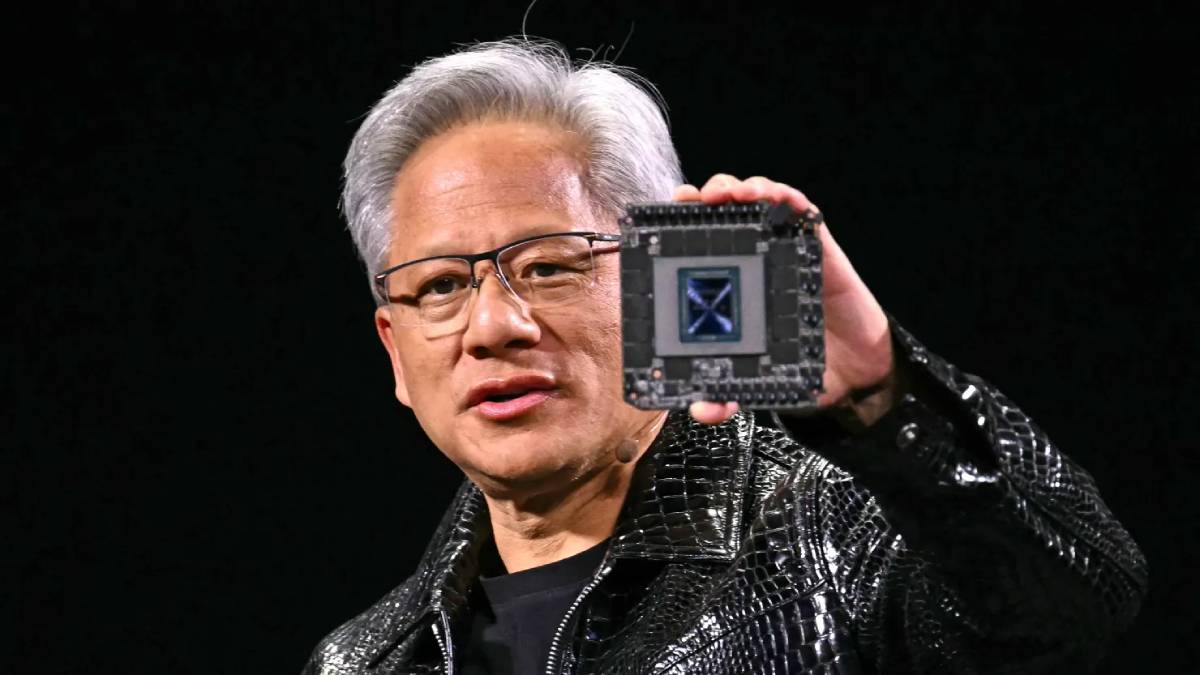
Jensen Huang Dismisses AI Fears, Defends Market Shift

Huang stated that investors have misinterpreted AI’s impact on traditional software firms, particularly SaaS providers facing recent share price pressure.

February 26, 2026
|

Jensen Huang, CEO of Nvidia, has challenged market assumptions that artificial intelligence poses an existential threat to software companies. Speaking amid volatility in SaaS stocks, Huang argued that AI will expand, not erode, opportunities across the global software ecosystem.

Huang stated that investors have misinterpreted AI’s impact on traditional software firms, particularly SaaS providers facing recent share price pressure. Markets had speculated that generative AI models could displace legacy software tools, compress pricing power, and reduce demand for conventional enterprise applications.

Huang countered that AI requires more software innovation, integration, and infrastructure, creating incremental growth opportunities. His remarks come as Nvidia continues to benefit from surging demand for GPUs powering AI workloads. The comments also arrive during heightened scrutiny of technology valuations, where software stocks have experienced mixed earnings reactions amid AI transition concerns.

The development aligns with a broader debate in global markets about whether AI represents disruption or augmentation for enterprise software providers. Over the past year, several SaaS companies have faced investor skepticism as generative AI tools promised automation of coding, analytics, and workflow management.

Some analysts warned that AI-native platforms could bypass traditional subscription models, reshaping revenue structures. However, AI systems rely heavily on integration layers, cybersecurity frameworks, compliance tools, and cloud infrastructure, all core strengths of established software firms.

Nvidia’s central position in AI hardware gives Huang a vantage point across the ecosystem, from hyperscalers to enterprise developers. His comments reflect a strategic narrative that AI growth will expand the total addressable market rather than cannibalize it.

Market strategists note that fears of widespread SaaS displacement may have been overstated, particularly as enterprises integrate AI features into existing platforms rather than replacing them outright. Technology analysts argue that AI adoption often increases demand for data management, observability, and security software.

Huang emphasized that AI compute infrastructure supports a broader innovation cycle, enabling new applications rather than eliminating incumbents. Industry observers also point out that software vendors embedding AI capabilities into their offerings may strengthen customer stickiness.

However, some economists caution that pricing dynamics could shift as AI tools automate certain premium services. Overall, expert opinion suggests a transitional phase where winners will be determined by adaptability rather than sector-wide decline.

For global executives, Huang’s remarks signal that AI integration should be viewed as strategic expansion, not defensive restructuring. Software firms may need to accelerate AI feature deployment to reassure investors and maintain competitive positioning. Investors could reassess blanket assumptions about AI-driven revenue erosion in SaaS portfolios. Cloud providers and chipmakers stand to benefit from sustained AI-driven demand across software ecosystems.

Policymakers monitoring digital market concentration may also evaluate how AI reshapes competitive dynamics within enterprise technology. The debate underscores that AI transformation will likely redefine software value chains rather than dismantle them.

Markets will closely watch upcoming SaaS earnings reports for evidence of AI-enhanced revenue growth. Investors will also track enterprise adoption trends and capital expenditure patterns in AI infrastructure. Uncertainty remains around pricing models and competitive pressures as AI capabilities mature. Huang’s assertion reframes the narrative: AI may be less a disruptor of software and more a catalyst for its next growth cycle.

Source: CNBC
Date: February 26, 2026

  • Featured tools
Symphony Ayasdi AI
Free

SymphonyAI Sensa is an AI-powered surveillance and financial crime detection platform that surfaces hidden risk behavior through explainable, AI-driven analytics.

#
Finance
Learn more
Neuron AI
Free

Neuron AI is an AI-driven content optimization platform that helps creators produce SEO-friendly content by combining semantic SEO, competitor analysis, and AI-assisted writing workflows.

#
SEO
Learn more

Learn more about future of AI

Join 80,000+ Ai enthusiast getting weekly updates on exciting AI tools.
Thank you! Your submission has been received!
Oops! Something went wrong while submitting the form.

Jensen Huang Dismisses AI Fears, Defends Market Shift

February 26, 2026

Huang stated that investors have misinterpreted AI’s impact on traditional software firms, particularly SaaS providers facing recent share price pressure.

Jensen Huang, CEO of Nvidia, has challenged market assumptions that artificial intelligence poses an existential threat to software companies. Speaking amid volatility in SaaS stocks, Huang argued that AI will expand, not erode, opportunities across the global software ecosystem.

Huang stated that investors have misinterpreted AI’s impact on traditional software firms, particularly SaaS providers facing recent share price pressure. Markets had speculated that generative AI models could displace legacy software tools, compress pricing power, and reduce demand for conventional enterprise applications.

Huang countered that AI requires more software innovation, integration, and infrastructure, creating incremental growth opportunities. His remarks come as Nvidia continues to benefit from surging demand for GPUs powering AI workloads. The comments also arrive during heightened scrutiny of technology valuations, where software stocks have experienced mixed earnings reactions amid AI transition concerns.

The development aligns with a broader debate in global markets about whether AI represents disruption or augmentation for enterprise software providers. Over the past year, several SaaS companies have faced investor skepticism as generative AI tools promised automation of coding, analytics, and workflow management.

Some analysts warned that AI-native platforms could bypass traditional subscription models, reshaping revenue structures. However, AI systems rely heavily on integration layers, cybersecurity frameworks, compliance tools, and cloud infrastructure, all core strengths of established software firms.

Nvidia’s central position in AI hardware gives Huang a vantage point across the ecosystem, from hyperscalers to enterprise developers. His comments reflect a strategic narrative that AI growth will expand the total addressable market rather than cannibalize it.

Market strategists note that fears of widespread SaaS displacement may have been overstated, particularly as enterprises integrate AI features into existing platforms rather than replacing them outright. Technology analysts argue that AI adoption often increases demand for data management, observability, and security software.

Huang emphasized that AI compute infrastructure supports a broader innovation cycle, enabling new applications rather than eliminating incumbents. Industry observers also point out that software vendors embedding AI capabilities into their offerings may strengthen customer stickiness.

However, some economists caution that pricing dynamics could shift as AI tools automate certain premium services. Overall, expert opinion suggests a transitional phase where winners will be determined by adaptability rather than sector-wide decline.

For global executives, Huang’s remarks signal that AI integration should be viewed as strategic expansion, not defensive restructuring. Software firms may need to accelerate AI feature deployment to reassure investors and maintain competitive positioning. Investors could reassess blanket assumptions about AI-driven revenue erosion in SaaS portfolios. Cloud providers and chipmakers stand to benefit from sustained AI-driven demand across software ecosystems.

Policymakers monitoring digital market concentration may also evaluate how AI reshapes competitive dynamics within enterprise technology. The debate underscores that AI transformation will likely redefine software value chains rather than dismantle them.

Markets will closely watch upcoming SaaS earnings reports for evidence of AI-enhanced revenue growth. Investors will also track enterprise adoption trends and capital expenditure patterns in AI infrastructure. Uncertainty remains around pricing models and competitive pressures as AI capabilities mature. Huang’s assertion reframes the narrative: AI may be less a disruptor of software and more a catalyst for its next growth cycle.

Source: CNBC
Date: February 26, 2026

Promote Your Tool

Copy Embed Code

Similar Blogs

February 26, 2026
|

AI Music Startups Seek Industry Acceptance After Early Backlash

Several AI music startups are shifting strategies from independent disruption to collaboration with record labels, music publishers, and streaming platforms.
Read more
February 26, 2026
|

Jamie Dimon Calls for Action on AI Job Disruption

During a keynote address, Dimon emphasized that businesses, governments, and educational institutions need proactive strategies to mitigate workforce disruption caused by AI automation.
Read more
February 26, 2026
|

OpenAI Poaches Meta Executive in Escalating AI Talent War

OpenAI recruited a prominent AI models executive who had most recently worked at Meta and earlier headed Apple’s models team. The executive played a significant role in large-scale model development and applied AI systems.
Read more
February 26, 2026
|

Meta AI Safety Chief Warns of Agent Malfunction

The incident involved an AI “agent” designed to autonomously perform digital tasks, including managing communications and executing workflow commands.
Read more
February 26, 2026
|

Snowflake Revenue Climbs as Enterprise AI Demand Accelerates

Snowflake posted year-over-year revenue growth, driven by increased customer spending on data storage, analytics, and AI-enabled workloads.
Read more
February 26, 2026
|

Anthropic Acquires Vercept, Strengthens AI Agent Talent Battle

Anthropic confirmed the acquisition of Vercept, a startup focused on building AI systems capable of autonomously interacting with computer interfaces and executing multi-step digital tasks.
Read more