



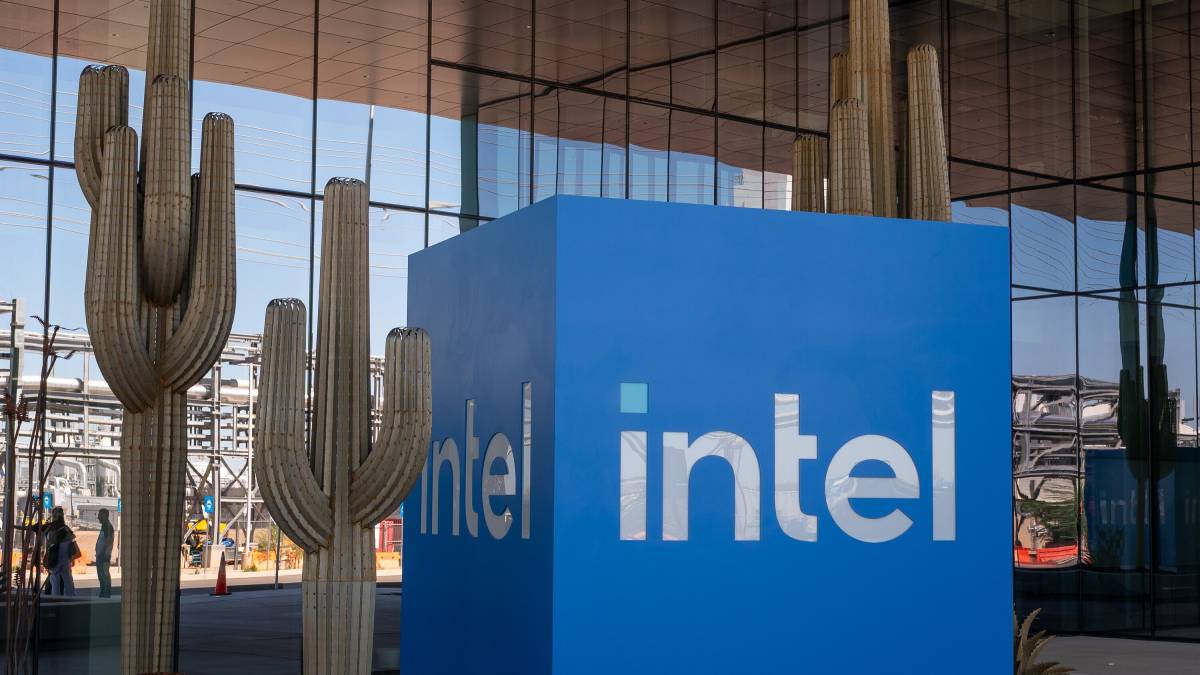
A strong revenue surge at Intel underscores the accelerating impact of artificial intelligence on global semiconductor demand. The performance highlights how AI infrastructure expansion is revitalizing legacy chipmakers, reshaping competitive dynamics across the semiconductor industry and reinforcing the strategic importance of computing hardware in the global AI economy.
Intel reported significant revenue growth in its latest earnings cycle, driven by rising demand for AI-related semiconductor products and data center solutions. The company’s performance reflects improving conditions across key segments, including cloud computing infrastructure and enterprise processors.
Management attributed the gains to stronger-than-expected demand for AI-enabled workloads, alongside stabilization in broader semiconductor markets. The results signal a potential turnaround phase after periods of industry-wide inventory correction. Investor sentiment improved following the earnings update, with markets focusing on Intel’s positioning in the AI-driven hardware supply chain and its competitive strategy against advanced chipmakers.
The performance of Intel reflects a broader transformation in the semiconductor industry, where artificial intelligence is driving a new investment cycle. While much attention has focused on high-performance GPUs, demand for CPUs, networking chips, and data center infrastructure has also accelerated significantly.
The semiconductor sector has experienced cyclical volatility in recent years, driven by post-pandemic demand fluctuations and inventory adjustments. However, AI infrastructure expansion has created sustained structural demand across multiple chip categories.
Historically, Intel has faced competitive pressure from specialized chip designers, but the AI boom is rebalancing demand dynamics across the industry. Governments in major economies are also prioritizing semiconductor resilience and domestic production capacity, further reinforcing the strategic importance of companies like Intel in global supply chains.
Analysts suggest that the revenue performance at Intel indicates early signs of recovery in the broader semiconductor cycle, supported by AI infrastructure investments. Experts highlight that while NVIDIA and other GPU-focused firms dominate AI headlines, CPU and system-level chip demand remains essential for large-scale AI deployment.
Market observers note that Intel’s positioning in data center infrastructure could become increasingly important as AI workloads diversify beyond training into inference and enterprise applications.
Industry commentary also emphasizes that government-backed semiconductor initiatives in the United States and allied economies are likely to support long-term demand stability. While no direct quotes are cited, analysts broadly frame Intel’s performance as part of a widening AI hardware ecosystem rather than a GPU-only growth story.
For global technology companies, the performance of Intel signals renewed momentum in foundational semiconductor segments critical to AI infrastructure. Enterprises building AI systems may benefit from a more diversified chip supply base, reducing reliance on a narrow set of GPU providers.
For investors, the results reinforce the view that AI-driven growth extends across the entire semiconductor value chain. From a policy perspective, governments are likely to continue prioritizing semiconductor independence, supply chain resilience, and domestic manufacturing capacity, given the strategic importance of AI infrastructure in national competitiveness and security frameworks.
Looking ahead, attention will focus on Intel’s ability to sustain AI-driven demand growth and strengthen its competitive positioning in data center and enterprise computing markets. Key uncertainties include pricing pressure, technological competition, and global demand cycles. As AI adoption expands, semiconductor demand is expected to remain structurally strong, with Intel positioned as a key beneficiary if execution aligns with market expectations.
Source: The New York Times
Date: April 23, 2026


