



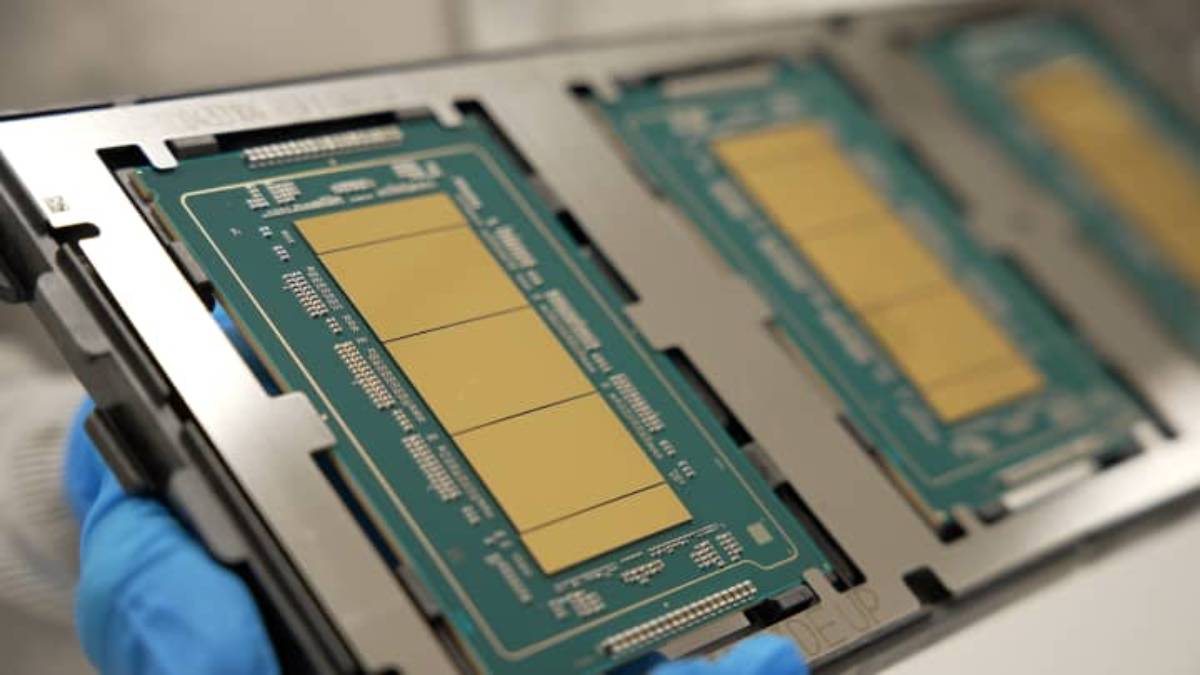
A major development unfolded as Google expanded its partnership with Intel to advance AI chip development, signaling a strategic push to secure computing power amid intensifying global competition. The move carries significant implications for semiconductor supply chains, cloud infrastructure, and enterprise AI adoption worldwide.
Google has strengthened its collaboration with Intel to develop and deploy next-generation AI chips, aimed at enhancing performance for machine learning workloads across its cloud and internal platforms.
The partnership focuses on leveraging Intel’s advanced semiconductor manufacturing capabilities alongside Google’s expertise in AI systems and infrastructure. The expansion comes as demand for AI-optimized chips surges globally, driven by generative AI and large-scale data processing needs.
This move positions Intel to regain relevance in the AI chip market while enabling Google to diversify its hardware ecosystem beyond in-house designs, ensuring greater flexibility and supply resilience in a constrained semiconductor environment.
The deepening alliance between Google and Intel reflects a broader shift in the semiconductor and AI industries, where control over compute infrastructure is becoming a critical competitive advantage. As AI workloads grow increasingly complex, demand for specialized chips particularly GPUs and AI accelerators has outpaced supply.
Historically, major tech companies have relied on a mix of third-party suppliers and proprietary chip designs. Google, for instance, has invested heavily in its Tensor Processing Units (TPUs). However, the scale of AI demand is now pushing companies to adopt hybrid strategies that include partnerships with established semiconductor firms.
Geopolitically, the semiconductor sector has become a focal point of global competition, with governments prioritizing domestic chip production and supply chain resilience. Collaborations like this highlight the strategic importance of aligning technological capabilities with manufacturing scale.
Industry analysts view the expanded partnership between Google and Intel as a calculated move to address both performance and supply chain challenges in AI infrastructure. Experts note that while companies like NVIDIA currently dominate the AI chip market, increasing demand is opening opportunities for alternative players.
Technology strategists suggest that Intel’s involvement could help bridge gaps in capacity and provide more customized solutions for hyperscale clients. For Google, the collaboration enhances its ability to scale AI services while mitigating risks associated with over-reliance on a single vendor.
Market observers also highlight that such partnerships are becoming essential as AI adoption accelerates across industries, requiring sustained investment in both hardware innovation and manufacturing capabilities to meet future demand.
For businesses, the strengthened alliance between Google and Intel signals increased competition and innovation in AI infrastructure, potentially leading to more cost-effective and scalable solutions for enterprises. For investors, the move underscores the strategic importance of semiconductor partnerships in capturing value from the AI boom, particularly as demand for compute resources continues to rise.
From a policy perspective, the deal highlights the growing need for resilient and diversified semiconductor supply chains. Governments may intensify efforts to support domestic chip production and reduce dependency on limited global suppliers.
The partnership between Google and Intel is likely to evolve as AI workloads expand and competition intensifies. Future developments may include deeper integration of custom chips and expanded manufacturing commitments. Decision-makers should monitor how this alliance impacts market dynamics, particularly in challenging the dominance of existing AI chip leaders and addressing ongoing supply constraints.
Source: CNBC
Date: April 10, 2026


