



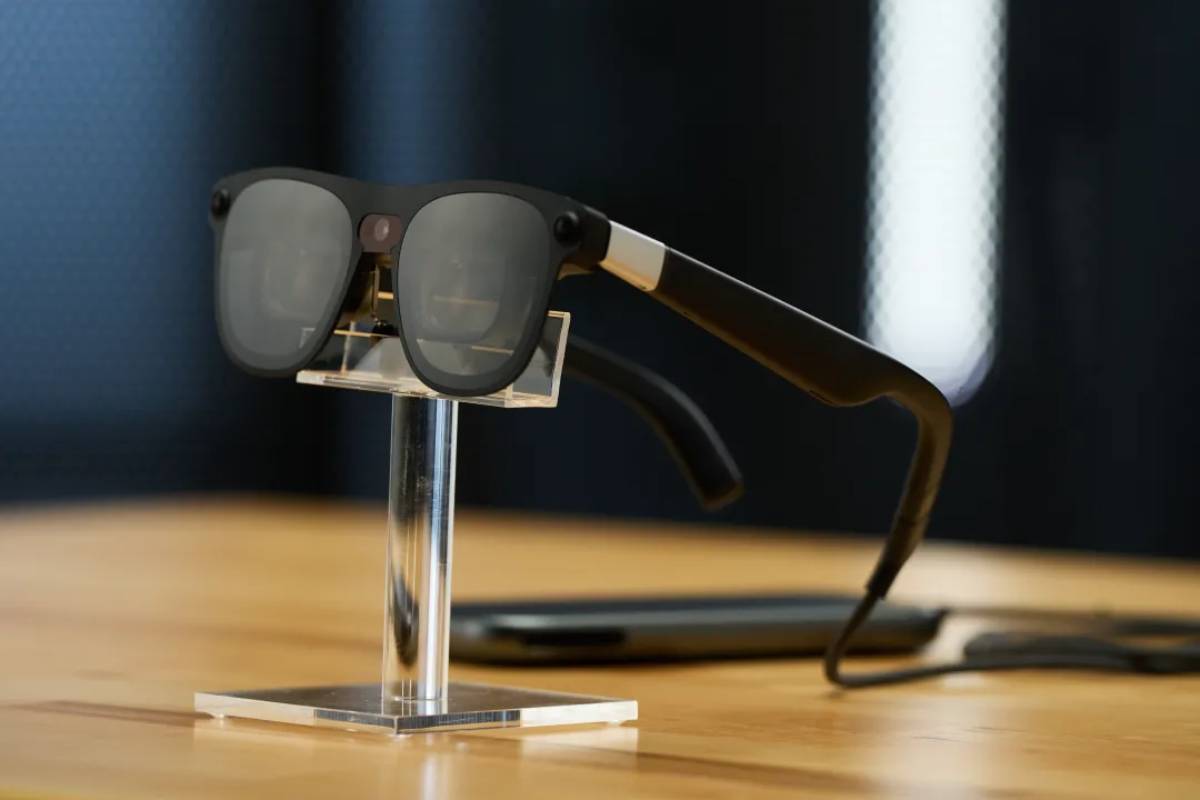
A major development unfolded as Google prepares to launch Gucci-branded smart glasses in partnership with Gucci. The initiative signals a strategic convergence of artificial intelligence, wearable computing, and luxury fashion, with implications for the global consumer tech market and high-end digital lifestyle ecosystems.
The upcoming smart glasses are expected to integrate Google’s AI-powered visual and voice computing capabilities with Gucci’s luxury design aesthetics. The product is slated for release next year, targeting premium consumers seeking fashion-forward wearable technology.
The collaboration expands Google’s broader push into AI-enabled wearables and spatial computing devices, competing in a segment increasingly shaped by augmented reality and contextual AI assistants.
Key stakeholders include fashion industry groups, consumer electronics manufacturers, and AI platform developers. The timing reflects growing investment in AI platforms and tools that merge lifestyle branding with functional computing, signaling a new phase in consumer hardware evolution where design and intelligence converge.
The development aligns with a broader trend across global markets where wearable technology is transitioning from niche experimentation to mainstream luxury adoption. Companies such as Apple and Meta have already invested heavily in augmented reality headsets and AI-integrated wearables.
Historically, wearables were positioned primarily as fitness or productivity tools. However, the emergence of AI frameworks and real-time contextual computing has expanded their role into lifestyle, communication, and immersive digital interaction.
Geopolitically, the race to dominate AI-driven hardware ecosystems is intensifying among US and European technology leaders, with China also advancing rapidly in smart device manufacturing. The Google–Gucci partnership reflects a strategic blending of high fashion and advanced AI platforms, positioning wearable devices as both functional tools and status-driven consumer products in a rapidly evolving digital economy.
Industry analysts suggest the collaboration represents a calculated move to differentiate AI wearables through luxury branding rather than purely technical specifications. Experts argue that design-led differentiation could be critical in a market where hardware capabilities are quickly converging.
Market observers note that consumer appetite for AI-enhanced wearable devices is increasing, particularly as AI tools become embedded in everyday digital interactions such as navigation, communication, and visual search.
However, analysts caution that adoption will depend on balancing aesthetics, battery efficiency, and practical utility. Without compelling everyday use cases, even premium-branded devices may struggle to achieve mass-market penetration.
From a strategic standpoint, the partnership highlights how technology firms are increasingly relying on lifestyle and fashion brands to accelerate consumer acceptance of next-generation AI platforms.
For global executives, the shift could redefine product development strategies across consumer electronics, luxury branding, and AI platform integration. Companies may need to reassess how AI tools are embedded into lifestyle-driven hardware ecosystems.
Investors are likely to view AI wearables as a high-growth frontier, particularly where brand equity and technological innovation intersect. From a policy perspective, the expansion of AI-enabled wearable devices raises questions around data privacy, biometric tracking, and real-time surveillance capabilities. Regulators may increasingly focus on governance frameworks for AI-powered consumer devices.
Consumers, meanwhile, could see a new category of personalized, context-aware digital assistants integrated directly into everyday fashion. Looking ahead, competition in AI wearables is expected to intensify as technology companies deepen partnerships with luxury and lifestyle brands. Decision-makers should watch product usability, consumer adoption rates, and regulatory responses to AI-enabled visual computing.
The success of Google and Gucci’s collaboration will depend on whether AI platforms and tools can seamlessly merge utility with aspirational design.
Source: The Verge
Date: April 16, 2026


