



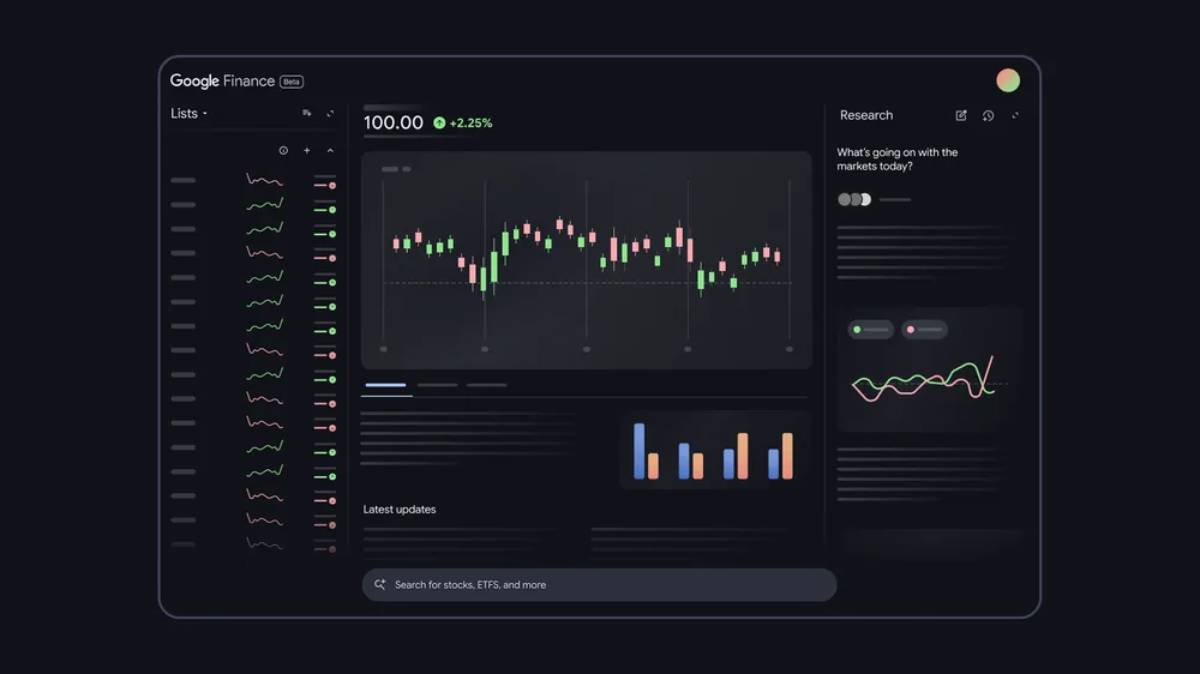
A major development unfolded as Google expanded its AI-powered Google Finance platform to more than 100 countries, signaling a strategic push to democratize financial insights globally. The move has far-reaching implications for investors, businesses, and policymakers navigating increasingly data-driven global markets.
- Google has rolled out its enhanced AI-driven Google Finance platform across 100+ countries.
- The upgrade integrates artificial intelligence to deliver personalized financial insights and curated market news.
- Users can access real-time data, portfolio tracking, and simplified financial analysis tools.
- The expansion targets both developed and emerging markets, broadening access to financial information.
- The initiative reflects Google’s strategy to integrate AI deeper into its core products ecosystem.
- It positions the platform as a competitor to traditional financial data providers and fintech applications.
- The rollout underscores growing demand for accessible, AI-driven financial decision-making tools globally.
The expansion of AI-powered financial platforms marks a significant shift in how individuals and institutions access market intelligence. Traditionally, sophisticated financial tools were limited to institutional investors and high-net-worth individuals. Platforms like Google Finance are changing this paradigm by democratizing access to data and insights.
This development aligns with a broader trend across global markets where artificial intelligence is transforming financial services, from algorithmic trading to personalized investment advice. The rise of fintech and digital platforms has intensified competition, pushing technology companies to innovate rapidly.
Historically, financial information has been fragmented and complex. AI-driven platforms aim to simplify this landscape, making insights more accessible and actionable. However, this shift also raises concerns about data accuracy, algorithmic bias, and the concentration of influence among major technology firms in financial ecosystems.
Industry experts view the expansion as a strategic move by Google to strengthen its position in the financial information ecosystem. “AI is becoming the backbone of modern financial decision-making, and accessibility will define market leaders,” noted a fintech analyst.
The enhanced capabilities of Google Finance are seen as a step toward more intuitive and personalized user experiences. Analysts highlight that such platforms could significantly influence retail investor behavior by simplifying complex financial data.
However, experts also caution that reliance on AI-driven insights requires transparency and accountability. Concerns around data privacy, algorithmic bias, and regulatory oversight remain central to discussions. Industry leaders suggest that collaboration between technology firms and regulators will be essential to ensure trust and stability in AI-powered financial ecosystems.
For global executives, this expansion signals a shift toward AI-driven decision-making in finance. Businesses may increasingly rely on platforms like Google Finance for market insights and strategic planning.
Investors, particularly in emerging markets, stand to benefit from improved access to financial data and tools. This could drive greater participation in global markets.
From a policy perspective, regulators may need to address challenges related to data governance, market influence, and consumer protection. As technology firms expand their role in financial ecosystems, ensuring transparency and fair competition will be critical for maintaining market integrity.
Decision-makers should monitor how AI-driven financial platforms reshape investor behavior and market dynamics. Future developments may include deeper personalization, integration with other financial services, and enhanced predictive analytics.
Key uncertainties include regulatory responses, data privacy concerns, and competitive pressures from fintech players. As AI continues to transform finance, platforms like Google Finance will play a pivotal role in shaping the future of global market intelligence.
Source: Google Blog
Date: April 9, 2026


