
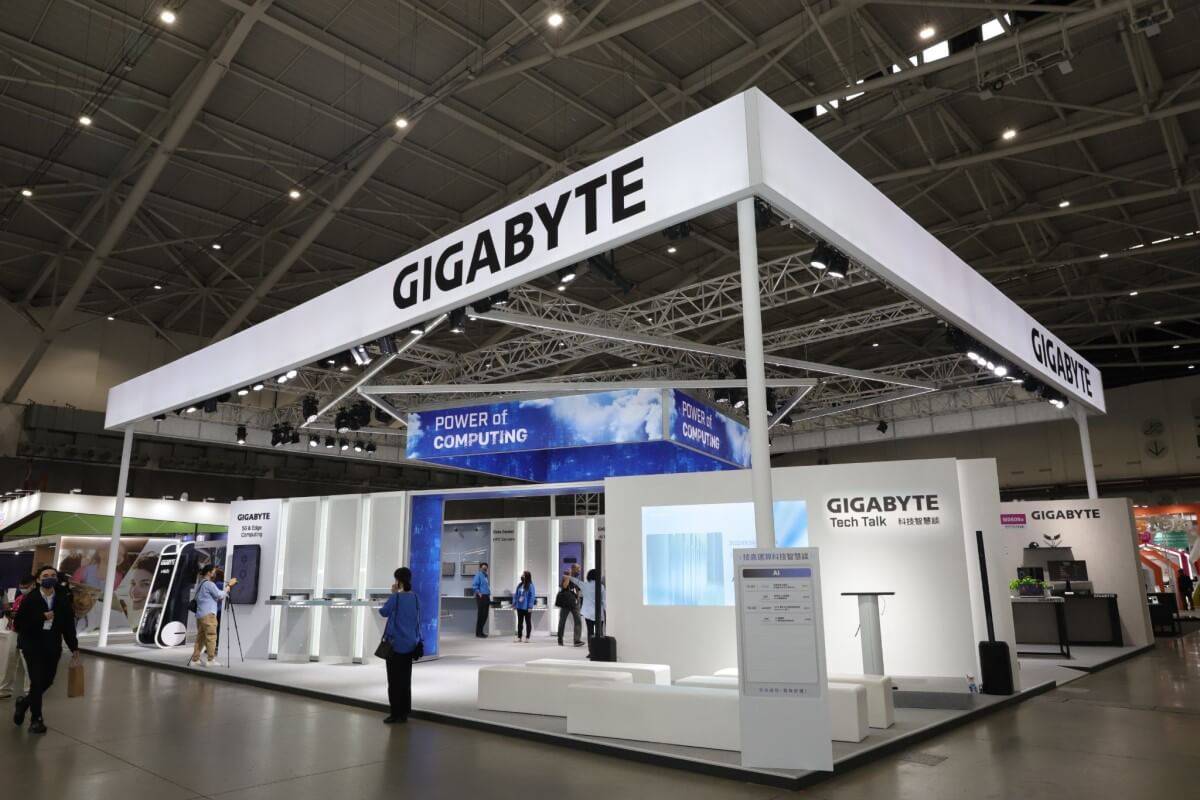
GIGABYTE Debuts End-to-End AI Infrastructure at MWC 2026

At MWC 2026, GIGABYTE showcased a comprehensive portfolio spanning AI servers, edge computing platforms, liquid cooling systems, and high-density GPU architectures designed specifically for telecom workloads.

March 2, 2026
|

A major infrastructure push unfolded at Mobile World Congress 2026 as GIGABYTE introduced end-to-end AI solutions tailored for telecom operators. The move underscores accelerating convergence between telecommunications and AI-driven data infrastructure, signaling strategic shifts in network modernization and enterprise-grade edge computing.

At MWC 2026, GIGABYTE showcased a comprehensive portfolio spanning AI servers, edge computing platforms, liquid cooling systems, and high-density GPU architectures designed specifically for telecom workloads. The solutions target AI-enabled network optimization, real-time analytics, and 5G/6G infrastructure scalability.

The company emphasized integrated infrastructure capable of supporting large-scale AI training and inference at both centralized data centers and edge nodes. Telecom providers face mounting pressure to manage exploding data volumes while reducing latency and energy consumption factors that make AI-ready infrastructure a strategic necessity. The unveiling positions GIGABYTE as a systems-level enabler rather than solely a hardware vendor.

The development aligns with a broader transformation in which telecom operators evolve into AI-powered digital service platforms. As 5G networks mature and early 6G research accelerates, carriers are investing heavily in edge intelligence, automation, and predictive network management. AI is increasingly embedded into radio access networks (RAN), traffic orchestration, and cybersecurity layers.

Simultaneously, hyperscalers and chipmakers are competing to supply AI-optimized infrastructure to telecom firms seeking vertical integration. Energy efficiency has emerged as a defining constraint. AI workloads demand high compute density, intensifying the importance of advanced cooling technologies and modular server design. For global markets, the telecom-AI convergence represents a multi-billion-dollar infrastructure cycle, reshaping capital expenditure strategies across regions. Executives are now balancing performance scaling with sustainability mandates and regulatory compliance requirements.

Industry analysts suggest telecom operators are shifting from incremental upgrades toward comprehensive AI-native network architectures. GIGABYTE’s integrated approach combining hardware acceleration, optimized server racks, and cooling innovations may resonate with carriers seeking turnkey deployments.

Market observers note that infrastructure vendors capable of delivering modular, scalable AI ecosystems could gain an edge over single-component providers. Telecom strategists argue that AI-driven network optimization can reduce operational costs, improve spectrum utilization, and enhance service reliability. However, experts caution that capital intensity remains high, and return on investment depends on successful monetization of AI-enabled services. The broader competitive landscape now includes hardware firms, cloud providers, and semiconductor giants vying for telecom partnerships.

For telecom executives, AI-ready infrastructure is transitioning from experimental deployment to strategic imperative. Investors may view integrated AI solutions as catalysts for renewed capital expenditure cycles within the telecom sector. Governments promoting digital sovereignty could support domestic telecom-AI integration to strengthen national infrastructure resilience. Regulators may also intensify oversight of data governance and AI-driven network automation.

For enterprises relying on telecom backbones ranging from IoT ecosystems to smart cities the shift promises enhanced reliability and lower latency services. The infrastructure race is increasingly tied to both economic competitiveness and digital sovereignty objectives.

As telecom operators evaluate AI deployment roadmaps, partnerships with infrastructure providers like GIGABYTE may accelerate. The next phase will hinge on real-world implementation metrics, energy efficiency gains, and service monetization outcomes. At MWC 2026, the message was clear: telecom modernization is no longer just about connectivity it is about compute intelligence embedded across the network fabric.

Source: Yahoo Finance
Date: March 2, 2026

  • Featured tools
Symphony Ayasdi AI
Free

SymphonyAI Sensa is an AI-powered surveillance and financial crime detection platform that surfaces hidden risk behavior through explainable, AI-driven analytics.

#
Finance
Learn more
Hostinger Website Builder
Paid

Hostinger Website Builder is a drag-and-drop website creator bundled with hosting and AI-powered tools, designed for businesses, blogs and small shops with minimal technical effort.It makes launching a site fast and affordable, with templates, responsive design and built-in hosting all in one.

#
Productivity
#
Startup Tools
#
Ecommerce
Learn more

Learn more about future of AI

Join 80,000+ Ai enthusiast getting weekly updates on exciting AI tools.
Thank you! Your submission has been received!
Oops! Something went wrong while submitting the form.

GIGABYTE Debuts End-to-End AI Infrastructure at MWC 2026

March 2, 2026

At MWC 2026, GIGABYTE showcased a comprehensive portfolio spanning AI servers, edge computing platforms, liquid cooling systems, and high-density GPU architectures designed specifically for telecom workloads.

A major infrastructure push unfolded at Mobile World Congress 2026 as GIGABYTE introduced end-to-end AI solutions tailored for telecom operators. The move underscores accelerating convergence between telecommunications and AI-driven data infrastructure, signaling strategic shifts in network modernization and enterprise-grade edge computing.

At MWC 2026, GIGABYTE showcased a comprehensive portfolio spanning AI servers, edge computing platforms, liquid cooling systems, and high-density GPU architectures designed specifically for telecom workloads. The solutions target AI-enabled network optimization, real-time analytics, and 5G/6G infrastructure scalability.

The company emphasized integrated infrastructure capable of supporting large-scale AI training and inference at both centralized data centers and edge nodes. Telecom providers face mounting pressure to manage exploding data volumes while reducing latency and energy consumption factors that make AI-ready infrastructure a strategic necessity. The unveiling positions GIGABYTE as a systems-level enabler rather than solely a hardware vendor.

The development aligns with a broader transformation in which telecom operators evolve into AI-powered digital service platforms. As 5G networks mature and early 6G research accelerates, carriers are investing heavily in edge intelligence, automation, and predictive network management. AI is increasingly embedded into radio access networks (RAN), traffic orchestration, and cybersecurity layers.

Simultaneously, hyperscalers and chipmakers are competing to supply AI-optimized infrastructure to telecom firms seeking vertical integration. Energy efficiency has emerged as a defining constraint. AI workloads demand high compute density, intensifying the importance of advanced cooling technologies and modular server design. For global markets, the telecom-AI convergence represents a multi-billion-dollar infrastructure cycle, reshaping capital expenditure strategies across regions. Executives are now balancing performance scaling with sustainability mandates and regulatory compliance requirements.

Industry analysts suggest telecom operators are shifting from incremental upgrades toward comprehensive AI-native network architectures. GIGABYTE’s integrated approach combining hardware acceleration, optimized server racks, and cooling innovations may resonate with carriers seeking turnkey deployments.

Market observers note that infrastructure vendors capable of delivering modular, scalable AI ecosystems could gain an edge over single-component providers. Telecom strategists argue that AI-driven network optimization can reduce operational costs, improve spectrum utilization, and enhance service reliability. However, experts caution that capital intensity remains high, and return on investment depends on successful monetization of AI-enabled services. The broader competitive landscape now includes hardware firms, cloud providers, and semiconductor giants vying for telecom partnerships.

For telecom executives, AI-ready infrastructure is transitioning from experimental deployment to strategic imperative. Investors may view integrated AI solutions as catalysts for renewed capital expenditure cycles within the telecom sector. Governments promoting digital sovereignty could support domestic telecom-AI integration to strengthen national infrastructure resilience. Regulators may also intensify oversight of data governance and AI-driven network automation.

For enterprises relying on telecom backbones ranging from IoT ecosystems to smart cities the shift promises enhanced reliability and lower latency services. The infrastructure race is increasingly tied to both economic competitiveness and digital sovereignty objectives.

As telecom operators evaluate AI deployment roadmaps, partnerships with infrastructure providers like GIGABYTE may accelerate. The next phase will hinge on real-world implementation metrics, energy efficiency gains, and service monetization outcomes. At MWC 2026, the message was clear: telecom modernization is no longer just about connectivity it is about compute intelligence embedded across the network fabric.

Source: Yahoo Finance
Date: March 2, 2026

Promote Your Tool

Copy Embed Code

Similar Blogs

March 2, 2026
|

Ideogram AI Boosts Visual Creativity, Revolutionizing Content Production

Ideogram AI leverages advanced generative algorithms to produce images from text prompts, offering customization, style transfer, and real-time iterative adjustments.
Read more
March 2, 2026
|

Pixelcut Rises as AI Photo Editing Powerhouse

Pixelcut, available via the Google Play Store, offers automated background removal, AI-generated product photography, image upscaling, and design templates tailored for social commerce.
Read more
March 2, 2026
|

Pony AI Hits Robotaxi Breakeven in Shenzhen

Pony.ai confirmed that its seventh-generation robotaxis reached UE (unit economics) breakeven in Shenzhen. The company attributed the milestone to improved hardware integration, lower sensor costs.
Read more
March 2, 2026
|

Scrutiny Grows Over Grok AI Amid Ethical Concerns

In commentary reported by AL.com, Gidley raised concerns regarding Grok AI’s responses and potential inconsistencies in politically sensitive contexts. The discussion centers on whether AI systems deployed on major digital platforms.
Read more
March 2, 2026
|

Investors Pivot as AI SaaS Hype Fades

A notable recalibration is unfolding in venture markets as investors signal waning appetite for hype-driven AI SaaS startups. Instead, capital is increasingly flowing toward companies demonstrating defensible technology.
Read more
March 2, 2026
|

Big Tech to Spend $655 Billion on AI

A sweeping capital surge is underway as the four largest U.S. technology companies prepare to spend a combined $655 billion on artificial intelligence infrastructure and development this year.
Read more