
Gemma 4 Enables Agentic Edge Intelligence

Google’s Gemma 4 enables developers to deploy AI agents directly on edge devices, reducing reliance on cloud infrastructure while improving latency and data privacy.

April 3, 2026
|
Image Source: https://developers.googleblog.com/

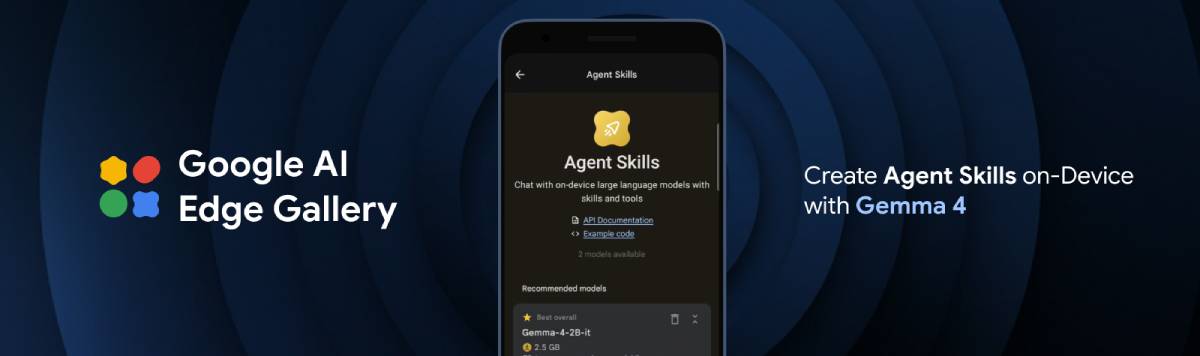
A major development unfolded as Google introduced Gemma 4, a new model designed to bring advanced agentic AI capabilities to edge devices. The launch signals a strategic shift toward decentralized AI deployment, with implications for enterprise computing, real-time decision-making, and global competition in AI infrastructure.

Google’s Gemma 4 enables developers to deploy AI agents directly on edge devices, reducing reliance on cloud infrastructure while improving latency and data privacy. The model is optimized for efficiency, allowing high-performance AI workloads to run on smaller hardware systems.

The release targets developers, enterprises, and device manufacturers seeking to integrate intelligent automation into applications ranging from IoT systems to mobile platforms.

Key stakeholders include cloud providers, semiconductor firms, and enterprises adopting AI-driven workflows. The move reflects increasing demand for localized AI processing, particularly in sectors requiring real-time responses, such as manufacturing, healthcare, and autonomous systems.

The development aligns with a broader trend across global markets where edge computing is becoming a critical component of AI deployment strategies. As organizations seek faster processing, improved data security, and reduced operational costs, shifting AI workloads closer to the source of data generation is gaining traction.

Historically, AI systems have relied heavily on centralized cloud infrastructure, dominated by large-scale data centers. However, the rise of edge computing is reshaping this model, enabling distributed intelligence across devices and networks.

Google’s introduction of Gemma 4 reflects intensifying competition in AI innovation, with companies investing in models that balance performance, efficiency, and scalability. The approach also addresses regulatory and privacy concerns, as localized processing minimizes data transfer and exposure, aligning with global data protection frameworks.

Industry analysts view Gemma 4 as a significant step toward democratizing AI deployment. “Bringing agentic capabilities to the edge reduces dependency on centralized systems and opens new possibilities for real-time applications,” noted a technology strategist.

Google developers emphasized that the model is designed to empower innovation across industries, enabling faster decision-making and improved system responsiveness. “Edge AI allows organizations to unlock value from data instantly, without latency constraints,” a company representative stated.

Experts also highlight challenges, including hardware limitations, security risks, and the need for robust model optimization. Analysts suggest that successful adoption will depend on seamless integration with existing systems, developer accessibility, and continuous improvements in edge computing infrastructure.

For global executives, Gemma 4 signals a shift toward distributed AI architectures, requiring organizations to rethink infrastructure strategies and investment priorities. Businesses may increasingly adopt hybrid models combining cloud and edge capabilities to optimize performance and cost.

Investors could see opportunities in edge computing ecosystems, including hardware manufacturers and AI software providers. Policymakers may focus on data governance, security, and compliance in decentralized AI environments.

The development underscores the strategic importance of edge AI in driving innovation, operational efficiency, and competitive advantage across industries, while also introducing new challenges in regulation and system management.

Looking ahead, stakeholders should monitor adoption rates of edge AI solutions, advancements in hardware capabilities, and integration with enterprise systems. Competitive responses from other technology leaders will shape the evolution of decentralized AI.

Uncertainties remain around scalability, security, and cost-effectiveness. Organizations that effectively leverage edge AI while maintaining robust governance frameworks will be well-positioned to capitalize on the next phase of AI-driven transformation.

Source: Google Developers Blog
Date: April 2026

  • Featured tools
Tome AI
Free

Tome AI is an AI-powered storytelling and presentation tool designed to help users create compelling narratives and presentations quickly and efficiently. It leverages advanced AI technologies to generate content, images, and animations based on user input.

#
Presentation
#
Startup Tools
Learn more
Kreateable AI
Free

Kreateable AI is a white-label, AI-driven design platform that enables logo generation, social media posts, ads, and more for businesses, agencies, and service providers.

#
Logo Generator
Learn more

Learn more about future of AI

Join 80,000+ Ai enthusiast getting weekly updates on exciting AI tools.
Thank you! Your submission has been received!
Oops! Something went wrong while submitting the form.

Gemma 4 Enables Agentic Edge Intelligence

April 3, 2026

Google’s Gemma 4 enables developers to deploy AI agents directly on edge devices, reducing reliance on cloud infrastructure while improving latency and data privacy.

Image Source: https://developers.googleblog.com/

A major development unfolded as Google introduced Gemma 4, a new model designed to bring advanced agentic AI capabilities to edge devices. The launch signals a strategic shift toward decentralized AI deployment, with implications for enterprise computing, real-time decision-making, and global competition in AI infrastructure.

Google’s Gemma 4 enables developers to deploy AI agents directly on edge devices, reducing reliance on cloud infrastructure while improving latency and data privacy. The model is optimized for efficiency, allowing high-performance AI workloads to run on smaller hardware systems.

The release targets developers, enterprises, and device manufacturers seeking to integrate intelligent automation into applications ranging from IoT systems to mobile platforms.

Key stakeholders include cloud providers, semiconductor firms, and enterprises adopting AI-driven workflows. The move reflects increasing demand for localized AI processing, particularly in sectors requiring real-time responses, such as manufacturing, healthcare, and autonomous systems.

The development aligns with a broader trend across global markets where edge computing is becoming a critical component of AI deployment strategies. As organizations seek faster processing, improved data security, and reduced operational costs, shifting AI workloads closer to the source of data generation is gaining traction.

Historically, AI systems have relied heavily on centralized cloud infrastructure, dominated by large-scale data centers. However, the rise of edge computing is reshaping this model, enabling distributed intelligence across devices and networks.

Google’s introduction of Gemma 4 reflects intensifying competition in AI innovation, with companies investing in models that balance performance, efficiency, and scalability. The approach also addresses regulatory and privacy concerns, as localized processing minimizes data transfer and exposure, aligning with global data protection frameworks.

Industry analysts view Gemma 4 as a significant step toward democratizing AI deployment. “Bringing agentic capabilities to the edge reduces dependency on centralized systems and opens new possibilities for real-time applications,” noted a technology strategist.

Google developers emphasized that the model is designed to empower innovation across industries, enabling faster decision-making and improved system responsiveness. “Edge AI allows organizations to unlock value from data instantly, without latency constraints,” a company representative stated.

Experts also highlight challenges, including hardware limitations, security risks, and the need for robust model optimization. Analysts suggest that successful adoption will depend on seamless integration with existing systems, developer accessibility, and continuous improvements in edge computing infrastructure.

For global executives, Gemma 4 signals a shift toward distributed AI architectures, requiring organizations to rethink infrastructure strategies and investment priorities. Businesses may increasingly adopt hybrid models combining cloud and edge capabilities to optimize performance and cost.

Investors could see opportunities in edge computing ecosystems, including hardware manufacturers and AI software providers. Policymakers may focus on data governance, security, and compliance in decentralized AI environments.

The development underscores the strategic importance of edge AI in driving innovation, operational efficiency, and competitive advantage across industries, while also introducing new challenges in regulation and system management.

Looking ahead, stakeholders should monitor adoption rates of edge AI solutions, advancements in hardware capabilities, and integration with enterprise systems. Competitive responses from other technology leaders will shape the evolution of decentralized AI.

Uncertainties remain around scalability, security, and cost-effectiveness. Organizations that effectively leverage edge AI while maintaining robust governance frameworks will be well-positioned to capitalize on the next phase of AI-driven transformation.

Source: Google Developers Blog
Date: April 2026

Promote Your Tool

Copy Embed Code

Similar Blogs

April 29, 2026
|

Dell XPS 16 Balances Performance Pricing Trade-Off

The Dell XPS 16 positions itself as a flagship large-screen laptop offering strong performance, premium design, and advanced display capabilities.
Read more
April 29, 2026
|

Logitech Redefines Gaming Hybrid Keyboard Innovation

The Logitech G512 X gaming keyboard integrates a hybrid switch architecture combining mechanical responsiveness with analog-level input control.
Read more
April 29, 2026
|

Acer Predator Deal Signals Gaming Hardware Shift

The Acer Predator Helios Neo 16 AI gaming laptop is currently available at a discount of approximately $560, positioning it as a competitively priced high-end device.
Read more
April 29, 2026
|

Elgato 4K Webcam Redefines Video Standards

The Elgato Facecam 4K webcam is currently being offered at approximately $160, positioning it competitively within the premium webcam segment.
Read more
April 29, 2026
|

Musk Altman Clash Exposes Global AI Faultlines

The opening day of the legal confrontation between Musk and Altman centered on disputes tied to the origins and direction of OpenAI.
Read more
April 29, 2026
|

Viture Beast Signals Breakthrough in AR Displays

The Viture Beast display glasses introduce a high-resolution virtual screen experience, enabling users to project large-format displays through lightweight wearable hardware.
Read more