
Gemini API Updates Boost Google AI Efficiency

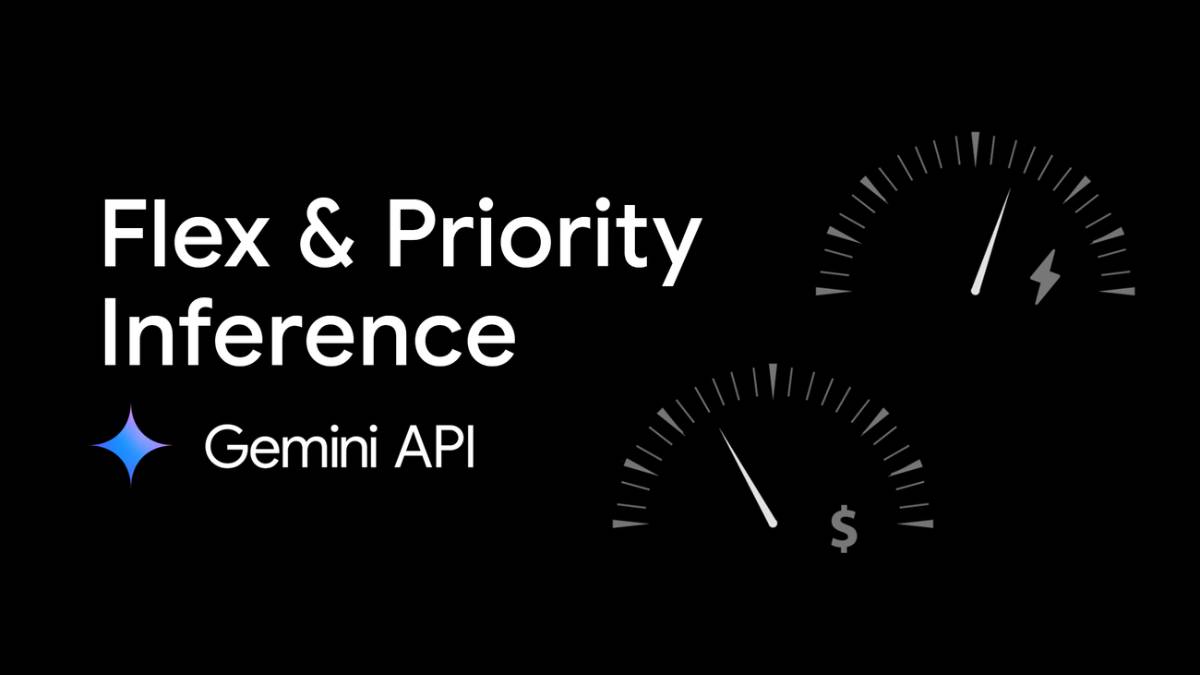
The Gemini API now supports two modes: Flex Inference, enabling dynamic resource allocation to reduce costs for non-urgent workloads, and Priority Inference, which accelerates high-priority requests for time-sensitive applications.

April 3, 2026
|

A major development unfolded today as Google introduces new cost-optimization and reliability features for its Gemini API. The enhancements, Flex and Priority Inference, allow developers and enterprises to dynamically balance performance, latency, and compute costs, signaling a strategic shift in how AI workloads are managed across cloud platforms with implications for global enterprise efficiency and AI adoption.

The Gemini API now supports two modes: Flex Inference, enabling dynamic resource allocation to reduce costs for non-urgent workloads, and Priority Inference, which accelerates high-priority requests for time-sensitive applications.

These tools provide granular control over compute utilization, helping organizations manage AI workloads more efficiently. Google positions these updates as part of its broader cloud AI strategy, targeting developers, startups, and large enterprises seeking scalable and cost-effective AI solutions.

Initial rollout begins in Q2 2026, with enterprise access prioritized. Analysts note the move could influence AI infrastructure spending patterns and position Google competitively against other cloud AI providers offering customizable inference options.

The development aligns with broader trends in AI infrastructure where enterprises seek flexibility and cost-efficiency alongside performance. As AI adoption grows across sectors, managing inference workloads balancing latency, compute cost, and reliability has become critical for cloud operations and enterprise digital transformation initiatives.

Google’s Gemini API competes directly with offerings from Amazon Web Services, Microsoft Azure, and NVIDIA’s AI inference platforms. Prior updates focused on expanding model capabilities; this release emphasizes operational efficiency, reflecting customer feedback on cost predictability and SLA management.

Historically, AI inference workloads have been resource-intensive, often creating trade-offs between speed and cost. By introducing Flex and Priority Inference, Google positions Gemini as a solution for enterprises optimizing AI deployment across real-time applications, batch processing, and mixed-priority workloads—potentially influencing procurement strategies and cloud vendor selection.

Industry analysts highlight that balancing cost and performance is now a key differentiator for AI cloud providers. “Enterprises are increasingly scrutinizing AI inference costs; solutions that allow dynamic prioritization could redefine infrastructure ROI,” notes a leading AI cloud strategist.

Google representatives emphasized that Flex and Priority Inference provide developers with transparent control over compute resources and cost allocation, enhancing operational predictability for mission-critical AI applications.

Competitors are expected to respond with similar offerings, heightening competition in the AI cloud infrastructure market. Analysts suggest the rollout may accelerate adoption of AI at scale, particularly for sectors with mixed-priority workloads such as finance, healthcare, and logistics, where real-time decision-making must coexist with cost-efficient batch processing.

For global executives, these updates redefine AI operational strategy by allowing companies to optimize spend without compromising performance. Businesses running high-volume AI applications can now better align costs with business priorities, while investors may see increased enterprise uptake translating into predictable revenue streams.

Policy implications include transparency and efficiency in AI deployment, potentially informing corporate sustainability and regulatory reporting on energy usage for AI workloads. Analysts caution that firms may need to reassess AI procurement strategies, SLAs, and infrastructure planning to fully capitalize on dynamic inference capabilities, influencing both cost management and competitive positioning.

Decision-makers should monitor adoption rates, resource utilization metrics, and competitor responses to gauge Gemini API’s market impact. As enterprises scale AI deployments, the ability to dynamically balance latency and cost could become a benchmark for cloud AI solutions. Google’s approach signals a shift toward more granular operational control, and uncertainty remains around how competitors and regulatory frameworks will adapt to optimize AI infrastructure efficiency globally.

Source: Google AI Blog
Date: April 2026

  • Featured tools
Neuron AI
Free

Neuron AI is an AI-driven content optimization platform that helps creators produce SEO-friendly content by combining semantic SEO, competitor analysis, and AI-assisted writing workflows.

#
SEO
Learn more
Tome AI
Free

Tome AI is an AI-powered storytelling and presentation tool designed to help users create compelling narratives and presentations quickly and efficiently. It leverages advanced AI technologies to generate content, images, and animations based on user input.

#
Presentation
#
Startup Tools
Learn more

Learn more about future of AI

Join 80,000+ Ai enthusiast getting weekly updates on exciting AI tools.
Thank you! Your submission has been received!
Oops! Something went wrong while submitting the form.

Gemini API Updates Boost Google AI Efficiency

April 3, 2026

The Gemini API now supports two modes: Flex Inference, enabling dynamic resource allocation to reduce costs for non-urgent workloads, and Priority Inference, which accelerates high-priority requests for time-sensitive applications.

A major development unfolded today as Google introduces new cost-optimization and reliability features for its Gemini API. The enhancements, Flex and Priority Inference, allow developers and enterprises to dynamically balance performance, latency, and compute costs, signaling a strategic shift in how AI workloads are managed across cloud platforms with implications for global enterprise efficiency and AI adoption.

The Gemini API now supports two modes: Flex Inference, enabling dynamic resource allocation to reduce costs for non-urgent workloads, and Priority Inference, which accelerates high-priority requests for time-sensitive applications.

These tools provide granular control over compute utilization, helping organizations manage AI workloads more efficiently. Google positions these updates as part of its broader cloud AI strategy, targeting developers, startups, and large enterprises seeking scalable and cost-effective AI solutions.

Initial rollout begins in Q2 2026, with enterprise access prioritized. Analysts note the move could influence AI infrastructure spending patterns and position Google competitively against other cloud AI providers offering customizable inference options.

The development aligns with broader trends in AI infrastructure where enterprises seek flexibility and cost-efficiency alongside performance. As AI adoption grows across sectors, managing inference workloads balancing latency, compute cost, and reliability has become critical for cloud operations and enterprise digital transformation initiatives.

Google’s Gemini API competes directly with offerings from Amazon Web Services, Microsoft Azure, and NVIDIA’s AI inference platforms. Prior updates focused on expanding model capabilities; this release emphasizes operational efficiency, reflecting customer feedback on cost predictability and SLA management.

Historically, AI inference workloads have been resource-intensive, often creating trade-offs between speed and cost. By introducing Flex and Priority Inference, Google positions Gemini as a solution for enterprises optimizing AI deployment across real-time applications, batch processing, and mixed-priority workloads—potentially influencing procurement strategies and cloud vendor selection.

Industry analysts highlight that balancing cost and performance is now a key differentiator for AI cloud providers. “Enterprises are increasingly scrutinizing AI inference costs; solutions that allow dynamic prioritization could redefine infrastructure ROI,” notes a leading AI cloud strategist.

Google representatives emphasized that Flex and Priority Inference provide developers with transparent control over compute resources and cost allocation, enhancing operational predictability for mission-critical AI applications.

Competitors are expected to respond with similar offerings, heightening competition in the AI cloud infrastructure market. Analysts suggest the rollout may accelerate adoption of AI at scale, particularly for sectors with mixed-priority workloads such as finance, healthcare, and logistics, where real-time decision-making must coexist with cost-efficient batch processing.

For global executives, these updates redefine AI operational strategy by allowing companies to optimize spend without compromising performance. Businesses running high-volume AI applications can now better align costs with business priorities, while investors may see increased enterprise uptake translating into predictable revenue streams.

Policy implications include transparency and efficiency in AI deployment, potentially informing corporate sustainability and regulatory reporting on energy usage for AI workloads. Analysts caution that firms may need to reassess AI procurement strategies, SLAs, and infrastructure planning to fully capitalize on dynamic inference capabilities, influencing both cost management and competitive positioning.

Decision-makers should monitor adoption rates, resource utilization metrics, and competitor responses to gauge Gemini API’s market impact. As enterprises scale AI deployments, the ability to dynamically balance latency and cost could become a benchmark for cloud AI solutions. Google’s approach signals a shift toward more granular operational control, and uncertainty remains around how competitors and regulatory frameworks will adapt to optimize AI infrastructure efficiency globally.

Source: Google AI Blog
Date: April 2026

Promote Your Tool

Copy Embed Code

Similar Blogs

April 29, 2026
|

Dell XPS 16 Balances Performance Pricing Trade-Off

The Dell XPS 16 positions itself as a flagship large-screen laptop offering strong performance, premium design, and advanced display capabilities.
Read more
April 29, 2026
|

Logitech Redefines Gaming Hybrid Keyboard Innovation

The Logitech G512 X gaming keyboard integrates a hybrid switch architecture combining mechanical responsiveness with analog-level input control.
Read more
April 29, 2026
|

Acer Predator Deal Signals Gaming Hardware Shift

The Acer Predator Helios Neo 16 AI gaming laptop is currently available at a discount of approximately $560, positioning it as a competitively priced high-end device.
Read more
April 29, 2026
|

Elgato 4K Webcam Redefines Video Standards

The Elgato Facecam 4K webcam is currently being offered at approximately $160, positioning it competitively within the premium webcam segment.
Read more
April 29, 2026
|

Musk Altman Clash Exposes Global AI Faultlines

The opening day of the legal confrontation between Musk and Altman centered on disputes tied to the origins and direction of OpenAI.
Read more
April 29, 2026
|

Viture Beast Signals Breakthrough in AR Displays

The Viture Beast display glasses introduce a high-resolution virtual screen experience, enabling users to project large-format displays through lightweight wearable hardware.
Read more