
Free Tools Challenge Turnitin AI Detection Dominance

A new wave of AI detection platforms, including offerings positioned as free and unrestricted, is entering the market, aiming to identify content generated by advanced models such as GPT systems.

April 7, 2026
|

A significant shift is unfolding in the AI governance landscape as free, unlimited AI detection tools challenge established verification systems. The emergence of platforms like Turnitin alternatives signals growing demand for transparency in AI-generated content, impacting education, enterprises, and regulatory frameworks globally.

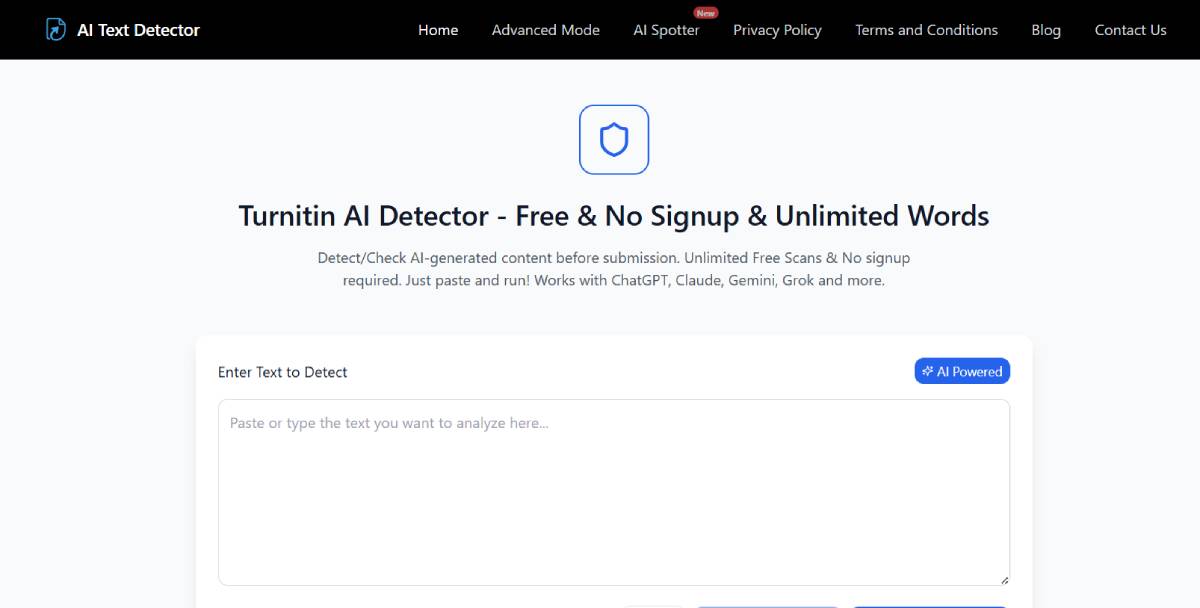
A new wave of AI detection platforms, including offerings positioned as free and unrestricted, is entering the market, aiming to identify content generated by advanced models such as GPT systems. These tools promise unlimited word checks without sign-up barriers, targeting students, educators, marketers, and enterprises.

The rise of such tools comes amid increasing reliance on generative AI across industries. Stakeholders include edtech firms, compliance-driven enterprises, and academic institutions seeking scalable verification solutions.

Economically, the trend introduces pricing pressure on premium AI detection services. Strategically, it reflects intensifying competition in the AI trust and safety ecosystem, where accuracy, accessibility, and scalability are becoming critical differentiators.

The development aligns with a broader global trend where generative AI adoption is accelerating faster than governance frameworks can keep pace. Tools like ChatGPT and similar large language models have democratized content creation, enabling rapid scaling of written material across education, media, and enterprise environments.

However, this surge has raised concerns around academic integrity, misinformation, and authenticity. Established players like Turnitin have built business models around plagiarism detection, later expanding into AI-generated content identification. The entry of free alternatives disrupts this model by lowering access barriers.

Historically, verification tools have followed a premium SaaS approach, but the current shift mirrors broader digital disruption trends where freemium or open-access models challenge incumbents. This evolution reflects a critical phase in AI maturity where detection and generation technologies are advancing in parallel.

Industry analysts suggest that the proliferation of free AI detection tools could trigger a “race to the bottom” in pricing while simultaneously raising questions about reliability and accuracy. Experts note that detection systems often struggle to keep pace with rapidly evolving generative models, leading to false positives and negatives.

Academic leaders emphasize the need for multi-layered verification approaches, combining AI detection with human oversight. Meanwhile, enterprise compliance officers highlight risks in relying solely on free tools, particularly in regulated industries such as finance, healthcare, and legal services.

Technology strategists argue that the real battleground will not be cost, but trust. Vendors capable of demonstrating transparency in detection methodologies and consistent accuracy metrics are likely to gain long-term credibility. In this context, established players may pivot toward enterprise-grade solutions, audits, and integrations rather than competing purely on accessibility.

For businesses, the emergence of free AI detection tools introduces both opportunity and risk. Organizations can reduce operational costs for content verification but may face challenges in ensuring reliability and compliance. Enterprises may increasingly adopt hybrid models combining free tools with premium solutions for critical workflows.

For investors, the shift signals potential margin compression in the AI verification segment, particularly for companies reliant on subscription-based models. Meanwhile, policymakers may accelerate efforts to standardize AI content labeling and detection benchmarks. For educators and consumers, accessibility improves, but the burden of interpreting results grows. As detection tools proliferate, trust in outputs not just availability will define adoption.

Looking ahead, the AI detection ecosystem is expected to evolve into a high-stakes arms race between generative and verification technologies. Decision-makers should monitor accuracy benchmarks, regulatory developments, and enterprise adoption patterns.

The key uncertainty remains whether detection tools can sustainably keep pace with increasingly sophisticated AI models. Ultimately, the future of AI governance may depend less on detection alone and more on integrated frameworks combining transparency, provenance, and accountability.

Source: Turnitin.app
Date: April 2026

  • Featured tools
WellSaid Ai
Free

WellSaid AI is an advanced text-to-speech platform that transforms written text into lifelike, human-quality voiceovers.

#
Text to Speech
Learn more
Neuron AI
Free

Neuron AI is an AI-driven content optimization platform that helps creators produce SEO-friendly content by combining semantic SEO, competitor analysis, and AI-assisted writing workflows.

#
SEO
Learn more

Learn more about future of AI

Join 80,000+ Ai enthusiast getting weekly updates on exciting AI tools.
Thank you! Your submission has been received!
Oops! Something went wrong while submitting the form.

Free Tools Challenge Turnitin AI Detection Dominance

April 7, 2026

A new wave of AI detection platforms, including offerings positioned as free and unrestricted, is entering the market, aiming to identify content generated by advanced models such as GPT systems.

A significant shift is unfolding in the AI governance landscape as free, unlimited AI detection tools challenge established verification systems. The emergence of platforms like Turnitin alternatives signals growing demand for transparency in AI-generated content, impacting education, enterprises, and regulatory frameworks globally.

A new wave of AI detection platforms, including offerings positioned as free and unrestricted, is entering the market, aiming to identify content generated by advanced models such as GPT systems. These tools promise unlimited word checks without sign-up barriers, targeting students, educators, marketers, and enterprises.

The rise of such tools comes amid increasing reliance on generative AI across industries. Stakeholders include edtech firms, compliance-driven enterprises, and academic institutions seeking scalable verification solutions.

Economically, the trend introduces pricing pressure on premium AI detection services. Strategically, it reflects intensifying competition in the AI trust and safety ecosystem, where accuracy, accessibility, and scalability are becoming critical differentiators.

The development aligns with a broader global trend where generative AI adoption is accelerating faster than governance frameworks can keep pace. Tools like ChatGPT and similar large language models have democratized content creation, enabling rapid scaling of written material across education, media, and enterprise environments.

However, this surge has raised concerns around academic integrity, misinformation, and authenticity. Established players like Turnitin have built business models around plagiarism detection, later expanding into AI-generated content identification. The entry of free alternatives disrupts this model by lowering access barriers.

Historically, verification tools have followed a premium SaaS approach, but the current shift mirrors broader digital disruption trends where freemium or open-access models challenge incumbents. This evolution reflects a critical phase in AI maturity where detection and generation technologies are advancing in parallel.

Industry analysts suggest that the proliferation of free AI detection tools could trigger a “race to the bottom” in pricing while simultaneously raising questions about reliability and accuracy. Experts note that detection systems often struggle to keep pace with rapidly evolving generative models, leading to false positives and negatives.

Academic leaders emphasize the need for multi-layered verification approaches, combining AI detection with human oversight. Meanwhile, enterprise compliance officers highlight risks in relying solely on free tools, particularly in regulated industries such as finance, healthcare, and legal services.

Technology strategists argue that the real battleground will not be cost, but trust. Vendors capable of demonstrating transparency in detection methodologies and consistent accuracy metrics are likely to gain long-term credibility. In this context, established players may pivot toward enterprise-grade solutions, audits, and integrations rather than competing purely on accessibility.

For businesses, the emergence of free AI detection tools introduces both opportunity and risk. Organizations can reduce operational costs for content verification but may face challenges in ensuring reliability and compliance. Enterprises may increasingly adopt hybrid models combining free tools with premium solutions for critical workflows.

For investors, the shift signals potential margin compression in the AI verification segment, particularly for companies reliant on subscription-based models. Meanwhile, policymakers may accelerate efforts to standardize AI content labeling and detection benchmarks. For educators and consumers, accessibility improves, but the burden of interpreting results grows. As detection tools proliferate, trust in outputs not just availability will define adoption.

Looking ahead, the AI detection ecosystem is expected to evolve into a high-stakes arms race between generative and verification technologies. Decision-makers should monitor accuracy benchmarks, regulatory developments, and enterprise adoption patterns.

The key uncertainty remains whether detection tools can sustainably keep pace with increasingly sophisticated AI models. Ultimately, the future of AI governance may depend less on detection alone and more on integrated frameworks combining transparency, provenance, and accountability.

Source: Turnitin.app
Date: April 2026

Promote Your Tool

Copy Embed Code

Similar Blogs

April 7, 2026
|

AI Coding Tools Drive App Store Growth

Apple’s reporting indicates that productivity, education, and AI-driven utilities dominate the surge, highlighting changing user demand patterns.
Read more
April 7, 2026
|

Hypergrowth AI Stocks Emerge Amid Sell-Off

Market analysts describe the current sell-off as a “healthy recalibration” for AI equities. Morgan Stanley strategists noted that while valuations had outpaced fundamentals.
Read more
April 7, 2026
|

Meta Considers Open AI Model Release

Meta is reportedly preparing to make its newest AI models publicly accessible, reversing its previous strategy of proprietary development.
Read more
April 7, 2026
|

GitHub Targeted in AI Supply Chain Attack

Cybersecurity researchers detected AI-generated malicious code injected into open-source projects hosted on GitHub. The attack exploited automated coding suggestions to insert vulnerabilities unnoticed by conventional security checks.
Read more
April 7, 2026
|

AI Software Access Questions Follow Nvidia Deal

Nvidia’s purchase of SchedMD, the developer of Slurm workload manager, has sparked industry debate over software availability for AI research and enterprise applications.
Read more
April 7, 2026
|

AI Generated Ads Raise Medvi Compliance Concerns

Medvi has reportedly run ad campaigns promoting weight-loss consultations using AI-generated profiles of medical professionals. Investigations suggest that some advertised doctors could be fictitious.
Read more