
China AI Race Enters Strategic Global Competition Phase

China is accelerating investments in AI infrastructure, talent, and domestic platforms to reduce reliance on foreign technologies. Leading firms such as Baidu, Alibaba, and Tencent are expanding their AI models and enterprise offerings.

March 31, 2026
|
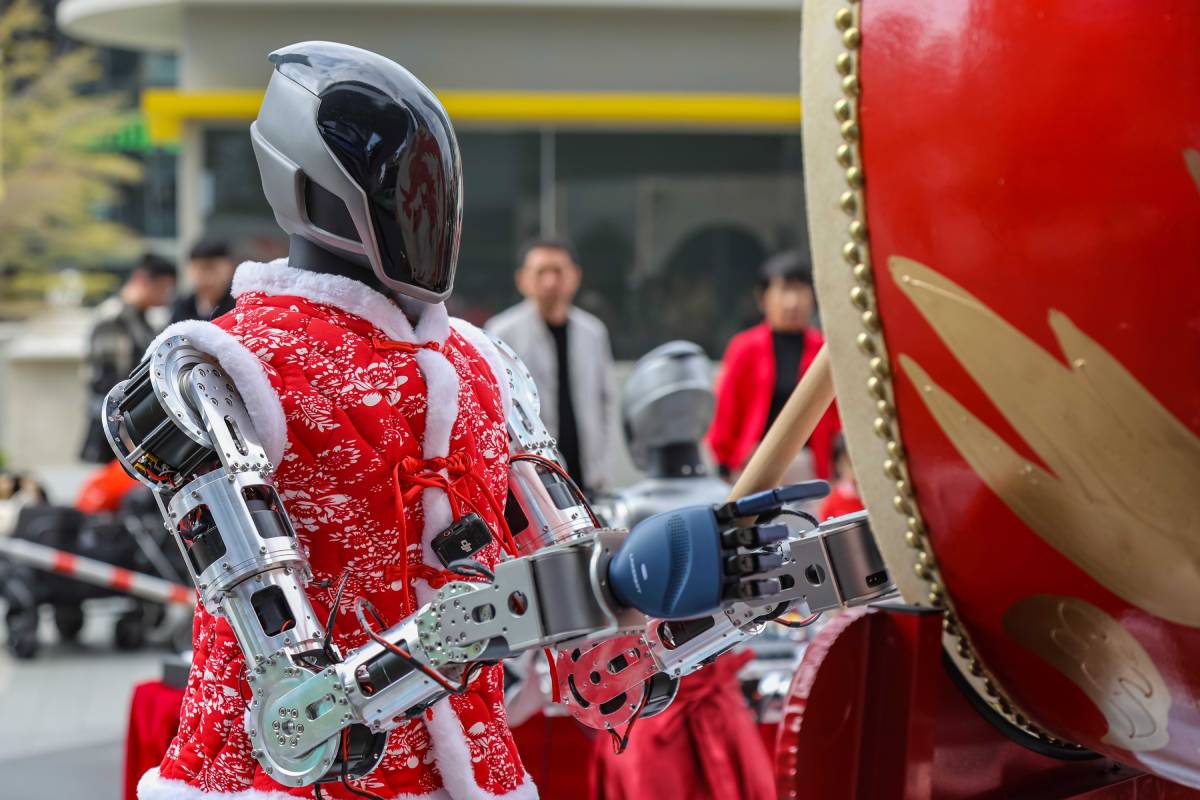
Image Credit: Vcg | Visual China Group | Getty Images

A major strategic shift is underway as China advances into a new phase of its AI race, prioritizing domestic innovation and platform self-reliance. The move signals intensifying global competition, with significant implications for multinational businesses, supply chains, and the future balance of power in AI frameworks and platforms.

China is accelerating investments in AI infrastructure, talent, and domestic platforms to reduce reliance on foreign technologies. Leading firms such as Baidu, Alibaba, and Tencent are expanding their AI models and enterprise offerings.

The shift comes amid tightening US export controls on advanced chips, which have reshaped China’s strategy toward building a self-sufficient AI ecosystem. Policymakers are also promoting industry-wide adoption of AI frameworks across manufacturing, finance, and public services.

This phase reflects a transition from rapid experimentation to structured deployment, with a focus on scalability, industrial integration, and long-term competitiveness in global AI markets. The development aligns with a broader geopolitical and economic contest over AI leadership, particularly between China and the United States. Over the past decade, China has prioritized AI as a national strategic sector, embedding it into industrial policy and economic planning.

Earlier phases of China’s AI growth focused on data scale and rapid model development. However, recent constraints especially restrictions on semiconductor access have forced a pivot toward optimizing domestic AI frameworks and building resilient supply chains.

Globally, AI platforms are becoming central to economic competitiveness, influencing sectors from defense to healthcare. China’s approach mirrors historical industrial strategies where state-backed coordination drives technological self-sufficiency. This new phase underscores a shift from catch-up growth to strategic consolidation, where efficiency, independence, and ecosystem control define the next stage of AI development.

Analysts suggest China’s evolving AI strategy reflects a pragmatic response to external pressures and internal ambitions. Experts note that focusing on integrated AI platforms—rather than isolated breakthroughs could strengthen China’s long-term competitive position.

Industry observers highlight that Chinese firms are increasingly tailoring AI frameworks for enterprise and government use cases, differentiating from Western consumer-focused models. This approach may enhance adoption across critical sectors such as logistics, urban planning, and financial services.

Policy experts also point to the role of state support in accelerating innovation, while cautioning that regulatory oversight and data controls could influence global collaboration. The interplay between innovation, regulation, and geopolitical dynamics will likely shape how China’s AI ecosystem evolves in the coming years.

For global businesses, China’s strategic shift signals a more fragmented AI landscape, where regional AI platforms and frameworks operate under distinct regulatory and technological standards. Companies may need to localize products and adapt to China-specific ecosystems to remain competitive.

Investors could see opportunities in firms aligned with domestic innovation priorities, while also facing risks tied to geopolitical tensions and supply chain disruptions. Meanwhile, policymakers worldwide may intensify efforts to secure their own AI capabilities, further accelerating the global technology race.

The divergence between Chinese and Western AI ecosystems could redefine international trade, partnerships, and digital governance models. Looking ahead, China’s AI trajectory will depend on its ability to overcome hardware constraints while scaling its domestic platforms. Stakeholders should monitor advancements in chip development, enterprise adoption, and regulatory evolution.

As the global AI race enters a more structured phase, competition will increasingly center on ecosystem strength rather than isolated innovation. China’s strategy signals a long-term play for technological leadership in AI frameworks and platforms.

Source: CNBC
Date: March 31, 2026

  • Featured tools
Murf Ai
Free

Murf AI Review – Advanced AI Voice Generator for Realistic Voiceovers

#
Text to Speech
Learn more
Ai Fiesta
Paid

AI Fiesta is an all-in-one productivity platform that gives users access to multiple leading AI models through a single interface. It includes features like prompt enhancement, image generation, audio transcription and side-by-side model comparison.

#
Copywriting
#
Art Generator
Learn more

Learn more about future of AI

Join 80,000+ Ai enthusiast getting weekly updates on exciting AI tools.
Thank you! Your submission has been received!
Oops! Something went wrong while submitting the form.

China AI Race Enters Strategic Global Competition Phase

March 31, 2026

China is accelerating investments in AI infrastructure, talent, and domestic platforms to reduce reliance on foreign technologies. Leading firms such as Baidu, Alibaba, and Tencent are expanding their AI models and enterprise offerings.

Image Credit: Vcg | Visual China Group | Getty Images

A major strategic shift is underway as China advances into a new phase of its AI race, prioritizing domestic innovation and platform self-reliance. The move signals intensifying global competition, with significant implications for multinational businesses, supply chains, and the future balance of power in AI frameworks and platforms.

China is accelerating investments in AI infrastructure, talent, and domestic platforms to reduce reliance on foreign technologies. Leading firms such as Baidu, Alibaba, and Tencent are expanding their AI models and enterprise offerings.

The shift comes amid tightening US export controls on advanced chips, which have reshaped China’s strategy toward building a self-sufficient AI ecosystem. Policymakers are also promoting industry-wide adoption of AI frameworks across manufacturing, finance, and public services.

This phase reflects a transition from rapid experimentation to structured deployment, with a focus on scalability, industrial integration, and long-term competitiveness in global AI markets. The development aligns with a broader geopolitical and economic contest over AI leadership, particularly between China and the United States. Over the past decade, China has prioritized AI as a national strategic sector, embedding it into industrial policy and economic planning.

Earlier phases of China’s AI growth focused on data scale and rapid model development. However, recent constraints especially restrictions on semiconductor access have forced a pivot toward optimizing domestic AI frameworks and building resilient supply chains.

Globally, AI platforms are becoming central to economic competitiveness, influencing sectors from defense to healthcare. China’s approach mirrors historical industrial strategies where state-backed coordination drives technological self-sufficiency. This new phase underscores a shift from catch-up growth to strategic consolidation, where efficiency, independence, and ecosystem control define the next stage of AI development.

Analysts suggest China’s evolving AI strategy reflects a pragmatic response to external pressures and internal ambitions. Experts note that focusing on integrated AI platforms—rather than isolated breakthroughs could strengthen China’s long-term competitive position.

Industry observers highlight that Chinese firms are increasingly tailoring AI frameworks for enterprise and government use cases, differentiating from Western consumer-focused models. This approach may enhance adoption across critical sectors such as logistics, urban planning, and financial services.

Policy experts also point to the role of state support in accelerating innovation, while cautioning that regulatory oversight and data controls could influence global collaboration. The interplay between innovation, regulation, and geopolitical dynamics will likely shape how China’s AI ecosystem evolves in the coming years.

For global businesses, China’s strategic shift signals a more fragmented AI landscape, where regional AI platforms and frameworks operate under distinct regulatory and technological standards. Companies may need to localize products and adapt to China-specific ecosystems to remain competitive.

Investors could see opportunities in firms aligned with domestic innovation priorities, while also facing risks tied to geopolitical tensions and supply chain disruptions. Meanwhile, policymakers worldwide may intensify efforts to secure their own AI capabilities, further accelerating the global technology race.

The divergence between Chinese and Western AI ecosystems could redefine international trade, partnerships, and digital governance models. Looking ahead, China’s AI trajectory will depend on its ability to overcome hardware constraints while scaling its domestic platforms. Stakeholders should monitor advancements in chip development, enterprise adoption, and regulatory evolution.

As the global AI race enters a more structured phase, competition will increasingly center on ecosystem strength rather than isolated innovation. China’s strategy signals a long-term play for technological leadership in AI frameworks and platforms.

Source: CNBC
Date: March 31, 2026

Promote Your Tool

Copy Embed Code

Similar Blogs

March 31, 2026
|

Nscale Joins CCIA Europe to Boost AI Infrastructure

Nscale’s inclusion in CCIA Europe brings its deep expertise in high-performance AI infrastructure, cloud optimization, and enterprise-scale compute to the association’s initiatives.
Read more
March 31, 2026
|

Microsoft Copilot Studio Tackles AI Security Risks

Microsoft Copilot Studio now integrates features specifically designed to mitigate the most critical vulnerabilities identified by the OWASP Top 10 for agentic AI systems, including prompt injection, data leakage, and unauthorized agent actions.
Read more
March 31, 2026
|

Microsoft Expands Texas AI Data Center

Microsoft assumed control of the Texas AI data center expansion, originally slated for joint development with OpenAI. The facility, positioned to support large-scale generative AI workloads, represents a multi-billion-dollar investment in cloud infrastructure.
Read more
March 31, 2026
|

AI Platforms Pivot From Adult Content Strategy

Leading AI developers, including OpenAI, are increasingly restricting or avoiding adult-content-related applications within their platforms. This marks a departure from earlier phases of the tech industry, where adult entertainment often accelerated adoption of new technologies.
Read more
March 31, 2026
|

Investor Rotation Masks AI Platform Growth Potential

Recent market activity shows investors moving capital away from high-flying AI stocks, particularly in semiconductor and large-cap tech segments that led the 2024–2025 rally. Profit-taking, valuation concerns, and broader macroeconomic uncertainty are driving this rotation.
Read more
March 31, 2026
|

AI Adoption Surges as Trust Erodes

A major shift is emerging in the global AI landscape as adoption of artificial intelligence tools accelerates, even as user trust declines. The trend signals growing dependence on AI platforms and AI frameworks across industries.
Read more