
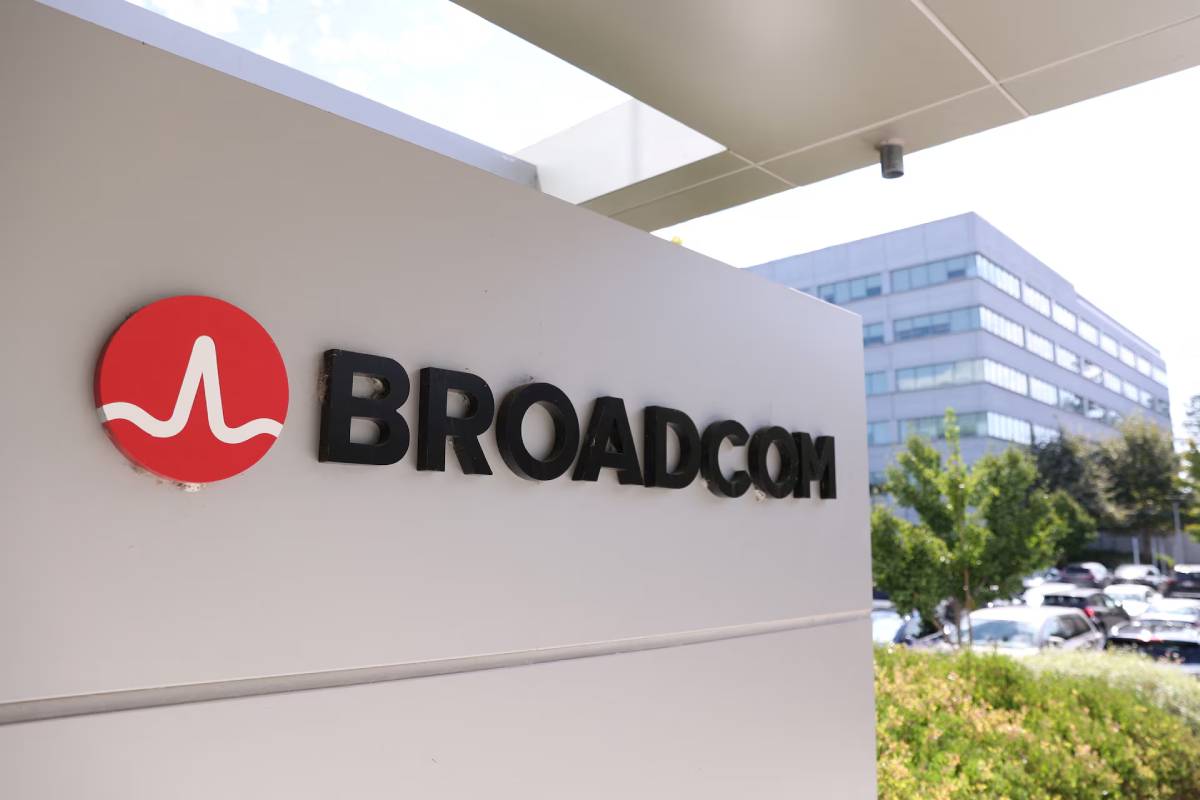
Broadcom Soft Forecast Fuels Investor Anxiety Over AI Spending

Broadcom delivered a financial outlook that disappointed investors despite ongoing demand for AI chips and networking hardware.

March 5, 2026
|

A major development unfolded in the global semiconductor sector as Broadcom issued a revenue forecast that fell short of investor expectations, triggering concerns about the sustainability of the artificial intelligence investment boom. The outlook suggests potential cooling in AI infrastructure spending, with implications for technology suppliers, investors, and global semiconductor markets.

Broadcom delivered a financial outlook that disappointed investors despite ongoing demand for AI chips and networking hardware. The company projected revenue growth that failed to match market expectations, raising concerns about near-term momentum in the AI infrastructure cycle.

The chipmaker, which supplies critical components used in data centers and AI networking systems, has benefited significantly from the surge in artificial intelligence investments led by cloud providers and technology firms.

However, the tempered forecast suggests that some customers may be moderating spending after aggressive infrastructure expansion over the past two years. Following the announcement, market sentiment reflected increasing investor caution toward AI-related semiconductor stocks.

The reaction to Broadcom’s outlook reflects broader volatility across the global semiconductor sector as markets assess the durability of the AI investment boom. Over the past several years, technology companies have poured billions into building AI-ready data centers, purchasing advanced processors and networking hardware.

Companies such as Nvidia, Advanced Micro Devices, and Broadcom have emerged as key beneficiaries of this wave of spending. The demand surge has driven record valuations for AI chipmakers and triggered massive capital investment in computing infrastructure worldwide.

However, analysts increasingly warn that the industry may be approaching a phase where customers reassess spending efficiency. Large cloud providers—including Amazon, Microsoft, and Alphabet have already committed tens of billions of dollars toward AI infrastructure, raising questions about whether the pace of expansion can continue at the same scale.

Market analysts say the muted guidance from Broadcom may signal a transition from explosive growth to a more measured phase in the AI semiconductor cycle. While demand remains strong, investors are increasingly scrutinizing whether spending levels are sustainable.

Industry observers note that companies building AI infrastructure are beginning to prioritize efficiency and return on investment after an initial wave of rapid capacity expansion. This shift could lead to more selective procurement of chips, networking hardware, and related technologies.

Financial analysts also highlight that semiconductor supply chains remain sensitive to macroeconomic conditions, including interest rates, capital expenditure cycles, and geopolitical tensions affecting global technology trade. As a result, even minor changes in guidance from major chip suppliers can trigger sharp market reactions.

For corporate leaders and investors, the development signals a potential recalibration in the AI investment cycle. Technology companies may shift focus from aggressive infrastructure expansion toward optimizing existing AI systems and improving cost efficiency.

Semiconductor firms heavily exposed to AI demand could face increased scrutiny from investors regarding long-term growth projections. Meanwhile, enterprises deploying AI technologies may gain negotiating leverage as supply and demand dynamics evolve.

From a policy perspective, governments seeking to strengthen domestic semiconductor ecosystems may view the moment as a reminder of the cyclical nature of technology investments. Strategic support for chip manufacturing and supply chain resilience remains a priority in regions such as the United States and the European Union.

Looking ahead, markets will closely monitor whether AI infrastructure spending stabilizes or enters a slower growth phase. Upcoming earnings reports from major semiconductor and cloud computing companies will offer further signals about demand trends. For executives and investors alike, the central question remains whether the AI boom is transitioning from rapid expansion to a more sustainable, long-term growth trajectory.

Source: Bloomberg
Date: March 5, 2026

  • Featured tools
Scalenut AI
Free

Scalenut AI is an all-in-one SEO content platform that combines AI-driven writing, keyword research, competitor insights, and optimization tools to help you plan, create, and rank content.

#
SEO
Learn more
Alli AI
Free

Alli AI is an all-in-one, AI-powered SEO automation platform that streamlines on-page optimization, site auditing, speed improvements, schema generation, internal linking, and ranking insights.

#
SEO
Learn more

Learn more about future of AI

Join 80,000+ Ai enthusiast getting weekly updates on exciting AI tools.
Thank you! Your submission has been received!
Oops! Something went wrong while submitting the form.

Broadcom Soft Forecast Fuels Investor Anxiety Over AI Spending

March 5, 2026

Broadcom delivered a financial outlook that disappointed investors despite ongoing demand for AI chips and networking hardware.

A major development unfolded in the global semiconductor sector as Broadcom issued a revenue forecast that fell short of investor expectations, triggering concerns about the sustainability of the artificial intelligence investment boom. The outlook suggests potential cooling in AI infrastructure spending, with implications for technology suppliers, investors, and global semiconductor markets.

Broadcom delivered a financial outlook that disappointed investors despite ongoing demand for AI chips and networking hardware. The company projected revenue growth that failed to match market expectations, raising concerns about near-term momentum in the AI infrastructure cycle.

The chipmaker, which supplies critical components used in data centers and AI networking systems, has benefited significantly from the surge in artificial intelligence investments led by cloud providers and technology firms.

However, the tempered forecast suggests that some customers may be moderating spending after aggressive infrastructure expansion over the past two years. Following the announcement, market sentiment reflected increasing investor caution toward AI-related semiconductor stocks.

The reaction to Broadcom’s outlook reflects broader volatility across the global semiconductor sector as markets assess the durability of the AI investment boom. Over the past several years, technology companies have poured billions into building AI-ready data centers, purchasing advanced processors and networking hardware.

Companies such as Nvidia, Advanced Micro Devices, and Broadcom have emerged as key beneficiaries of this wave of spending. The demand surge has driven record valuations for AI chipmakers and triggered massive capital investment in computing infrastructure worldwide.

However, analysts increasingly warn that the industry may be approaching a phase where customers reassess spending efficiency. Large cloud providers—including Amazon, Microsoft, and Alphabet have already committed tens of billions of dollars toward AI infrastructure, raising questions about whether the pace of expansion can continue at the same scale.

Market analysts say the muted guidance from Broadcom may signal a transition from explosive growth to a more measured phase in the AI semiconductor cycle. While demand remains strong, investors are increasingly scrutinizing whether spending levels are sustainable.

Industry observers note that companies building AI infrastructure are beginning to prioritize efficiency and return on investment after an initial wave of rapid capacity expansion. This shift could lead to more selective procurement of chips, networking hardware, and related technologies.

Financial analysts also highlight that semiconductor supply chains remain sensitive to macroeconomic conditions, including interest rates, capital expenditure cycles, and geopolitical tensions affecting global technology trade. As a result, even minor changes in guidance from major chip suppliers can trigger sharp market reactions.

For corporate leaders and investors, the development signals a potential recalibration in the AI investment cycle. Technology companies may shift focus from aggressive infrastructure expansion toward optimizing existing AI systems and improving cost efficiency.

Semiconductor firms heavily exposed to AI demand could face increased scrutiny from investors regarding long-term growth projections. Meanwhile, enterprises deploying AI technologies may gain negotiating leverage as supply and demand dynamics evolve.

From a policy perspective, governments seeking to strengthen domestic semiconductor ecosystems may view the moment as a reminder of the cyclical nature of technology investments. Strategic support for chip manufacturing and supply chain resilience remains a priority in regions such as the United States and the European Union.

Looking ahead, markets will closely monitor whether AI infrastructure spending stabilizes or enters a slower growth phase. Upcoming earnings reports from major semiconductor and cloud computing companies will offer further signals about demand trends. For executives and investors alike, the central question remains whether the AI boom is transitioning from rapid expansion to a more sustainable, long-term growth trajectory.

Source: Bloomberg
Date: March 5, 2026

Promote Your Tool

Copy Embed Code

Similar Blogs

March 9, 2026
|

Nota AI Demonstrates On Device AI at Embedded World

Nota AI plans to showcase a fully integrated AI solution spanning device-level optimization, real-time analytics, and industrial deployment. The demonstration at Embedded World 2026.
Read more
March 9, 2026
|

Criteo Debuts AI Commerce Platform With ChatGPT Pilot

A major development unfolded today as Criteo presented its AI-driven commerce platform at the Morgan Stanley Technology, Media & Telecom Conference. The announcement, highlighting a ChatGPT pilot and the Commerce Go solution.
Read more
March 9, 2026
|

AI Governance Risks Rise Amid U.S. Anthropic Standoff

The U.S. Department of Defense and federal regulators have expressed caution over Anthropic’s AI models, citing potential risks to security and ethical compliance.
Read more
March 9, 2026
|

Investors Move From Prediction Markets to AI Stocks

A major investment trend is emerging as market observers note soaring activity in prediction markets, yet analysts suggest that high-growth artificial intelligence stocks offer more strategic upside.
Read more
March 9, 2026
|

Netflix Buys Ben Affleck’s AI Start Up for Innovation

Netflix completed the acquisition of Ben Affleck’s AI start-up, a company specializing in generative AI tools for video production, script analysis, and automated editing.
Read more
March 9, 2026
|

AWS Boosts AI Workforce Skills Via College Alliance

Amazon Web Services (AWS) is scaling its partnership with the National Applied AI Consortium to broaden AI-focused training programs across community colleges in the United States.
Read more