
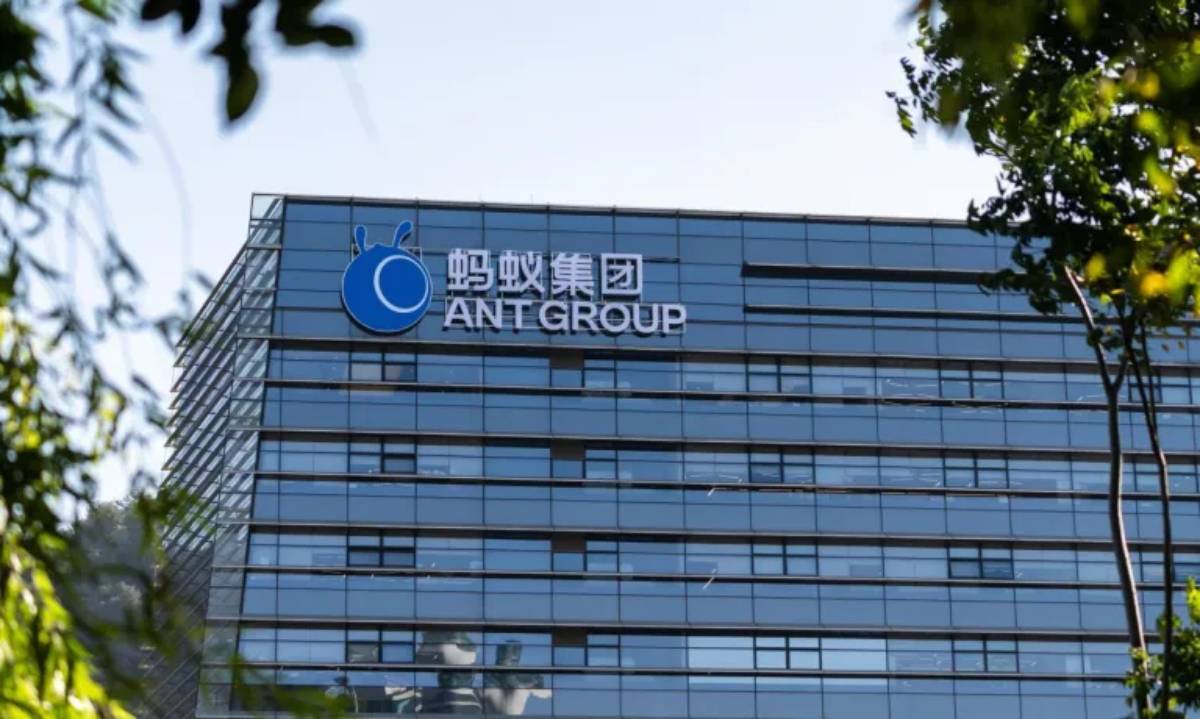
Ant Group Pushes AI in Crypto Finance

Ant Group has introduced a platform that allows AI agents to independently conduct cryptocurrency transactions, marking a significant evolution in fintech capabilities.

April 6, 2026
|
Image Source: https://www.pymnts.com/

A major development unfolded as Ant Group unveiled a platform enabling AI agents to execute cryptocurrency transactions autonomously. The move signals a strategic shift toward machine-driven finance, raising critical questions around regulation, security, and the future role of human oversight in global financial systems.

Ant Group has introduced a platform that allows AI agents to independently conduct cryptocurrency transactions, marking a significant evolution in fintech capabilities. The system integrates AI decision-making with blockchain-based financial infrastructure, enabling automated trading, payments, and asset management.

The development comes amid rising global interest in decentralized finance (DeFi) and AI-driven automation. While specific timelines for full-scale deployment remain unclear, the initiative positions Ant Group at the forefront of AI-finance convergence. Key stakeholders include regulators, financial institutions, and crypto market participants, all of whom face new challenges in monitoring and governing autonomous financial systems.

The development aligns with a broader trend across global markets where artificial intelligence is increasingly embedded into financial services from algorithmic trading to fraud detection and customer service automation. However, the integration of AI with cryptocurrency transactions marks a new frontier, combining two highly disruptive technologies.

Ant Group, an affiliate of Alibaba Group, has long been a leader in digital payments and fintech innovation through platforms like Alipay. Its expansion into AI-driven crypto capabilities reflects China’s evolving stance on financial technology, even as the country maintains strict controls over cryptocurrency usage.

Globally, regulators in regions such as the U.S. and Europe are grappling with how to oversee AI in finance, particularly in decentralized ecosystems. This move underscores the growing complexity of balancing innovation with risk management in a rapidly digitizing financial landscape.

Industry analysts view Ant Group’s initiative as a pivotal step toward autonomous finance, where AI agents could act as independent economic actors. Experts suggest that such systems could enhance efficiency, reduce transaction costs, and enable real-time financial decision-making at scale.

However, concerns are mounting over accountability and risk. Analysts warn that AI-driven crypto transactions could amplify volatility, introduce systemic risks, and complicate compliance with anti-money laundering (AML) and know-your-customer (KYC) regulations.

From a policy perspective, regulators are likely to scrutinize how decision-making authority is delegated to machines. Industry voices emphasize the need for robust governance frameworks, transparency in AI algorithms, and clear liability structures to mitigate potential misuse or unintended consequences.

For global executives, this shift could redefine financial operations, particularly in areas such as treasury management, cross-border payments, and digital asset trading. Companies may increasingly explore AI agents to optimize financial workflows and reduce human intervention.

Investors could see new opportunities in AI-fintech platforms, but also heightened risks linked to regulatory uncertainty and market volatility. Financial institutions may need to reassess compliance frameworks and invest in AI governance capabilities.

On the policy front, governments face mounting pressure to establish clear rules for AI-driven financial activities, especially in the context of cryptocurrencies, where oversight remains fragmented and evolving.

Looking ahead, the convergence of AI and cryptocurrency is expected to accelerate, with more firms exploring autonomous financial systems. Decision-makers should closely monitor regulatory responses, technological advancements, and market adoption trends.

The key uncertainty remains governance how to ensure control, accountability, and trust in a system where machines transact independently. The next phase of fintech innovation will hinge on striking that balance.

Source: PYMNTS
Date: April 2, 2026

  • Featured tools
Hostinger Horizons
Freemium

Hostinger Horizons is an AI-powered platform that allows users to build and deploy custom web applications without writing code. It packs hosting, domain management and backend integration into a unified tool for rapid app creation.

#
Startup Tools
#
Coding
#
Project Management
Learn more
Ai Fiesta
Paid

AI Fiesta is an all-in-one productivity platform that gives users access to multiple leading AI models through a single interface. It includes features like prompt enhancement, image generation, audio transcription and side-by-side model comparison.

#
Copywriting
#
Art Generator
Learn more

Learn more about future of AI

Join 80,000+ Ai enthusiast getting weekly updates on exciting AI tools.
Thank you! Your submission has been received!
Oops! Something went wrong while submitting the form.

Ant Group Pushes AI in Crypto Finance

April 6, 2026

Ant Group has introduced a platform that allows AI agents to independently conduct cryptocurrency transactions, marking a significant evolution in fintech capabilities.

Image Source: https://www.pymnts.com/

A major development unfolded as Ant Group unveiled a platform enabling AI agents to execute cryptocurrency transactions autonomously. The move signals a strategic shift toward machine-driven finance, raising critical questions around regulation, security, and the future role of human oversight in global financial systems.

Ant Group has introduced a platform that allows AI agents to independently conduct cryptocurrency transactions, marking a significant evolution in fintech capabilities. The system integrates AI decision-making with blockchain-based financial infrastructure, enabling automated trading, payments, and asset management.

The development comes amid rising global interest in decentralized finance (DeFi) and AI-driven automation. While specific timelines for full-scale deployment remain unclear, the initiative positions Ant Group at the forefront of AI-finance convergence. Key stakeholders include regulators, financial institutions, and crypto market participants, all of whom face new challenges in monitoring and governing autonomous financial systems.

The development aligns with a broader trend across global markets where artificial intelligence is increasingly embedded into financial services from algorithmic trading to fraud detection and customer service automation. However, the integration of AI with cryptocurrency transactions marks a new frontier, combining two highly disruptive technologies.

Ant Group, an affiliate of Alibaba Group, has long been a leader in digital payments and fintech innovation through platforms like Alipay. Its expansion into AI-driven crypto capabilities reflects China’s evolving stance on financial technology, even as the country maintains strict controls over cryptocurrency usage.

Globally, regulators in regions such as the U.S. and Europe are grappling with how to oversee AI in finance, particularly in decentralized ecosystems. This move underscores the growing complexity of balancing innovation with risk management in a rapidly digitizing financial landscape.

Industry analysts view Ant Group’s initiative as a pivotal step toward autonomous finance, where AI agents could act as independent economic actors. Experts suggest that such systems could enhance efficiency, reduce transaction costs, and enable real-time financial decision-making at scale.

However, concerns are mounting over accountability and risk. Analysts warn that AI-driven crypto transactions could amplify volatility, introduce systemic risks, and complicate compliance with anti-money laundering (AML) and know-your-customer (KYC) regulations.

From a policy perspective, regulators are likely to scrutinize how decision-making authority is delegated to machines. Industry voices emphasize the need for robust governance frameworks, transparency in AI algorithms, and clear liability structures to mitigate potential misuse or unintended consequences.

For global executives, this shift could redefine financial operations, particularly in areas such as treasury management, cross-border payments, and digital asset trading. Companies may increasingly explore AI agents to optimize financial workflows and reduce human intervention.

Investors could see new opportunities in AI-fintech platforms, but also heightened risks linked to regulatory uncertainty and market volatility. Financial institutions may need to reassess compliance frameworks and invest in AI governance capabilities.

On the policy front, governments face mounting pressure to establish clear rules for AI-driven financial activities, especially in the context of cryptocurrencies, where oversight remains fragmented and evolving.

Looking ahead, the convergence of AI and cryptocurrency is expected to accelerate, with more firms exploring autonomous financial systems. Decision-makers should closely monitor regulatory responses, technological advancements, and market adoption trends.

The key uncertainty remains governance how to ensure control, accountability, and trust in a system where machines transact independently. The next phase of fintech innovation will hinge on striking that balance.

Source: PYMNTS
Date: April 2, 2026

Promote Your Tool

Copy Embed Code

Similar Blogs

April 29, 2026
|

Dell XPS 16 Balances Performance Pricing Trade-Off

The Dell XPS 16 positions itself as a flagship large-screen laptop offering strong performance, premium design, and advanced display capabilities.
Read more
April 29, 2026
|

Logitech Redefines Gaming Hybrid Keyboard Innovation

The Logitech G512 X gaming keyboard integrates a hybrid switch architecture combining mechanical responsiveness with analog-level input control.
Read more
April 29, 2026
|

Acer Predator Deal Signals Gaming Hardware Shift

The Acer Predator Helios Neo 16 AI gaming laptop is currently available at a discount of approximately $560, positioning it as a competitively priced high-end device.
Read more
April 29, 2026
|

Elgato 4K Webcam Redefines Video Standards

The Elgato Facecam 4K webcam is currently being offered at approximately $160, positioning it competitively within the premium webcam segment.
Read more
April 29, 2026
|

Musk Altman Clash Exposes Global AI Faultlines

The opening day of the legal confrontation between Musk and Altman centered on disputes tied to the origins and direction of OpenAI.
Read more
April 29, 2026
|

Viture Beast Signals Breakthrough in AR Displays

The Viture Beast display glasses introduce a high-resolution virtual screen experience, enabling users to project large-format displays through lightweight wearable hardware.
Read more