
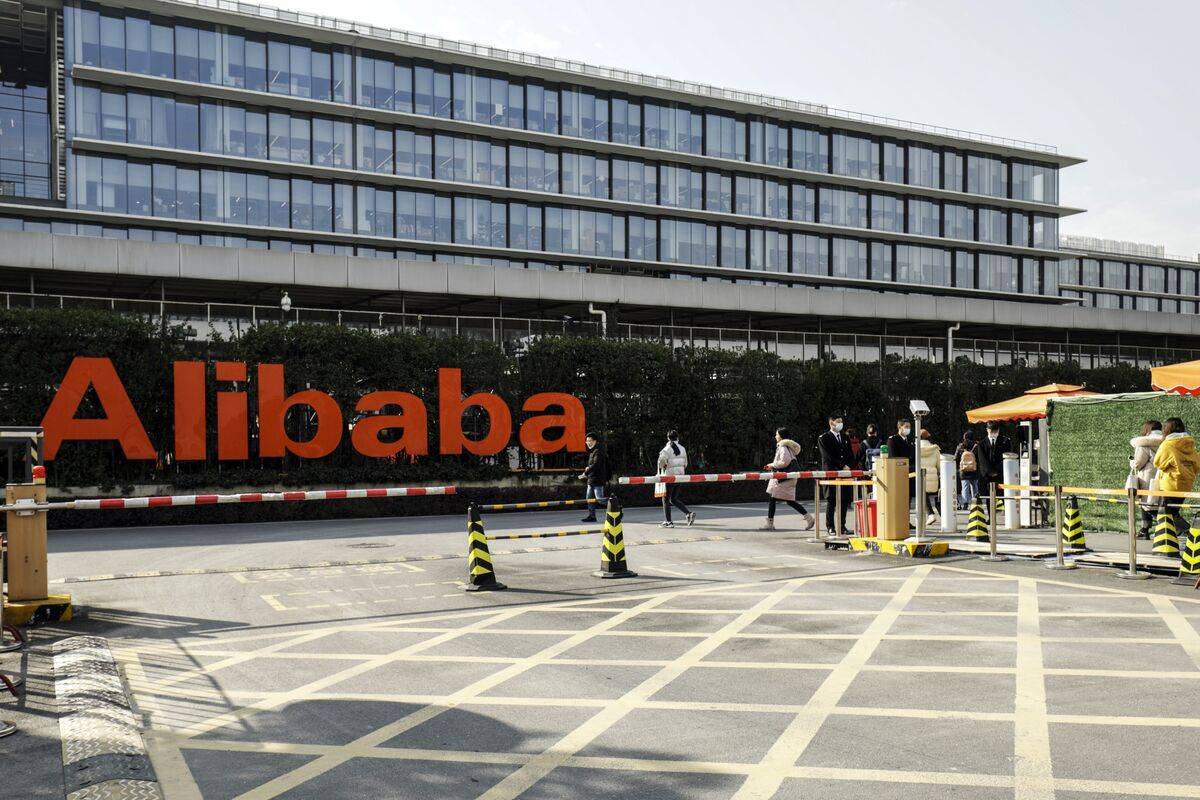
Alibaba Targets $100B AI Revenue in Five Years

Alibaba has outlined plans to scale its artificial intelligence business to $100 billion in revenue over the next five years, reflecting a major shift in corporate priorities.

March 30, 2026
|

A major development unfolded as Alibaba set an ambitious goal to generate $100 billion in AI-related revenue within five years. The move signals a strategic pivot toward artificial intelligence as growth in its traditional businesses slows, with significant implications for global tech competition and investor sentiment.

Alibaba has outlined plans to scale its artificial intelligence business to $100 billion in revenue over the next five years, reflecting a major shift in corporate priorities.

The announcement comes alongside weaker-than-expected financial results, intensifying pressure to find new growth engines. The company is increasing investments in AI infrastructure, cloud computing, and large language models.

Key stakeholders include enterprise customers, global investors, and Chinese regulators. The initiative positions Alibaba to compete more aggressively with global AI leaders while strengthening its domestic technology ecosystem amid evolving economic conditions.

The development aligns with a broader trend across global markets where major technology companies are pivoting toward artificial intelligence as a primary growth driver. With cloud computing and AI converging, firms are investing heavily in infrastructure, chips, and advanced models to capture enterprise demand.

For Alibaba, the shift comes at a critical time. Its traditional e-commerce business has faced slowing growth due to macroeconomic pressures and increasing competition. At the same time, China’s regulatory environment has reshaped the operating landscape for large tech firms.

Globally, rivals are aggressively scaling AI capabilities, creating a high-stakes race for technological leadership. Alibaba’s renewed focus on AI reflects both a defensive and offensive strategy to remain competitive in an increasingly AI-driven digital economy.

Industry analysts view Alibaba’s $100 billion target as bold but achievable if execution aligns with market demand. Experts highlight that enterprise AI adoption is accelerating, particularly in sectors such as finance, healthcare, and logistics.

Market observers suggest the company’s cloud and data ecosystem could provide a strong foundation for scaling AI services. However, they caution that competition from global players and domestic rivals remains intense.

From a strategic standpoint, analysts emphasize the importance of monetization. While AI capabilities are expanding rapidly, converting them into sustainable revenue streams will be critical. The consensus is that Alibaba’s success will depend on its ability to integrate AI across its platform while maintaining cost discipline.

For global executives, Alibaba’s pivot underscores the urgency of integrating AI into core business strategies. Companies across industries may accelerate investments in AI to remain competitive in a rapidly evolving landscape.

Investors are likely to closely monitor execution, as tlhe initiative could influence valuations across the tech sector. A successful transition may reinforce confidence in AI-driven growth models, while setbacks could trigger broader reassessments.

From a policy perspective, the move highlights the strategic importance of AI in national economies. Governments may intensify efforts to support domestic AI ecosystems while balancing regulation, innovation, and data governance concerns.

Looking ahead, the success of Alibaba’s AI ambitions will depend on execution, market adoption, and competitive positioning. Decision-makers should watch for progress in cloud growth, enterprise adoption, and profitability metrics.

While uncertainties remain, the initiative signals a decisive shift toward AI as the next frontier of growth, with potential to reshape both the company’s trajectory and the broader global technology landscape.

Source: Bloomberg
Date: March 19, 2026

  • Featured tools
Copy Ai
Free

Copy AI is one of the most popular AI writing tools designed to help professionals create high-quality content quickly. Whether you are a product manager drafting feature descriptions or a marketer creating ad copy, Copy AI can save hours of work while maintaining creativity and tone.

#
Copywriting
Learn more
Tome AI
Free

Tome AI is an AI-powered storytelling and presentation tool designed to help users create compelling narratives and presentations quickly and efficiently. It leverages advanced AI technologies to generate content, images, and animations based on user input.

#
Presentation
#
Startup Tools
Learn more

Learn more about future of AI

Join 80,000+ Ai enthusiast getting weekly updates on exciting AI tools.
Thank you! Your submission has been received!
Oops! Something went wrong while submitting the form.

Alibaba Targets $100B AI Revenue in Five Years

March 30, 2026

Alibaba has outlined plans to scale its artificial intelligence business to $100 billion in revenue over the next five years, reflecting a major shift in corporate priorities.

A major development unfolded as Alibaba set an ambitious goal to generate $100 billion in AI-related revenue within five years. The move signals a strategic pivot toward artificial intelligence as growth in its traditional businesses slows, with significant implications for global tech competition and investor sentiment.

Alibaba has outlined plans to scale its artificial intelligence business to $100 billion in revenue over the next five years, reflecting a major shift in corporate priorities.

The announcement comes alongside weaker-than-expected financial results, intensifying pressure to find new growth engines. The company is increasing investments in AI infrastructure, cloud computing, and large language models.

Key stakeholders include enterprise customers, global investors, and Chinese regulators. The initiative positions Alibaba to compete more aggressively with global AI leaders while strengthening its domestic technology ecosystem amid evolving economic conditions.

The development aligns with a broader trend across global markets where major technology companies are pivoting toward artificial intelligence as a primary growth driver. With cloud computing and AI converging, firms are investing heavily in infrastructure, chips, and advanced models to capture enterprise demand.

For Alibaba, the shift comes at a critical time. Its traditional e-commerce business has faced slowing growth due to macroeconomic pressures and increasing competition. At the same time, China’s regulatory environment has reshaped the operating landscape for large tech firms.

Globally, rivals are aggressively scaling AI capabilities, creating a high-stakes race for technological leadership. Alibaba’s renewed focus on AI reflects both a defensive and offensive strategy to remain competitive in an increasingly AI-driven digital economy.

Industry analysts view Alibaba’s $100 billion target as bold but achievable if execution aligns with market demand. Experts highlight that enterprise AI adoption is accelerating, particularly in sectors such as finance, healthcare, and logistics.

Market observers suggest the company’s cloud and data ecosystem could provide a strong foundation for scaling AI services. However, they caution that competition from global players and domestic rivals remains intense.

From a strategic standpoint, analysts emphasize the importance of monetization. While AI capabilities are expanding rapidly, converting them into sustainable revenue streams will be critical. The consensus is that Alibaba’s success will depend on its ability to integrate AI across its platform while maintaining cost discipline.

For global executives, Alibaba’s pivot underscores the urgency of integrating AI into core business strategies. Companies across industries may accelerate investments in AI to remain competitive in a rapidly evolving landscape.

Investors are likely to closely monitor execution, as tlhe initiative could influence valuations across the tech sector. A successful transition may reinforce confidence in AI-driven growth models, while setbacks could trigger broader reassessments.

From a policy perspective, the move highlights the strategic importance of AI in national economies. Governments may intensify efforts to support domestic AI ecosystems while balancing regulation, innovation, and data governance concerns.

Looking ahead, the success of Alibaba’s AI ambitions will depend on execution, market adoption, and competitive positioning. Decision-makers should watch for progress in cloud growth, enterprise adoption, and profitability metrics.

While uncertainties remain, the initiative signals a decisive shift toward AI as the next frontier of growth, with potential to reshape both the company’s trajectory and the broader global technology landscape.

Source: Bloomberg
Date: March 19, 2026

Promote Your Tool

Copy Embed Code

Similar Blogs

March 30, 2026
|

Meta Court Setbacks Signal Stricter AI Scrutiny

Meta faced multiple legal losses related to its AI initiatives, particularly around training data usage, algorithmic transparency, and consumer protection obligations. Courts questioned the company’s safeguards, emphasizing risks of bias, privacy violations, and misinformation.
Read more
March 30, 2026
|

Anthropic Pushes Back Against Pentagon Pressure

Anthropic, a leading AI firm, resisted Pentagon pressure to weaken or remove safeguards designed to prevent misuse of its AI systems. The confrontation escalated after Hegseth urged faster deployment of AI capabilities without certain safety constraints.
Read more
March 30, 2026
|

Digital Twin Meets AI in Mining Transformation

MineScape 2026 introduces enhanced capabilities combining AI-powered analytics with digital twin simulations to optimize mine planning and operations.
Read more
March 30, 2026
|

AI Moves Beyond Earth With Space Data Centers

Nvidia has introduced a concept for deploying AI data center hardware in space, leveraging satellite platforms and orbital infrastructure to process data closer to its source. The initiative aligns with rising demand for real-time analytics from Earth observation, telecommunications, and defense sectors.
Read more
March 30, 2026
|

AI Becomes Frontline Defense Against Spam Calls

The development aligns with a broader trend across global markets where AI is being used both to enable and combat digital fraud. Spam calls have become a widespread issue, costing consumers and businesses billions annually.
Read more
March 30, 2026
|

Bluesky Unveils AI Driven Feed Customization

The integration of AI into feed customization represents a convergence of personalization and decentralization. Historically, social media has prioritized engagement metrics over user choice.
Read more