



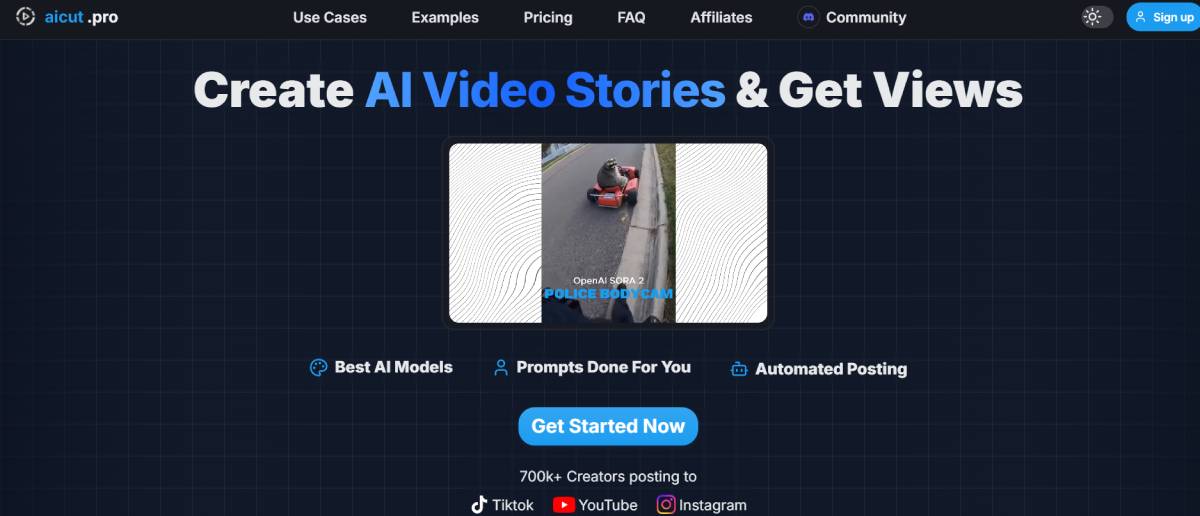
The creator economy is witnessing another AI-driven disruption as AICut rolls out a platform enabling users to generate automated video stories optimized for social media engagement. The move reflects intensifying competition in AI-powered content production, impacting digital creators, marketers, and platform-driven advertising models globally.
Aicut allows users to transform scripts or prompts into short-form video stories designed for platforms such as TikTok, Instagram, and YouTube Shorts. The platform integrates AI narration, automated visuals, subtitles, and editing workflows into a streamlined interface. Its core audience includes solo creators, affiliate marketers, and small businesses seeking scalable content output. By automating production, AICut reduces the need for professional editing software or on-camera presence. Revenue models likely revolve around subscription tiers or usage-based pricing. The platform positions itself within a fast-growing short-form video economy where algorithmic reach directly influences monetization opportunities.
The development aligns with a broader trend across global digital markets where short-form video has become the dominant engagement driver. Platforms such as TikTok and Instagram have reshaped advertising economics, rewarding high-frequency, algorithm-optimized content. This has placed pressure on creators to maintain consistent output.
Generative AI tools are increasingly filling this production gap by automating scripting, voiceovers, and visual assembly. The shift mirrors a wider transformation in media workflows, where AI augments or replaces manual editing tasks.
At the same time, monetization structures tied to views and engagement have intensified competition among creators. AI-generated storytelling tools offer efficiency advantages but also raise questions about content saturation and authenticity.
For executives, automated video production signals a structural shift in how digital narratives are created, distributed, and monetized. Digital media analysts argue that AI video automation lowers entry barriers for aspiring creators, expanding market participation.
Marketing strategists note that brands may use such tools to rapidly test campaigns and respond to trending topics in real time. However, advertising experts caution that algorithmic platforms may penalize repetitive or low-quality automated content, limiting sustainable reach. Technology policy observers highlight growing scrutiny around AI-generated disclosures, especially in influencer marketing and sponsored posts.
Industry commentators suggest that long-term success will depend on balancing automation with originality, ensuring that AI-enhanced storytelling retains human relatability. AICut’s emergence reflects the convergence of generative AI and performance-driven social commerce ecosystems.
For businesses, AI storytelling platforms offer scalable marketing content without expanding creative teams. Startups and SMEs can compete more effectively in digital advertising through automated production pipelines. Investors tracking SaaS-based creator tools may view AI video automation as a high-growth segment within the broader generative AI market.
Regulators, however, may tighten rules on transparency, sponsored content labeling, and AI-generated media disclosures. For corporate leaders, integrating AI-driven video tools requires governance policies that address brand risk, intellectual property, and data compliance considerations.
Decision-makers should monitor platform algorithm changes, monetization policies, and evolving AI disclosure regulations. As competition intensifies, differentiation may hinge on storytelling depth, analytics integration, and audience personalization. AICut’s expansion highlights a defining shift: in the AI era, content velocity and automation are becoming central pillars of digital growth strategy.
Source: AICut Official Website
Date: February 27, 2026


