



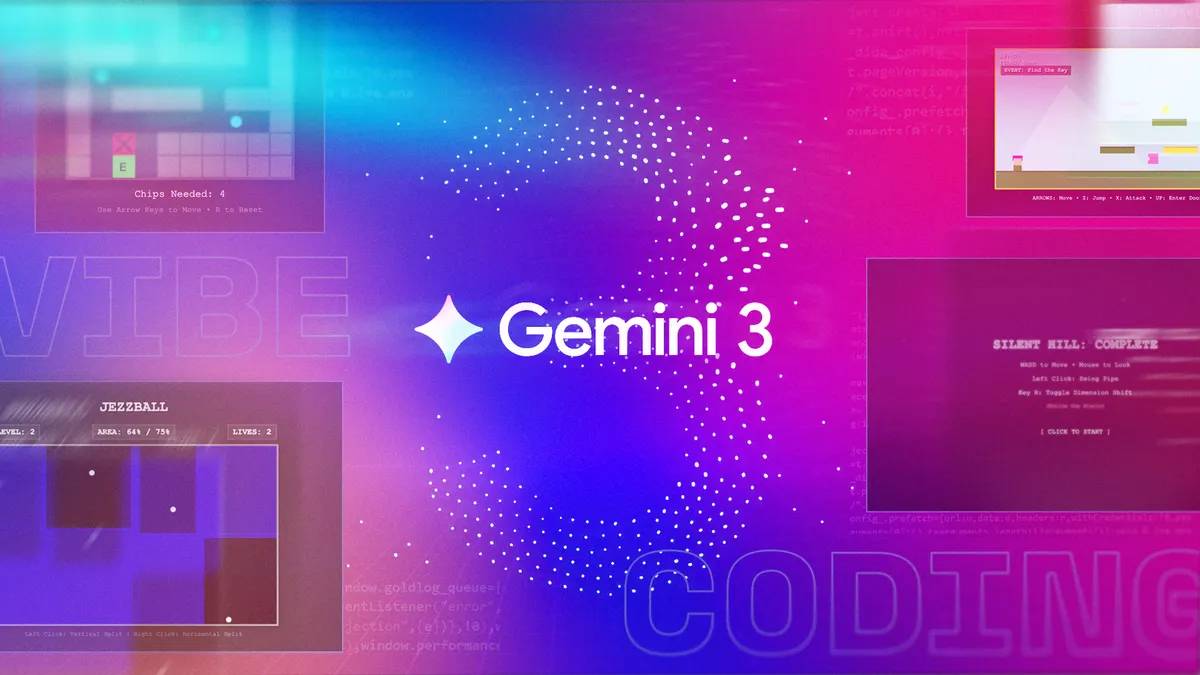
A new wave of AI-assisted creativity is reshaping software development as developers use generative tools like Google’s Gemini-based systems to recreate retro video games through “vibe coding.” The approach highlights how artificial intelligence is transforming not only enterprise workflows but also personal software experimentation and digital nostalgia.
The concept of “vibe coding” involves using AI models to rapidly generate, modify, and reconstruct software experiences based on intuitive prompts rather than traditional programming workflows. In this case, retro childhood video games were recreated using AI-assisted coding techniques powered by Gemini-based tools.
The process allows developers to rebuild classic gaming experiences with minimal manual coding, relying instead on generative models for logic, design, and interaction flow. The approach demonstrates how AI is lowering barriers to software creation.
The trend reflects growing experimentation among developers using AI not just for productivity, but also for creative recreation and interactive storytelling. The rise of AI-assisted development tools is fundamentally reshaping the software engineering landscape. Traditionally, game development required specialized programming knowledge, significant time investment, and structured design pipelines. However, generative AI systems are increasingly enabling rapid prototyping and code generation through natural language instructions.
This shift aligns with broader industry trends where AI is transitioning from a productivity enhancer to a co-creator in digital development workflows. The resurgence of interest in retro gaming also reflects cultural nostalgia, where older game formats are being reimagined with modern tools and technologies.
Companies like Google are at the forefront of integrating large language models into development ecosystems, enabling more intuitive and accessible programming experiences. The combination of nostalgia-driven content and AI-driven creation is opening new pathways for both independent developers and commercial studios exploring lightweight, experimental game design models.
Industry analysts suggest that AI-driven “vibe coding” represents an early stage of a broader shift toward intent-based software development. Instead of writing structured code, developers increasingly describe desired outcomes, with AI systems generating functional prototypes.
Experts highlight that this approach could significantly reduce development cycles, particularly for indie developers and rapid prototyping environments. However, concerns remain around code reliability, optimization, and long-term maintainability of AI-generated systems.
Technology observers also note that Google’s Gemini ecosystem is part of a competitive race among major AI providers to integrate coding capabilities directly into generative models. While current applications are largely experimental, analysts expect structured integration into mainstream development environments over time, particularly in gaming, education, and creative media industries.
For businesses, AI-assisted coding could dramatically lower barriers to software and game development, enabling faster prototyping and reducing engineering costs. This may accelerate innovation cycles, particularly in gaming, edtech, and digital content industries.
Investors are likely to view generative coding tools as a long-term disruption to traditional software development workflows, potentially reshaping demand for entry-level programming roles while increasing value in AI system design and oversight.
From a policy perspective, questions may emerge around intellectual property ownership of AI-generated code, licensing frameworks, and quality assurance standards. Regulators may also need to consider how AI-generated software is tested and validated before deployment in commercial environments.
AI-driven development is expected to evolve rapidly toward fully integrated “prompt-to-product” ecosystems, where applications and games can be generated with minimal manual coding. The gaming sector is likely to remain a key experimentation ground for these technologies. However, challenges around performance optimization, creative control, and regulatory clarity will shape how quickly mainstream adoption occurs.
Source: CNET
Date: May 2026


