



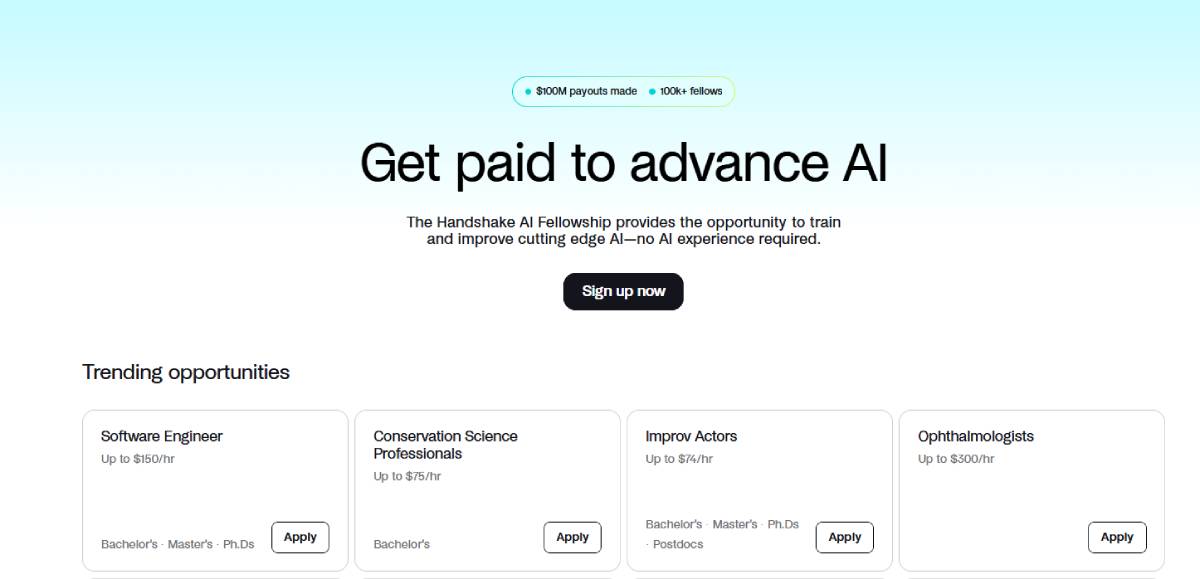
A major development unfolded as Handshake launched paid, remote AI training opportunities for experts and generalists. The move highlights the growing reliance on human input to train advanced AI systems, with significant implications for global labor markets, enterprise AI development, and the evolving intersection of technology and workforce dynamics.
- Handshake introduced AI-related remote work opportunities focused on training and improving machine learning systems.
- Roles are open to both domain experts and generalists, expanding access to a broad talent pool.
- Tasks include data labeling, content evaluation, and feedback generation to refine AI models.
- The initiative reflects increasing demand for human-in-the-loop processes in AI development.
- The platform connects companies building AI systems with distributed global talent.
- The offering emphasizes flexible, remote work, aligning with post-pandemic workforce trends.
- Analysts see this as a scalable model to support rapid AI innovation while maintaining quality and alignment.
The rapid expansion of AI technologies has created a parallel demand for human input to train, validate, and refine models. Despite advances in automation, human judgment remains critical for ensuring accuracy, relevance, and ethical alignment.
Platforms like Handshake are capitalizing on this demand by connecting organizations with distributed workforces capable of supporting AI development. This trend aligns with the broader growth of the gig economy and remote work, which have transformed how companies access talent globally.
At the same time, the rise of human-in-the-loop systems reflects the limitations of AI, particularly in complex or nuanced tasks. Geopolitically, access to skilled labor for AI training is becoming a competitive advantage, with companies and countries investing in talent pipelines. The development underscores the growing importance of workforce participation in shaping AI outcomes.
Industry experts view the expansion of AI training roles as a natural evolution of the technology ecosystem. “AI systems are only as good as the data and feedback they receive,” noted a labor market analyst specializing in digital workforces.
Executives at Handshake emphasize the importance of democratizing access to AI-related work opportunities. By opening roles to both experts and generalists, the platform aims to scale human input efficiently.
Analysts also highlight the potential for this model to reshape employment patterns, creating new categories of digital labor. However, concerns remain around compensation, job quality, and long-term sustainability. Experts suggest that clear standards and transparency will be essential to ensure fair and effective participation in AI training ecosystems.
For global executives, the rise of AI training workforces signals a need to integrate human-in-the-loop processes into AI strategies. Companies may need to invest in talent platforms and workflows that enable scalable human input.
Investors could see this as a growing segment within the digital economy, driven by demand for AI development and maintenance. However, questions around labor conditions and cost structures may influence valuations.
From a policy perspective, governments may need to address issues related to worker protections, compensation standards, and cross-border employment. As AI training becomes a critical industry, regulatory frameworks will likely evolve to ensure fairness, accountability, and sustainability.
Decision-makers should monitor the growth of AI training marketplaces, adoption by enterprises, and regulatory responses to digital labor models. Future developments may include specialization of roles, improved tooling, and integration with enterprise AI pipelines.
Key uncertainties include workforce sustainability, quality control, and economic impact. For executives and policymakers, the human-in-the-loop economy will play a central role in shaping the future of AI development.
Source: Handshake
Date: April 9, 2026


