
AI Fuelled Rally Faces Reality Check on Wall Street

The sell-off reflects broader uncertainty around monetisation timelines, regulatory headwinds, and the macroeconomic environment, including interest rate expectations and slowing global growth.

February 24, 2026
|

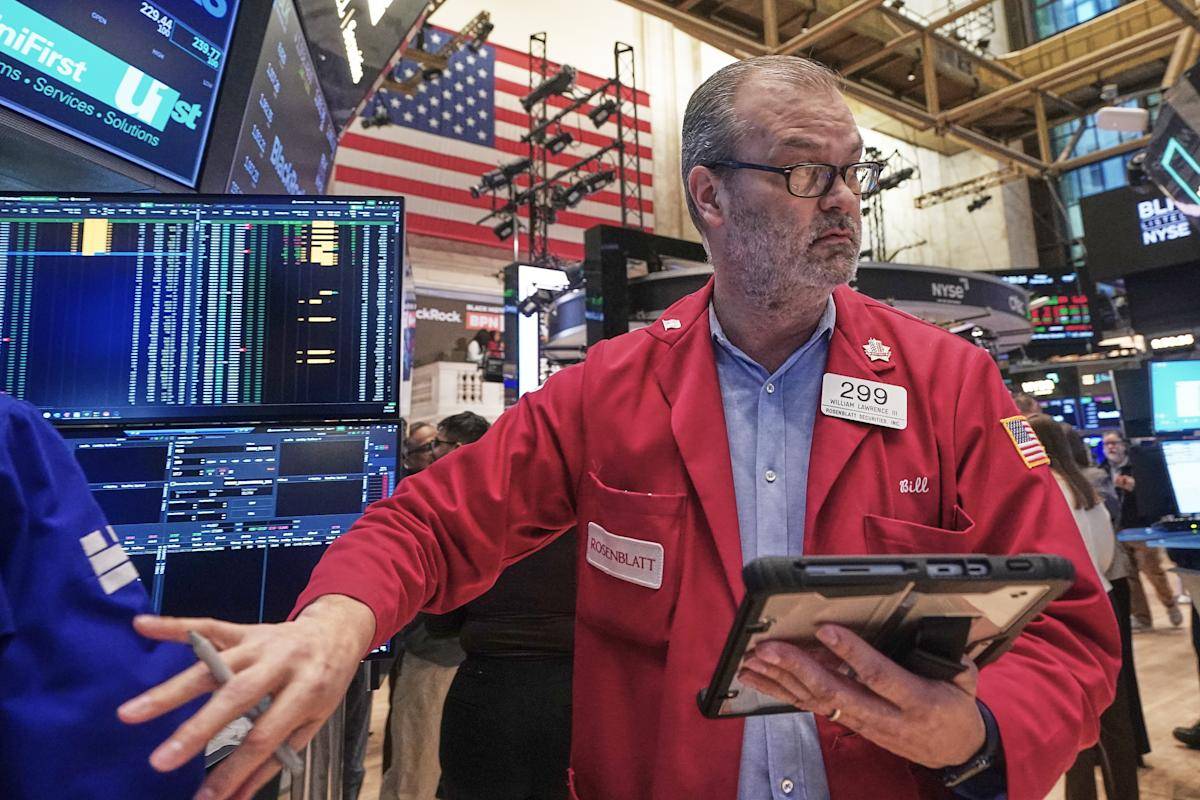
A sharp reassessment of artificial intelligence valuations is rippling through Wall Street, as investors weigh the disruptive and potentially destabilising effects of rapid AI adoption. The recent stock sell-off signals a shift in market sentiment, with implications for technology giants, institutional investors, and global capital flows.

According to a report published by Yahoo Finance, investors have begun rotating out of high-flying AI-linked equities following months of aggressive gains. Concerns centre on whether current valuations accurately reflect earnings potential amid mounting competitive pressures and capital expenditure demands.

Major US technology stocks, many of which led the AI rally, have experienced volatility as analysts question sustainability. Portfolio managers are increasingly debating whether AI’s long-term productivity upside justifies near-term balance sheet strain and infrastructure costs.

The sell-off reflects broader uncertainty around monetisation timelines, regulatory headwinds, and the macroeconomic environment, including interest rate expectations and slowing global growth.

The development aligns with a broader trend across global markets where transformative technologies experience rapid capital inflows followed by valuation corrections. Since 2023, AI enthusiasm has driven significant gains in semiconductor firms, cloud providers, and software platforms embedding generative capabilities.

However, history suggests that disruptive cycles from the dot-com boom to the early cloud era often face recalibration as markets transition from narrative-driven investing to earnings-based scrutiny.

AI’s capital intensity further complicates the outlook. Data centre expansion, specialised chip procurement, and energy demands are exerting pressure on operating margins. Meanwhile, geopolitical tensions affecting semiconductor supply chains add another layer of uncertainty.

For institutional investors, the debate is no longer whether AI will transform industries, but how quickly that transformation converts into durable, scalable revenue streams without eroding shareholder returns.

Market strategists note that volatility in AI-linked stocks may represent a healthy correction rather than a structural reversal. Some analysts argue that expectations have run ahead of fundamentals, particularly for companies yet to demonstrate clear pricing power from AI services.

Others warn that disruption fears are beginning to affect non-technology sectors as well. Financial services, media, and professional services firms face operational shifts driven by automation and generative tools, raising workforce and margin considerations.

Portfolio managers suggest investors are recalibrating exposure, favouring diversified AI enablers over speculative pure-play models. Risk committees at major asset managers are reportedly stress-testing scenarios tied to regulatory crackdowns, cybersecurity incidents, or slower enterprise adoption rates.

The overarching theme: AI remains a strategic imperative, but the market is demanding clearer pathways to profitability and governance resilience. For global executives, the shift could redefine capital allocation strategies. Companies heavily investing in AI infrastructure may face heightened investor scrutiny over return on investment timelines and cost discipline.

Investors are likely to prioritise firms demonstrating tangible productivity gains or subscription revenue uplift from AI integration. Boards may push for greater transparency around AI spending, risk controls, and revenue attribution.

From a policy perspective, increased volatility could intensify calls for clearer AI regulatory frameworks to stabilise investor confidence. Governments may also evaluate the systemic risk implications of concentrated AI exposure within equity markets.

In this climate, disciplined execution may separate sustainable leaders from speculative outperformers.

Markets will closely monitor upcoming earnings seasons for concrete evidence of AI-driven revenue growth and margin stability. Capital expenditure guidance, chip supply outlooks, and regulatory developments will remain key indicators.

While short-term volatility may persist, AI’s structural impact on productivity and competitive advantage remains intact. The critical question for decision-makers: can innovation momentum translate into resilient, long-term value creation?

Source: Yahoo Finance
Date: February 2026

  • Featured tools
Kreateable AI
Free

Kreateable AI is a white-label, AI-driven design platform that enables logo generation, social media posts, ads, and more for businesses, agencies, and service providers.

#
Logo Generator
Learn more
Symphony Ayasdi AI
Free

SymphonyAI Sensa is an AI-powered surveillance and financial crime detection platform that surfaces hidden risk behavior through explainable, AI-driven analytics.

#
Finance
Learn more

Learn more about future of AI

Join 80,000+ Ai enthusiast getting weekly updates on exciting AI tools.
Thank you! Your submission has been received!
Oops! Something went wrong while submitting the form.

AI Fuelled Rally Faces Reality Check on Wall Street

February 24, 2026

The sell-off reflects broader uncertainty around monetisation timelines, regulatory headwinds, and the macroeconomic environment, including interest rate expectations and slowing global growth.

A sharp reassessment of artificial intelligence valuations is rippling through Wall Street, as investors weigh the disruptive and potentially destabilising effects of rapid AI adoption. The recent stock sell-off signals a shift in market sentiment, with implications for technology giants, institutional investors, and global capital flows.

According to a report published by Yahoo Finance, investors have begun rotating out of high-flying AI-linked equities following months of aggressive gains. Concerns centre on whether current valuations accurately reflect earnings potential amid mounting competitive pressures and capital expenditure demands.

Major US technology stocks, many of which led the AI rally, have experienced volatility as analysts question sustainability. Portfolio managers are increasingly debating whether AI’s long-term productivity upside justifies near-term balance sheet strain and infrastructure costs.

The sell-off reflects broader uncertainty around monetisation timelines, regulatory headwinds, and the macroeconomic environment, including interest rate expectations and slowing global growth.

The development aligns with a broader trend across global markets where transformative technologies experience rapid capital inflows followed by valuation corrections. Since 2023, AI enthusiasm has driven significant gains in semiconductor firms, cloud providers, and software platforms embedding generative capabilities.

However, history suggests that disruptive cycles from the dot-com boom to the early cloud era often face recalibration as markets transition from narrative-driven investing to earnings-based scrutiny.

AI’s capital intensity further complicates the outlook. Data centre expansion, specialised chip procurement, and energy demands are exerting pressure on operating margins. Meanwhile, geopolitical tensions affecting semiconductor supply chains add another layer of uncertainty.

For institutional investors, the debate is no longer whether AI will transform industries, but how quickly that transformation converts into durable, scalable revenue streams without eroding shareholder returns.

Market strategists note that volatility in AI-linked stocks may represent a healthy correction rather than a structural reversal. Some analysts argue that expectations have run ahead of fundamentals, particularly for companies yet to demonstrate clear pricing power from AI services.

Others warn that disruption fears are beginning to affect non-technology sectors as well. Financial services, media, and professional services firms face operational shifts driven by automation and generative tools, raising workforce and margin considerations.

Portfolio managers suggest investors are recalibrating exposure, favouring diversified AI enablers over speculative pure-play models. Risk committees at major asset managers are reportedly stress-testing scenarios tied to regulatory crackdowns, cybersecurity incidents, or slower enterprise adoption rates.

The overarching theme: AI remains a strategic imperative, but the market is demanding clearer pathways to profitability and governance resilience. For global executives, the shift could redefine capital allocation strategies. Companies heavily investing in AI infrastructure may face heightened investor scrutiny over return on investment timelines and cost discipline.

Investors are likely to prioritise firms demonstrating tangible productivity gains or subscription revenue uplift from AI integration. Boards may push for greater transparency around AI spending, risk controls, and revenue attribution.

From a policy perspective, increased volatility could intensify calls for clearer AI regulatory frameworks to stabilise investor confidence. Governments may also evaluate the systemic risk implications of concentrated AI exposure within equity markets.

In this climate, disciplined execution may separate sustainable leaders from speculative outperformers.

Markets will closely monitor upcoming earnings seasons for concrete evidence of AI-driven revenue growth and margin stability. Capital expenditure guidance, chip supply outlooks, and regulatory developments will remain key indicators.

While short-term volatility may persist, AI’s structural impact on productivity and competitive advantage remains intact. The critical question for decision-makers: can innovation momentum translate into resilient, long-term value creation?

Source: Yahoo Finance
Date: February 2026

Promote Your Tool

Copy Embed Code

Similar Blogs

March 9, 2026
|

Nota AI Demonstrates On Device AI at Embedded World

Nota AI plans to showcase a fully integrated AI solution spanning device-level optimization, real-time analytics, and industrial deployment. The demonstration at Embedded World 2026.
Read more
March 9, 2026
|

Criteo Debuts AI Commerce Platform With ChatGPT Pilot

A major development unfolded today as Criteo presented its AI-driven commerce platform at the Morgan Stanley Technology, Media & Telecom Conference. The announcement, highlighting a ChatGPT pilot and the Commerce Go solution.
Read more
March 9, 2026
|

AI Governance Risks Rise Amid U.S. Anthropic Standoff

The U.S. Department of Defense and federal regulators have expressed caution over Anthropic’s AI models, citing potential risks to security and ethical compliance.
Read more
March 9, 2026
|

Investors Move From Prediction Markets to AI Stocks

A major investment trend is emerging as market observers note soaring activity in prediction markets, yet analysts suggest that high-growth artificial intelligence stocks offer more strategic upside.
Read more
March 9, 2026
|

Netflix Buys Ben Affleck’s AI Start Up for Innovation

Netflix completed the acquisition of Ben Affleck’s AI start-up, a company specializing in generative AI tools for video production, script analysis, and automated editing.
Read more
March 9, 2026
|

AWS Boosts AI Workforce Skills Via College Alliance

Amazon Web Services (AWS) is scaling its partnership with the National Applied AI Consortium to broaden AI-focused training programs across community colleges in the United States.
Read more