
US Advances AI Investment Drive as China Rivalry Deepens

Washington framed the initiative as a push for transparent, rules-based economic growth, while implicitly countering China’s expanding technological footprint in the region. AI funding proposals emphasized infrastructure.

February 12, 2026
|

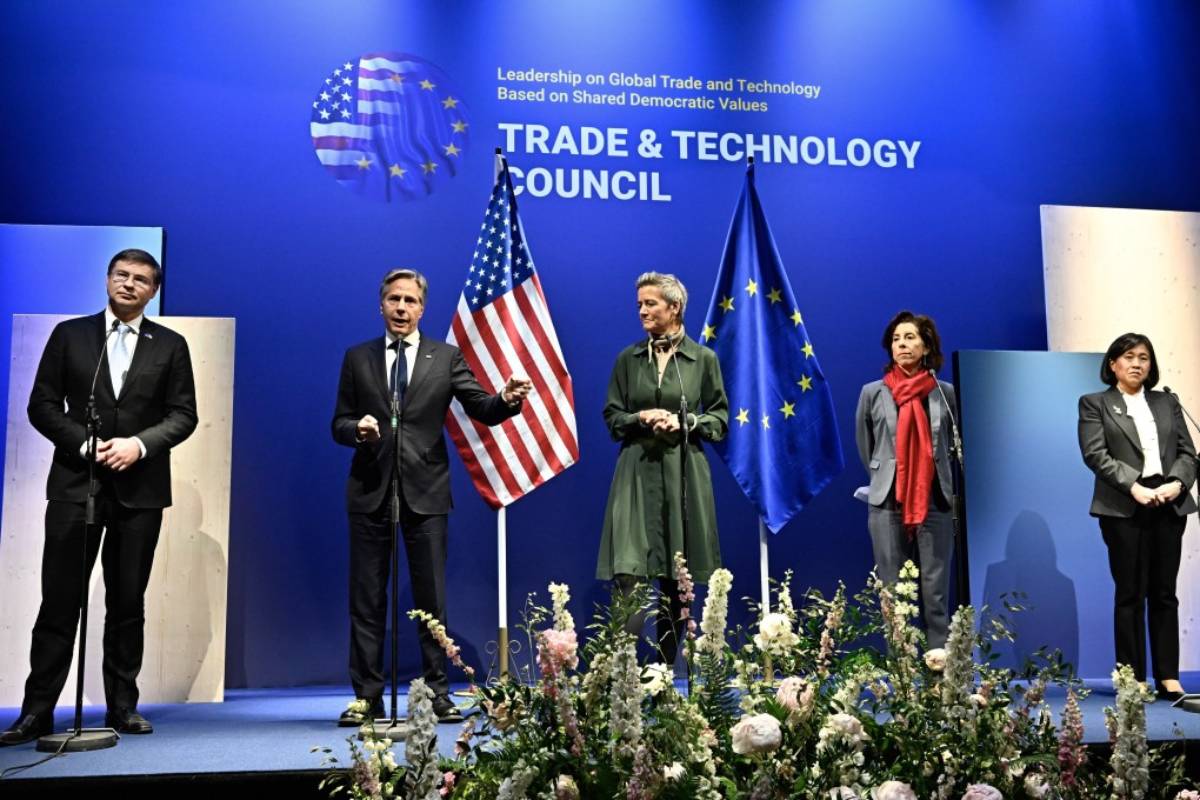
A strategic shift unfolded at the APEC forum as the United States pushed for expanded AI funding and advanced fisheries technology cooperation, positioning innovation as a geopolitical tool amid intensifying rivalry with China. The move carries implications for regional supply chains, digital standards, and strategic influence across the Indo-Pacific.

At the Asia-Pacific Economic Cooperation (APEC) meetings, US officials advocated stronger collaboration on artificial intelligence development and marine technology, including digital monitoring systems for fisheries management.

Washington framed the initiative as a push for transparent, rules-based economic growth, while implicitly countering China’s expanding technological footprint in the region. AI funding proposals emphasized infrastructure, research partnerships, and responsible innovation standards.

Fisheries technology ranging from satellite tracking to data analytics was highlighted as a means to combat illegal fishing and strengthen food security. The diplomatic outreach comes amid broader US efforts to reinforce alliances and supply chain resilience in strategic sectors across the Indo-Pacific.

The development aligns with a broader trend across global markets where advanced technologies are increasingly deployed as instruments of geopolitical influence. AI has become central to economic competitiveness, military capability, and digital governance frameworks.

The Indo-Pacific remains a focal point of US-China competition, particularly in semiconductors, telecommunications, and digital infrastructure. China has expanded investment and development initiatives across Southeast Asia and the Pacific, often integrating technology financing with broader trade partnerships.

Fisheries management, while less visible than semiconductors, represents a strategic domain involving maritime security, sustainability, and regional livelihoods. Illegal, unreported, and unregulated fishing has long been a sensitive issue in the Pacific.

For executives and policymakers, the US push signals that AI diplomacy is expanding beyond software and chips into applied technologies affecting food security and environmental governance.

Policy analysts suggest the US strategy reflects a dual objective: strengthening economic partnerships while shaping regional technology norms. By promoting AI governance standards and transparency, Washington aims to differentiate its approach from state-driven technology models.

Geopolitical experts note that fisheries technology cooperation provides a practical entry point for trust-building, especially among smaller Pacific economies concerned about maritime sovereignty.

Industry observers argue that AI funding initiatives may open opportunities for American technology firms specializing in cloud computing, satellite analytics, and environmental data systems.

However, analysts caution that regional nations often seek balanced engagement with both Washington and Beijing. Competitive diplomacy could intensify, particularly if technology initiatives are perceived as exclusionary or politically aligned.

For global executives, the initiative underscores how AI investment is increasingly intertwined with foreign policy. Companies operating in the Indo-Pacific may encounter new partnership opportunities tied to public funding and development programs.

Investors could view expanded AI diplomacy as supportive of long-term infrastructure spending, particularly in data analytics and maritime technology sectors.

From a policy perspective, the move may accelerate efforts to harmonize AI governance frameworks across APEC economies. Governments must balance economic cooperation with strategic autonomy, particularly amid intensifying US-China competition.

Regional markets could benefit from improved digital infrastructure, but geopolitical tensions remain a defining variable.

Attention will now turn to funding commitments, implementation timelines, and regional responses to US proposals. Decision-makers should watch how China counters with its own technology initiatives.

As AI becomes central to economic diplomacy, the Indo-Pacific may emerge as a proving ground for competing models of digital governance and strategic influence.

Source: Reuters
Date: February 12, 2026

  • Featured tools
Copy Ai
Free

Copy AI is one of the most popular AI writing tools designed to help professionals create high-quality content quickly. Whether you are a product manager drafting feature descriptions or a marketer creating ad copy, Copy AI can save hours of work while maintaining creativity and tone.

#
Copywriting
Learn more
Hostinger Website Builder
Paid

Hostinger Website Builder is a drag-and-drop website creator bundled with hosting and AI-powered tools, designed for businesses, blogs and small shops with minimal technical effort.It makes launching a site fast and affordable, with templates, responsive design and built-in hosting all in one.

#
Productivity
#
Startup Tools
#
Ecommerce
Learn more

Learn more about future of AI

Join 80,000+ Ai enthusiast getting weekly updates on exciting AI tools.
Thank you! Your submission has been received!
Oops! Something went wrong while submitting the form.

US Advances AI Investment Drive as China Rivalry Deepens

February 12, 2026

Washington framed the initiative as a push for transparent, rules-based economic growth, while implicitly countering China’s expanding technological footprint in the region. AI funding proposals emphasized infrastructure.

A strategic shift unfolded at the APEC forum as the United States pushed for expanded AI funding and advanced fisheries technology cooperation, positioning innovation as a geopolitical tool amid intensifying rivalry with China. The move carries implications for regional supply chains, digital standards, and strategic influence across the Indo-Pacific.

At the Asia-Pacific Economic Cooperation (APEC) meetings, US officials advocated stronger collaboration on artificial intelligence development and marine technology, including digital monitoring systems for fisheries management.

Washington framed the initiative as a push for transparent, rules-based economic growth, while implicitly countering China’s expanding technological footprint in the region. AI funding proposals emphasized infrastructure, research partnerships, and responsible innovation standards.

Fisheries technology ranging from satellite tracking to data analytics was highlighted as a means to combat illegal fishing and strengthen food security. The diplomatic outreach comes amid broader US efforts to reinforce alliances and supply chain resilience in strategic sectors across the Indo-Pacific.

The development aligns with a broader trend across global markets where advanced technologies are increasingly deployed as instruments of geopolitical influence. AI has become central to economic competitiveness, military capability, and digital governance frameworks.

The Indo-Pacific remains a focal point of US-China competition, particularly in semiconductors, telecommunications, and digital infrastructure. China has expanded investment and development initiatives across Southeast Asia and the Pacific, often integrating technology financing with broader trade partnerships.

Fisheries management, while less visible than semiconductors, represents a strategic domain involving maritime security, sustainability, and regional livelihoods. Illegal, unreported, and unregulated fishing has long been a sensitive issue in the Pacific.

For executives and policymakers, the US push signals that AI diplomacy is expanding beyond software and chips into applied technologies affecting food security and environmental governance.

Policy analysts suggest the US strategy reflects a dual objective: strengthening economic partnerships while shaping regional technology norms. By promoting AI governance standards and transparency, Washington aims to differentiate its approach from state-driven technology models.

Geopolitical experts note that fisheries technology cooperation provides a practical entry point for trust-building, especially among smaller Pacific economies concerned about maritime sovereignty.

Industry observers argue that AI funding initiatives may open opportunities for American technology firms specializing in cloud computing, satellite analytics, and environmental data systems.

However, analysts caution that regional nations often seek balanced engagement with both Washington and Beijing. Competitive diplomacy could intensify, particularly if technology initiatives are perceived as exclusionary or politically aligned.

For global executives, the initiative underscores how AI investment is increasingly intertwined with foreign policy. Companies operating in the Indo-Pacific may encounter new partnership opportunities tied to public funding and development programs.

Investors could view expanded AI diplomacy as supportive of long-term infrastructure spending, particularly in data analytics and maritime technology sectors.

From a policy perspective, the move may accelerate efforts to harmonize AI governance frameworks across APEC economies. Governments must balance economic cooperation with strategic autonomy, particularly amid intensifying US-China competition.

Regional markets could benefit from improved digital infrastructure, but geopolitical tensions remain a defining variable.

Attention will now turn to funding commitments, implementation timelines, and regional responses to US proposals. Decision-makers should watch how China counters with its own technology initiatives.

As AI becomes central to economic diplomacy, the Indo-Pacific may emerge as a proving ground for competing models of digital governance and strategic influence.

Source: Reuters
Date: February 12, 2026

Promote Your Tool

Copy Embed Code

Similar Blogs

February 13, 2026
|

Capgemini Bets on AI, Digital Sovereignty for Growth

Capgemini signaled that investments in artificial intelligence solutions and sovereign technology frameworks will be central to its medium-term expansion strategy.
Read more
February 13, 2026
|

Amazon Enters Bear Market as Pressure Mounts on Tech Giants

Amazon’s shares have fallen more than 20% from their recent peak, meeting the technical definition of a bear market. The slide reflects mounting investor caution around high-growth technology stocks.
Read more
February 13, 2026
|

AI.com Soars From ₹300 Registration to ₹634 Crore Asset

The domain AI.com was originally acquired decades ago for a nominal registration fee, reportedly around ₹300. As artificial intelligence evolved from a niche academic field into a multi-trillion-dollar global industry.
Read more
February 13, 2026
|

Spotify Engineers Shift to AI as Coding Model Rewritten

A major shift in software engineering unfolded as Spotify revealed that many of its top developers have not written traditional code since December, relying instead on artificial intelligence tools.
Read more
February 13, 2026
|

Apple Loses $200 Billion as AI Anxiety Rattles Big Tech

Apple shares slid sharply following renewed concerns that the company may be lagging peers in deploying advanced generative AI capabilities across its ecosystem. The decline erased approximately $200 billion in market value in a single trading session.
Read more
February 13, 2026
|

NVIDIA Expands Latin America Push With AI Day

NVIDIA executives highlighted demand for high-performance GPUs, AI frameworks, and cloud-based compute solutions powering sectors such as finance, healthcare, energy, and agribusiness.
Read more