



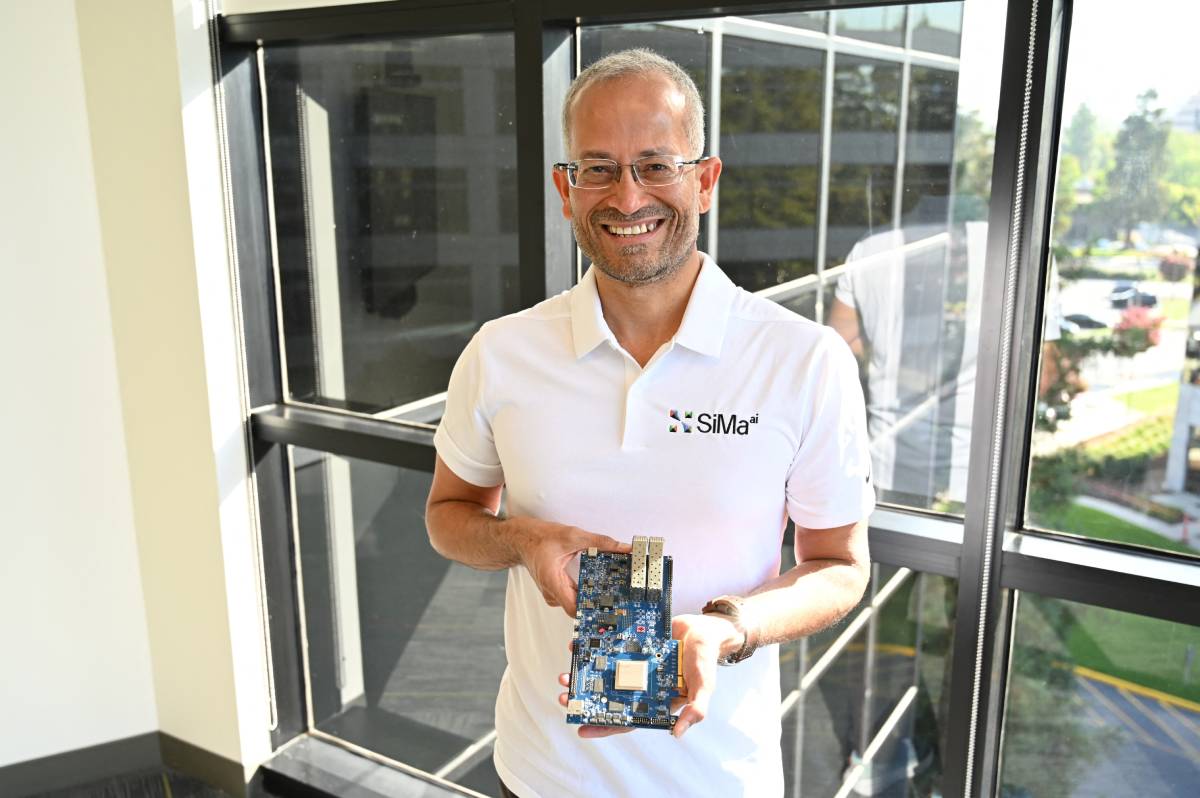
A major development unfolded today as SiMa.ai, a leading provider of edge AI solutions, and Kaynes Semicon, a prominent semiconductor manufacturing firm, announced a strategic partnership to advance high-performance physical AI innovation. The collaboration aims to accelerate AI hardware deployment across industries, signaling a pivotal shift in semiconductor and AI ecosystems with implications for global technology markets and enterprise adoption.
- SiMa.ai and Kaynes Semicon formalized a partnership to co-develop advanced AI accelerators and physical AI systems optimized for edge computing.
- The initiative focuses on high-performance AI chips designed for industrial automation, autonomous systems, and IoT applications.
- Timelines for initial prototypes and pilot deployments are expected within the next 12–18 months.
- The partnership combines SiMa.ai’s AI software stack and expertise in neural network optimization with Kaynes’ semiconductor fabrication capabilities.
- Analysts highlight the potential for this collaboration to enhance India’s AI semiconductor sector, while global tech enterprises may benefit from more efficient and scalable AI deployment solutions.
The SiMa.ai–Kaynes alliance aligns with a global push to integrate AI directly into physical hardware, bridging software intelligence with optimized semiconductor design. Edge AI adoption has surged as industries demand real-time decision-making, low-latency computing, and energy-efficient solutions. Historically, AI innovation has been limited by bottlenecks in hardware performance and manufacturing scalability. By combining SiMa.ai’s AI inference engines with Kaynes’ fabrication capabilities, the partnership addresses these challenges while supporting India’s broader ambition to become a hub for AI hardware innovation. This move reflects a global trend where strategic collaborations between AI developers and semiconductor manufacturers accelerate the commercialization of cutting-edge AI solutions, influencing competitive positioning, market share, and technological sovereignty.
Industry analysts view the partnership as a strategic milestone for both companies, emphasizing its potential to shape next-generation AI hardware standards. A spokesperson from SiMa.ai noted that the collaboration will focus on optimizing AI models for physical deployment, improving energy efficiency and performance across edge devices. Kaynes Semicon highlighted its commitment to producing high-yield, cost-effective semiconductor solutions capable of meeting the growing demands of industrial AI applications. Experts predict the alliance could catalyze similar partnerships globally, fostering innovation ecosystems where AI software and hardware co-evolve. Additionally, market observers underscore the strategic importance for India’s semiconductor and AI sectors, suggesting that such alliances will bolster domestic capabilities while attracting international investment and collaboration.
For global executives, the partnership may redefine operational strategies across industrial automation, IoT, and AI-powered manufacturing sectors. Businesses can anticipate faster deployment of edge AI systems, enabling improved decision-making, operational efficiency, and cost savings. Investors may view the alliance as an opportunity to capitalize on a high-growth segment within AI hardware. Policymakers could leverage this collaboration to support national semiconductor capabilities, enhance technological sovereignty, and incentivize AI innovation. Analysts caution that competitors will need to reassess product development pipelines and partnerships to maintain relevance in the evolving AI semiconductor landscape. Regulatory compliance and IP protections will also be critical to maximize the strategic benefits of this venture.
Looking ahead, decision-makers should monitor prototype launches, pilot adoption rates, and global industry response to the SiMa.ai–Kaynes collaboration. The partnership could set benchmarks for AI hardware performance and accelerate edge AI commercialization. While opportunities are significant, uncertainties remain regarding scaling production, supply chain constraints, and market adoption. The alliance marks a critical step in merging AI software expertise with semiconductor manufacturing, potentially shaping the future of high-performance AI innovation worldwide.
Source & Date
Source: Industrial Automation India
Date: January 15, 2026


