



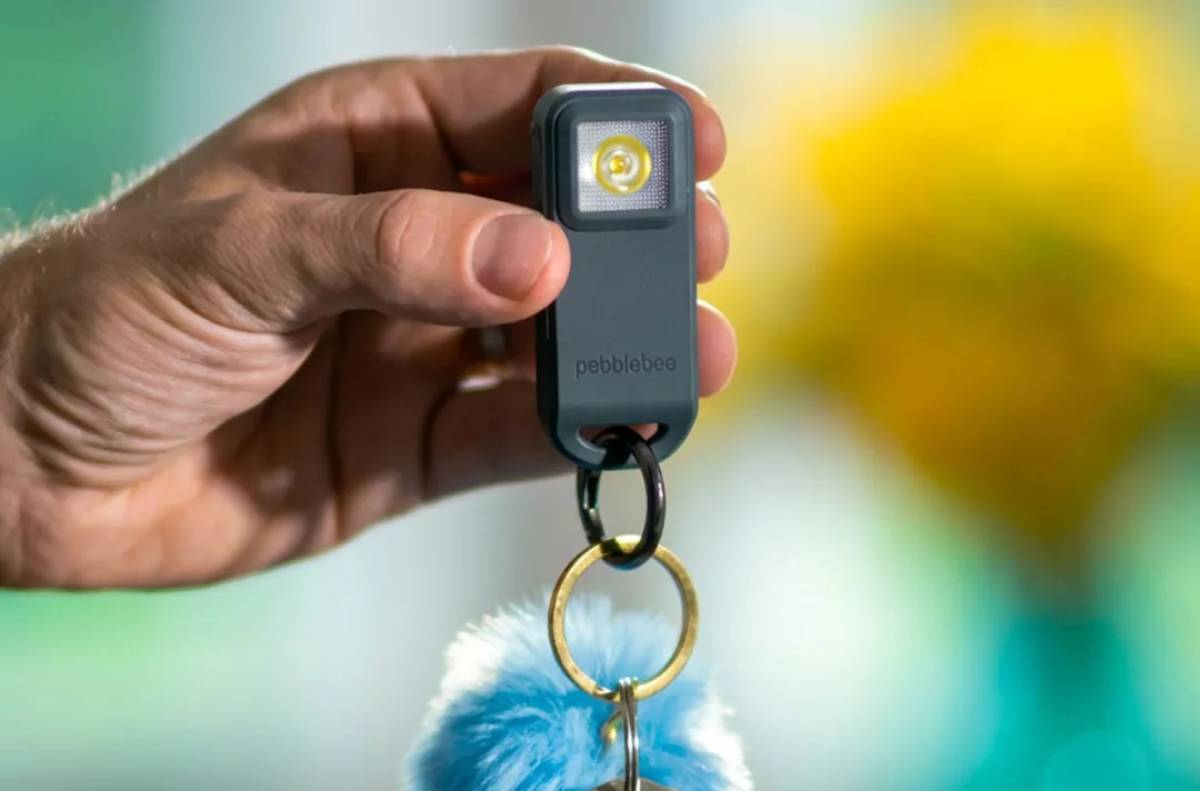
A new wave of consumer safety and tracking technology is gaining traction as Pebblebee’s Halo Bluetooth tracker sees renewed attention following a promotional price cut to $50. The device, designed to help users locate lost items and enhance personal safety, reflects the growing convergence of consumer electronics, location intelligence, and personal security solutions in everyday digital ecosystems.
Pebblebee’s Halo device has been positioned as a compact Bluetooth-enabled tracker capable of helping users locate personal belongings such as keys, bags, and wallets, while also offering features designed to enhance personal safety.
The device integrates with mobile ecosystems to provide real-time location tracking, leveraging proximity-based connectivity and smartphone integration. The recent price reduction to approximately $50 has increased consumer visibility and competitiveness within the expanding smart tracking market.
Pebblebee has emphasized safety-oriented use cases alongside traditional item tracking, reflecting a broader industry shift toward multifunctional personal security devices. The promotional pricing comes amid heightened competition in the Bluetooth tracker segment, where companies are increasingly differentiating through ecosystem compatibility, battery efficiency, and advanced alert features.
The development aligns with a broader trend across global consumer electronics markets where location-based services and smart tracking devices are becoming mainstream tools for both convenience and safety.
Bluetooth trackers have evolved from simple item-finding tools into integrated safety devices capable of sharing location data, triggering alerts, and supporting emergency use cases. Companies such as Apple, Tile, and Pebblebee operate in an increasingly competitive ecosystem driven by smartphone integration and cloud-based location networks.
The rise in adoption is linked to growing consumer demand for personal security solutions, particularly in urban environments where mobility and digital connectivity are central to daily life. The integration of tracking technologies into broader smart ecosystems has further accelerated market expansion.
Historically, item-tracking devices were limited to basic proximity alerts, but advancements in low-energy Bluetooth, mobile computing, and cloud connectivity have significantly expanded their capabilities. This evolution has positioned tracking devices as part of the broader Internet of Things (IoT) landscape.
Industry analysts note that the Bluetooth tracking market is transitioning from niche utility products to broader personal safety platforms, with increasing emphasis on real-time connectivity and ecosystem integration.
Technology observers highlight that devices like Pebblebee Halo are benefiting from consumer familiarity with location-based services, particularly as smartphone operating systems increasingly incorporate native tracking networks.
Market specialists suggest that pricing strategies, such as temporary discounts, play a critical role in expanding adoption in a segment where competition is intensifying and product differentiation is narrowing.
Experts also emphasize that privacy considerations remain central to the adoption of tracking technologies, as companies must balance functionality with user data protection and secure location sharing protocols.
Pebblebee has not issued additional public statements beyond product positioning, but continues to market the Halo as both a convenience tool and a personal safety enhancement device.
For technology companies, the growing demand for smart trackers highlights opportunities to expand ecosystem-based services and subscription-driven location platforms. For investors, the segment represents a steadily expanding niche within the broader IoT and wearable technology markets, with potential for recurring revenue models tied to connected services.
For consumers, devices like Pebblebee Halo offer improved convenience and safety, but also raise considerations around data privacy and location sharing permissions. For regulators, the expansion of always-connected tracking devices may prompt further scrutiny of location data usage, consent frameworks, and cross-platform interoperability standards.
The smart tracking market is expected to continue evolving toward deeper integration with mobile operating systems and broader safety ecosystems. Decision-makers should watch for advances in cross-platform compatibility, privacy regulations, and the expansion of subscription-based location services.
As consumer demand for connected safety tools grows, companies like Pebblebee are likely to compete not just on hardware, but on ecosystem intelligence and data-driven service layers.
Source: The Verge
Date: June 2, 2026


