



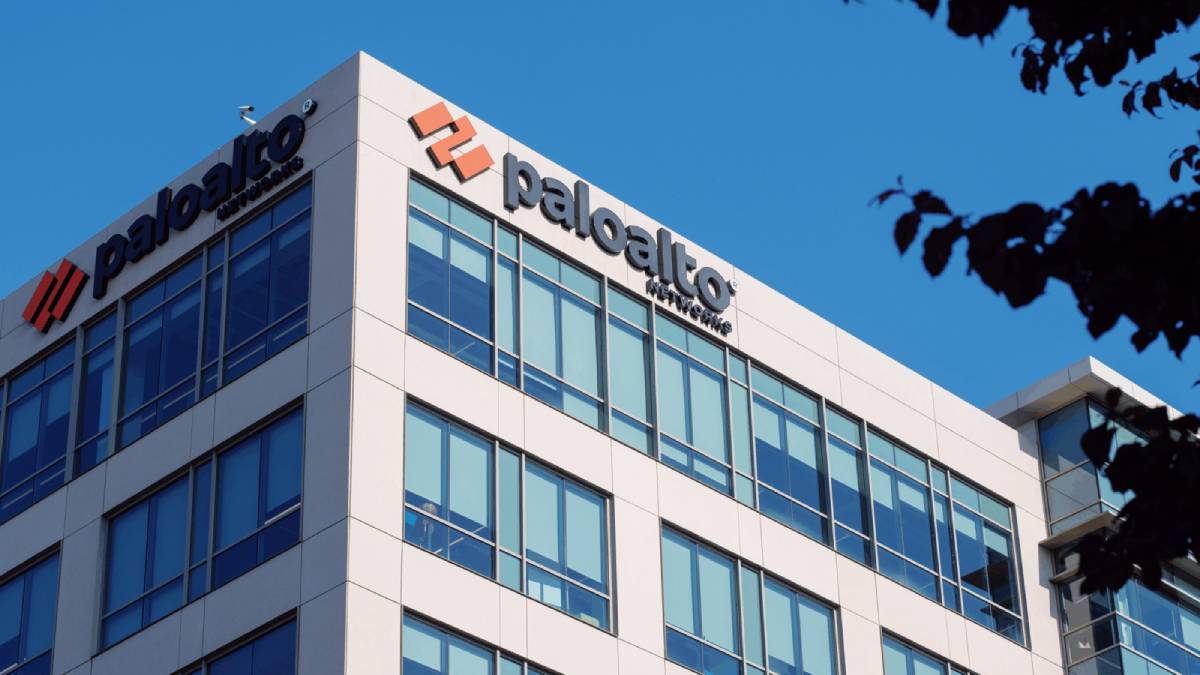
Shares of Palo Alto Networks fell after the cybersecurity firm issued a softer-than-expected outlook, overshadowing its strong emphasis on artificial intelligence-driven innovation. The market reaction highlights growing investor sensitivity to forward guidance, even as AI remains central to corporate growth narratives across the tech sector.
Despite highlighting expanding AI-powered security offerings including automation and threat-detection enhancements the company’s projections signaled moderated growth compared with prior periods.
The stock declined sharply in after-hours trading, reflecting broader concerns around enterprise IT spending and cybersecurity budget cycles. Executives reiterated confidence in long-term AI integration across its security platforms, positioning machine learning and automation as core to future product differentiation.
However, markets appeared focused on near-term demand trends rather than long-term AI transformation potential. The development aligns with a broader recalibration across technology markets, where AI enthusiasm is increasingly weighed against macroeconomic realities.
Cybersecurity firms have benefited from heightened global threats, regulatory compliance requirements, and digital transformation initiatives. At the same time, enterprises are scrutinizing IT budgets amid economic uncertainty, creating uneven spending patterns.
Palo Alto Networks has aggressively positioned itself as an AI-first security platform, integrating automation and advanced analytics into threat detection and response systems.
Historically, cybersecurity has been considered a defensive, resilient sector. However, investor expectations have risen alongside AI-driven valuations, leaving little margin for conservative forecasts.
For CXOs and investors, the episode underscores a key dynamic: AI messaging alone may not sustain valuations without clear revenue acceleration and sustained demand visibility.
Market analysts suggest the stock reaction reflects valuation pressures rather than fundamental weakness. With cybersecurity companies trading at premium multiples, even modest guidance adjustments can trigger outsized moves.
Industry experts argue that AI-powered security remains a long-term growth driver, particularly as threat actors themselves adopt AI tools. Automation is increasingly critical in addressing talent shortages within cybersecurity teams.
Executives have emphasized that AI integration improves detection speed, reduces false positives, and enhances operational efficiency for enterprise customers.
However, analysts caution that customers may delay large-scale platform consolidations or new deployments if economic signals remain mixed. The key question for investors is whether current softness represents a temporary pause or a structural slowdown in enterprise spending.
For global executives, the market response signals heightened scrutiny of earnings quality and forward visibility especially in AI-linked sectors. Cybersecurity vendors may need to balance innovation messaging with disciplined forecasting to maintain investor confidence.
Investors should monitor enterprise security budgets, renewal cycles, and competitive pricing pressures as indicators of sector momentum. From a policy standpoint, rising geopolitical tensions and regulatory mandates continue to support cybersecurity investment. Governments worldwide are tightening compliance requirements, which could provide structural tailwinds even amid short-term volatility.
Companies operating in AI-driven security must align technological ambition with predictable revenue execution. Attention will now shift to upcoming quarters for clearer signals on enterprise demand and AI monetization. If spending stabilizes, Palo Alto Networks could regain investor momentum as AI-enhanced offerings mature. However, sustained guidance conservatism may continue to pressure valuations.
For decision-makers, the episode reinforces a broader lesson in 2026 markets: execution and outlook discipline matter as much as AI vision.
Source: MarketWatch
Date: February 2026


