
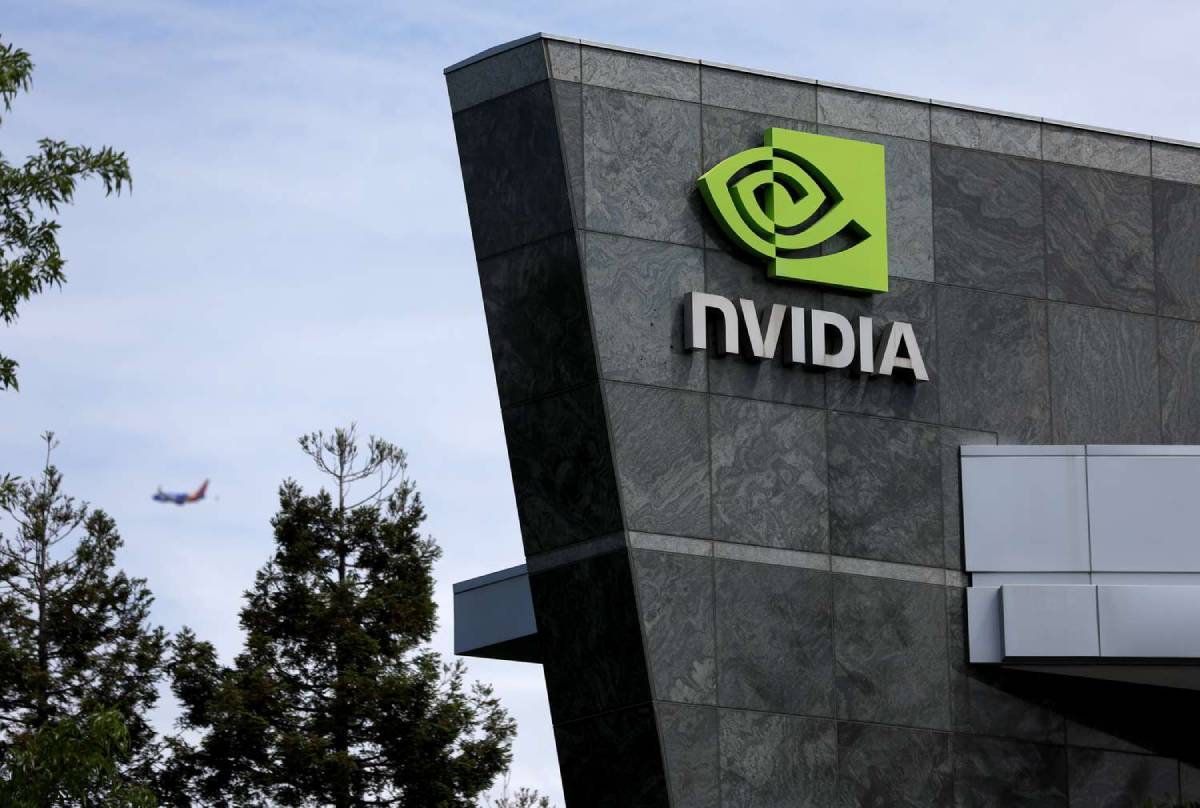
Nvidia’s Meteoric Rise Redefines the Balance of Power in the Global AI Economy

Looking ahead, decision-makers will watch whether Nvidia can sustain its lead as competitors and sovereign-backed chip programs scale up. Key uncertainties include regulatory intervention.

January 15, 2026
|

A major development unfolded as leading technology observers spotlighted Nvidia’s extraordinary rise from graphics specialist to the backbone of the global AI economy. The discussion underscores how Nvidia’s dominance in AI computing is reshaping markets, corporate strategies, and geopolitical competition around artificial intelligence infrastructure.

Nvidia’s transformation has been driven by its near-monopoly in advanced AI chips powering data centers, cloud platforms, and generative AI models. Demand for its GPUs has surged as enterprises, governments, and hyperscalers race to deploy large-scale AI systems. Industry analysts highlight Nvidia’s integrated ecosystem hardware, software, and developer tools as a critical competitive advantage. The company’s valuation surge reflects investor confidence in sustained AI-driven growth, while its supply chain influence has expanded across Asia, the U.S., and Europe. Meanwhile, competitors and policymakers are grappling with the strategic implications of Nvidia’s central role in AI infrastructure.

The development aligns with a broader trend across global markets where artificial intelligence has become a core driver of economic and strategic power. Over the past decade, Nvidia quietly positioned itself at the intersection of gaming, high-performance computing, and machine learning. As generative AI exploded into the mainstream, Nvidia’s GPUs emerged as the default engine for training and deploying advanced models. This shift has coincided with intensifying U.S.–China technology competition, export controls on advanced chips, and rising concerns about supply chain concentration. Historically, platform-defining companies such as Intel in CPUs or Microsoft in operating systems have shaped entire eras of technology. Nvidia’s rise suggests AI hardware may now represent the most consequential platform of the next economic cycle.

Technology analysts increasingly describe Nvidia as the “infrastructure layer” of the AI revolution. Commentators note that while software breakthroughs often capture headlines, it is Nvidia’s compute power that enables them at scale. Industry experts argue that Nvidia’s CUDA software ecosystem has locked in developers, making switching costs prohibitively high for rivals. Academic and market observers also caution that such dominance could attract regulatory scrutiny over time, particularly as governments assess AI’s societal impact. Corporate leaders emphasize that Nvidia’s roadmap spanning next-generation chips and AI-optimized systems positions it years ahead of competitors. The consensus among experts is that Nvidia’s influence now extends beyond technology into economics, national security, and global industrial policy.

For global executives, Nvidia’s dominance could redefine procurement strategies, capital allocation, and digital transformation timelines. Companies reliant on AI must navigate supply constraints and pricing power concentrated in a single vendor. Investors face both opportunity and risk as AI infrastructure becomes increasingly central to market valuations. Policymakers, meanwhile, must balance innovation with resilience, considering whether overreliance on one company poses strategic vulnerabilities. Governments may accelerate domestic chip initiatives, subsidies, and partnerships to counterbalance Nvidia’s influence. The shift underscores how AI hardware has become a policy issue, not just a commercial one.

Looking ahead, decision-makers will watch whether Nvidia can sustain its lead as competitors and sovereign-backed chip programs scale up. Key uncertainties include regulatory intervention, technological disruption, and geopolitical constraints on chip exports. What remains clear is that Nvidia has moved from industry player to structural pillar of the AI age one whose trajectory will shape markets, policies, and innovation strategies for years to come.

Source & Date

Source: Daily Northwestern
Date: January 15, 2026

  • Featured tools
Figstack AI
Free

Figstack AI is an intelligent assistant for developers that explains code, generates docstrings, converts code between languages, and analyzes time complexity helping you work smarter, not harder.

#
Coding
Learn more
Tome AI
Free

Tome AI is an AI-powered storytelling and presentation tool designed to help users create compelling narratives and presentations quickly and efficiently. It leverages advanced AI technologies to generate content, images, and animations based on user input.

#
Presentation
#
Startup Tools
Learn more

Learn more about future of AI

Join 80,000+ Ai enthusiast getting weekly updates on exciting AI tools.
Thank you! Your submission has been received!
Oops! Something went wrong while submitting the form.

Nvidia’s Meteoric Rise Redefines the Balance of Power in the Global AI Economy

January 15, 2026

Looking ahead, decision-makers will watch whether Nvidia can sustain its lead as competitors and sovereign-backed chip programs scale up. Key uncertainties include regulatory intervention.

A major development unfolded as leading technology observers spotlighted Nvidia’s extraordinary rise from graphics specialist to the backbone of the global AI economy. The discussion underscores how Nvidia’s dominance in AI computing is reshaping markets, corporate strategies, and geopolitical competition around artificial intelligence infrastructure.

Nvidia’s transformation has been driven by its near-monopoly in advanced AI chips powering data centers, cloud platforms, and generative AI models. Demand for its GPUs has surged as enterprises, governments, and hyperscalers race to deploy large-scale AI systems. Industry analysts highlight Nvidia’s integrated ecosystem hardware, software, and developer tools as a critical competitive advantage. The company’s valuation surge reflects investor confidence in sustained AI-driven growth, while its supply chain influence has expanded across Asia, the U.S., and Europe. Meanwhile, competitors and policymakers are grappling with the strategic implications of Nvidia’s central role in AI infrastructure.

The development aligns with a broader trend across global markets where artificial intelligence has become a core driver of economic and strategic power. Over the past decade, Nvidia quietly positioned itself at the intersection of gaming, high-performance computing, and machine learning. As generative AI exploded into the mainstream, Nvidia’s GPUs emerged as the default engine for training and deploying advanced models. This shift has coincided with intensifying U.S.–China technology competition, export controls on advanced chips, and rising concerns about supply chain concentration. Historically, platform-defining companies such as Intel in CPUs or Microsoft in operating systems have shaped entire eras of technology. Nvidia’s rise suggests AI hardware may now represent the most consequential platform of the next economic cycle.

Technology analysts increasingly describe Nvidia as the “infrastructure layer” of the AI revolution. Commentators note that while software breakthroughs often capture headlines, it is Nvidia’s compute power that enables them at scale. Industry experts argue that Nvidia’s CUDA software ecosystem has locked in developers, making switching costs prohibitively high for rivals. Academic and market observers also caution that such dominance could attract regulatory scrutiny over time, particularly as governments assess AI’s societal impact. Corporate leaders emphasize that Nvidia’s roadmap spanning next-generation chips and AI-optimized systems positions it years ahead of competitors. The consensus among experts is that Nvidia’s influence now extends beyond technology into economics, national security, and global industrial policy.

For global executives, Nvidia’s dominance could redefine procurement strategies, capital allocation, and digital transformation timelines. Companies reliant on AI must navigate supply constraints and pricing power concentrated in a single vendor. Investors face both opportunity and risk as AI infrastructure becomes increasingly central to market valuations. Policymakers, meanwhile, must balance innovation with resilience, considering whether overreliance on one company poses strategic vulnerabilities. Governments may accelerate domestic chip initiatives, subsidies, and partnerships to counterbalance Nvidia’s influence. The shift underscores how AI hardware has become a policy issue, not just a commercial one.

Looking ahead, decision-makers will watch whether Nvidia can sustain its lead as competitors and sovereign-backed chip programs scale up. Key uncertainties include regulatory intervention, technological disruption, and geopolitical constraints on chip exports. What remains clear is that Nvidia has moved from industry player to structural pillar of the AI age one whose trajectory will shape markets, policies, and innovation strategies for years to come.

Source & Date

Source: Daily Northwestern
Date: January 15, 2026

Promote Your Tool

Copy Embed Code

Similar Blogs

January 15, 2026
|

SiMa.ai & Kaynes Semicon Partner to Boost High Performance Physical AI

Industry analysts view the partnership as a strategic milestone for both companies, emphasizing its potential to shape next-generation AI hardware standards. A spokesperson from SiMa.ai noted that the collaboration.
Read more
January 15, 2026
|

Fractal Analytics Announces ₹4,900 Crore IPO Amid Growing AI Market Momentum

Market analysts highlight that Fractal Analytics’ IPO is strategically timed to capture growing investor appetite for AI and data-driven enterprises. Industry observers point to the company’s strong client portfolio.
Read more
January 15, 2026
|

Anthropic Launches Claude for Healthcare, Escalating Competition in Medical AI Post-OpenAI

For healthcare organizations, Claude offers potential efficiency gains, improved diagnostic accuracy, and streamlined patient communication. Investors are closely evaluating Anthropic’s positioning relative to OpenAI.
Read more
January 15, 2026
|

X Restricts Grok AI Following Deepfake Controversy in Platform Responsibility

A major intervention unfolded as X moved to restrict its Grok AI tool following public backlash over its ability to generate non-consensual explicit images of real people. The decision underscores growing regulatory.
Read more
January 15, 2026
|

Can AI Truly Create? Rethinking Innovation and Human Advantage

A critical debate is unfolding across technology, academia, and boardrooms as artificial intelligence systems demonstrate the ability to generate ideas, concepts, and solutions once thought to be uniquely human.
Read more
January 15, 2026
|

TSMC Hits Record Profits as AI Chip Demand Soars

For global businesses, TSMC’s results confirm that access to advanced AI chips will remain a competitive differentiator. Technology firms dependent on AI acceleration face higher costs but more predictable supply.
Read more