
Nadella Calls for Global AI Responsibility Pact to Secure Public Trust

Satya Nadella emphasized that AI’s long-term success depends on trust, accountability, and alignment with public interest. He called on AI companies to embed responsibility, safety.

January 27, 2026
|

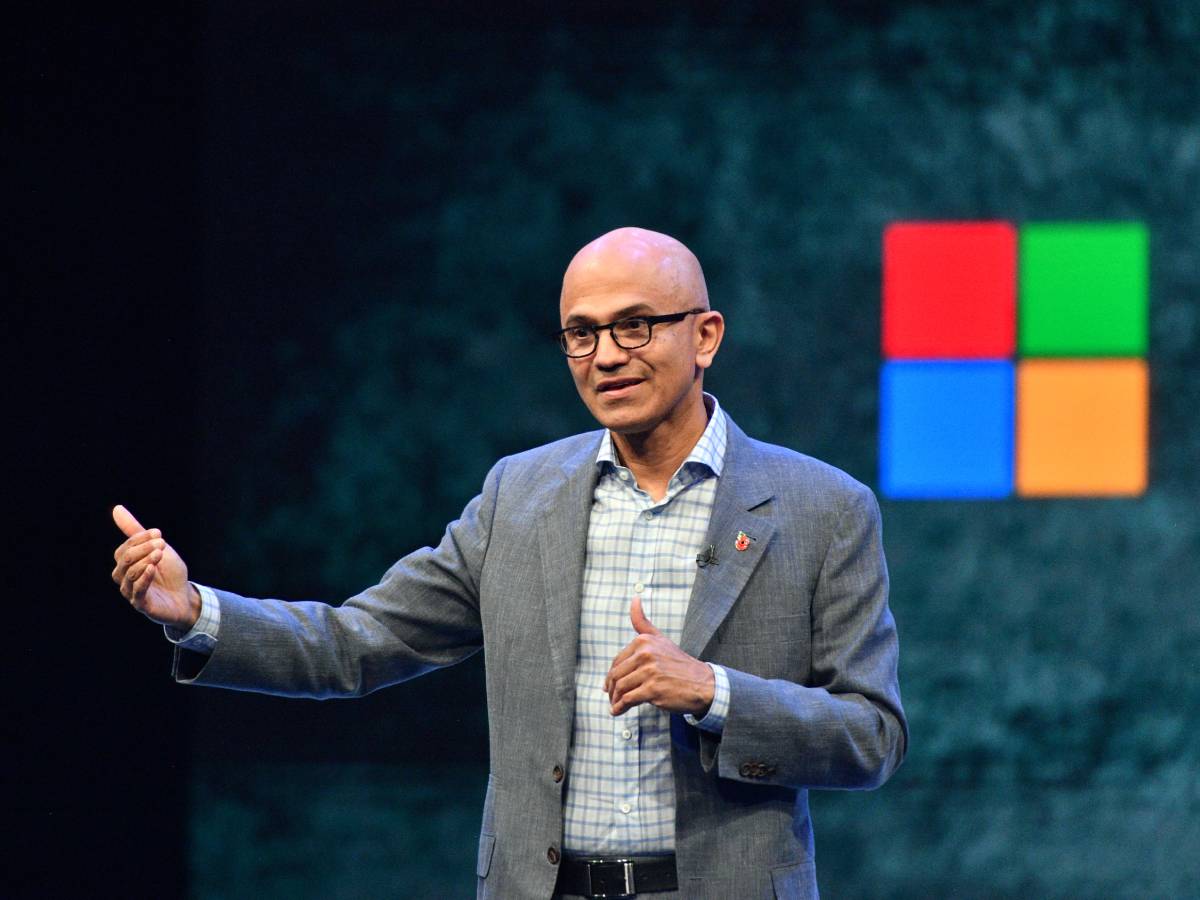
A major development unfolded as Microsoft CEO Satya Nadella issued a direct message to the global AI industry, urging companies to make artificial intelligence socially acceptable for both citizens and governments. The call signals a strategic shift toward responsible AI governance, with implications for global markets, regulation, and corporate leadership.

Satya Nadella emphasized that AI’s long-term success depends on trust, accountability, and alignment with public interest. He called on AI companies to embed responsibility, safety, and transparency into product design and deployment.

The message targets major AI developers, cloud providers, and platform companies that shape global digital infrastructure. Nadella highlighted the need for collaboration between governments and private companies to establish shared rules of engagement for AI systems.

The statement comes as regulatory pressure rises globally, with governments increasingly demanding ethical AI frameworks, explainability standards, and risk controls. The focus is shifting from pure innovation speed to legitimacy, governance, and public acceptance.

The development aligns with a broader trend across global markets where AI adoption is accelerating faster than regulatory and social trust frameworks. From Europe’s AI Act to emerging AI governance models in Asia and North America, governments are asserting control over how AI systems are built, trained, and deployed.

Historically, technological revolutions—from social media to cloud computing—scaled rapidly before regulatory structures matured, creating public backlash and policy intervention. AI now sits at a similar inflection point. Concerns around data privacy, job displacement, algorithmic bias, misinformation, and national security have made AI a political, social, and economic issue—not just a technological one.

For global corporations, AI is no longer just a productivity tool but a governance challenge. Corporate responsibility, regulatory compliance, and public trust are becoming core components of AI strategy alongside innovation and profitability.

Industry analysts view Nadella’s message as a recognition that AI legitimacy is becoming as important as AI capability. Experts argue that without trust frameworks, AI adoption risks regulatory clampdowns, public resistance, and fragmented global markets.

Policy experts highlight that governments are increasingly unwilling to accept “move fast and break things” approaches in AI development. Instead, they are demanding risk assessments, accountability mechanisms, and auditability.

Corporate leaders across sectors are beginning to echo similar concerns, emphasizing responsible AI, explainability, and human oversight. Market observers note that trust-based AI governance could become a competitive advantage, differentiating companies that can scale safely from those that face regulatory friction.

The consensus view is that AI companies must evolve from pure technology builders into institutional actors that operate within political, ethical, and societal frameworks.

For global executives, the shift could redefine operational strategies across AI development, deployment, and governance. Companies may need to invest more in compliance, AI ethics teams, governance frameworks, and regulatory engagement.

Investors are likely to increasingly assess AI companies not just on innovation and growth, but on regulatory resilience and reputational risk management.

For policymakers, Nadella’s message reinforces the push for structured AI regulation rather than reactive bans. Governments may accelerate standard-setting, certification models, and international AI governance cooperation.

Analysts warn that firms ignoring responsible AI principles risk facing stricter regulations, public backlash, and market exclusion in highly regulated regions.

Decision-makers should watch for coordinated industry frameworks on responsible AI, stronger government-industry collaboration, and the emergence of global AI governance standards. Over the next 12–24 months, AI leadership will increasingly be defined not just by model performance, but by trust, compliance, and social legitimacy. The AI race is shifting from raw capability to sustainable acceptance.

Source & Date

Source: The Times of India
Date: January 2026

  • Featured tools
Writesonic AI
Free

Writesonic AI is a versatile AI writing platform designed for marketers, entrepreneurs, and content creators. It helps users create blog posts, ad copies, product descriptions, social media posts, and more with ease. With advanced AI models and user-friendly tools, Writesonic streamlines content production and saves time for busy professionals.

#
Copywriting
Learn more
Alli AI
Free

Alli AI is an all-in-one, AI-powered SEO automation platform that streamlines on-page optimization, site auditing, speed improvements, schema generation, internal linking, and ranking insights.

#
SEO
Learn more

Learn more about future of AI

Join 80,000+ Ai enthusiast getting weekly updates on exciting AI tools.
Thank you! Your submission has been received!
Oops! Something went wrong while submitting the form.

Nadella Calls for Global AI Responsibility Pact to Secure Public Trust

January 27, 2026

Satya Nadella emphasized that AI’s long-term success depends on trust, accountability, and alignment with public interest. He called on AI companies to embed responsibility, safety.

A major development unfolded as Microsoft CEO Satya Nadella issued a direct message to the global AI industry, urging companies to make artificial intelligence socially acceptable for both citizens and governments. The call signals a strategic shift toward responsible AI governance, with implications for global markets, regulation, and corporate leadership.

Satya Nadella emphasized that AI’s long-term success depends on trust, accountability, and alignment with public interest. He called on AI companies to embed responsibility, safety, and transparency into product design and deployment.

The message targets major AI developers, cloud providers, and platform companies that shape global digital infrastructure. Nadella highlighted the need for collaboration between governments and private companies to establish shared rules of engagement for AI systems.

The statement comes as regulatory pressure rises globally, with governments increasingly demanding ethical AI frameworks, explainability standards, and risk controls. The focus is shifting from pure innovation speed to legitimacy, governance, and public acceptance.

The development aligns with a broader trend across global markets where AI adoption is accelerating faster than regulatory and social trust frameworks. From Europe’s AI Act to emerging AI governance models in Asia and North America, governments are asserting control over how AI systems are built, trained, and deployed.

Historically, technological revolutions—from social media to cloud computing—scaled rapidly before regulatory structures matured, creating public backlash and policy intervention. AI now sits at a similar inflection point. Concerns around data privacy, job displacement, algorithmic bias, misinformation, and national security have made AI a political, social, and economic issue—not just a technological one.

For global corporations, AI is no longer just a productivity tool but a governance challenge. Corporate responsibility, regulatory compliance, and public trust are becoming core components of AI strategy alongside innovation and profitability.

Industry analysts view Nadella’s message as a recognition that AI legitimacy is becoming as important as AI capability. Experts argue that without trust frameworks, AI adoption risks regulatory clampdowns, public resistance, and fragmented global markets.

Policy experts highlight that governments are increasingly unwilling to accept “move fast and break things” approaches in AI development. Instead, they are demanding risk assessments, accountability mechanisms, and auditability.

Corporate leaders across sectors are beginning to echo similar concerns, emphasizing responsible AI, explainability, and human oversight. Market observers note that trust-based AI governance could become a competitive advantage, differentiating companies that can scale safely from those that face regulatory friction.

The consensus view is that AI companies must evolve from pure technology builders into institutional actors that operate within political, ethical, and societal frameworks.

For global executives, the shift could redefine operational strategies across AI development, deployment, and governance. Companies may need to invest more in compliance, AI ethics teams, governance frameworks, and regulatory engagement.

Investors are likely to increasingly assess AI companies not just on innovation and growth, but on regulatory resilience and reputational risk management.

For policymakers, Nadella’s message reinforces the push for structured AI regulation rather than reactive bans. Governments may accelerate standard-setting, certification models, and international AI governance cooperation.

Analysts warn that firms ignoring responsible AI principles risk facing stricter regulations, public backlash, and market exclusion in highly regulated regions.

Decision-makers should watch for coordinated industry frameworks on responsible AI, stronger government-industry collaboration, and the emergence of global AI governance standards. Over the next 12–24 months, AI leadership will increasingly be defined not just by model performance, but by trust, compliance, and social legitimacy. The AI race is shifting from raw capability to sustainable acceptance.

Source & Date

Source: The Times of India
Date: January 2026

Promote Your Tool

Copy Embed Code

Similar Blogs

March 13, 2026
|

Alibaba Releases OpenClaw App in China AI Race

Alibaba has introduced the OpenClaw app, a platform designed to support the growing ecosystem of “agentic AI” systems capable of performing tasks autonomously with minimal human intervention.
Read more
March 13, 2026
|

Meta Adds AI Tools to Boost Facebook Marketplace

Meta has rolled out a suite of artificial intelligence features designed to make selling items on Facebook Marketplace faster and more efficient. The tools can automatically generate product descriptions.
Read more
March 13, 2026
|

Proprietary Data Emerges as Key Advantage in AI

Analysts at S&P Global report that software companies with extensive proprietary data assets are likely to remain resilient as artificial intelligence transforms the technology sector.
Read more
March 13, 2026
|

ByteDance Gains Access to Nvidia AI Chips

ByteDance has obtained access to Nvidia’s high-end AI chips, which are widely considered essential for training and running advanced artificial intelligence models.
Read more
March 13, 2026
|

China Leads Global Rise of Agentic AI Platforms

Chinese technology companies and developers are rapidly experimenting with OpenClaw, an open-source platform designed to create autonomous AI agents capable of performing tasks.
Read more
March 13, 2026
|

Meta Acquires Social Network to Grow AI Ecosystem

Meta confirmed that the Moltbook acquisition will bring AI agent networking capabilities into its portfolio, allowing autonomous AI entities to interact, share data, and perform tasks collaboratively.
Read more