
Microsoft Balances OpenAI Cloud Strategy Risk

Internal communications and strategic discussions within Microsoft reportedly highlighted fears that OpenAI could shift workloads or narratives toward Amazon Web Services.

May 11, 2026
|
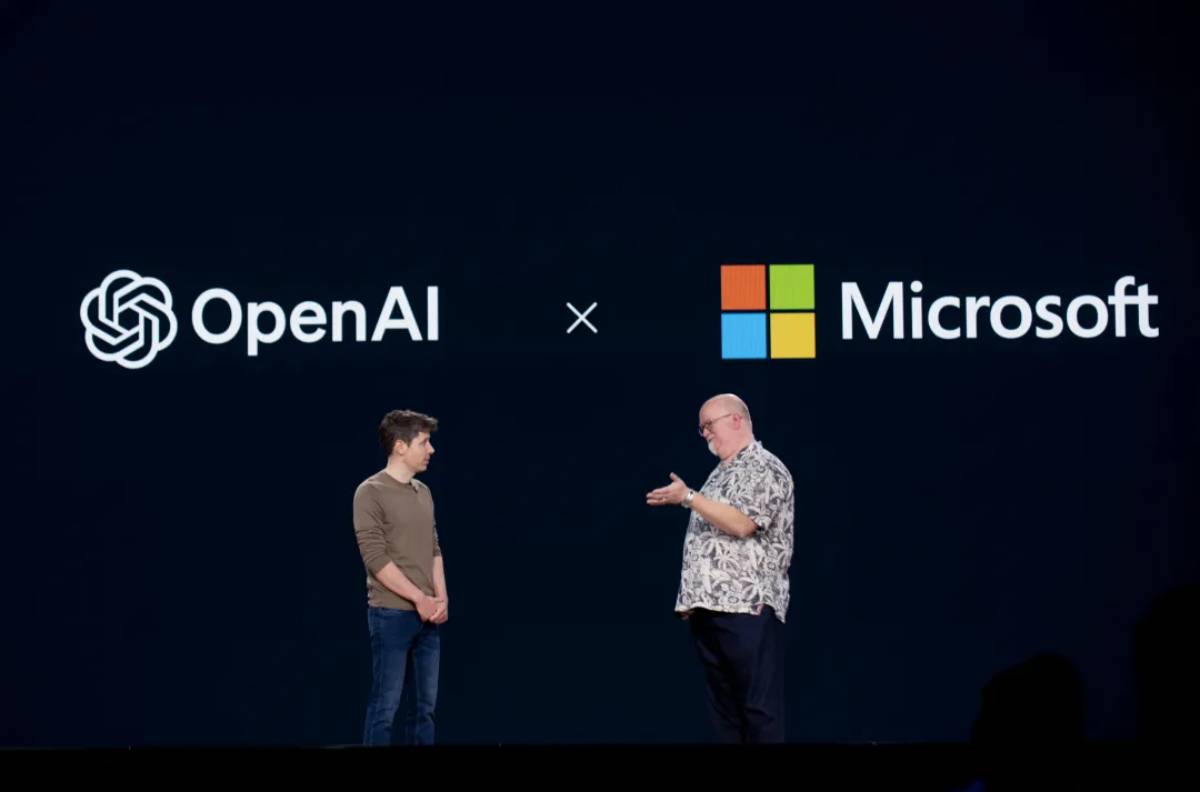
Image Source:  The Verge

Tensions have surfaced in the deep partnership between Microsoft and OpenAI, with internal concerns reportedly centered on whether OpenAI could pivot toward rival cloud providers such as Amazon. The discussion underscores intensifying competition in AI infrastructure, where cloud allegiance increasingly shapes strategic advantage, market perception, and enterprise trust in platforms like Microsoft Azure.

Internal communications and strategic discussions within Microsoft reportedly highlighted fears that OpenAI could shift workloads or narratives toward Amazon Web Services, potentially weakening Azure’s positioning in the AI cloud race. The concern was not only technical migration but reputational how enterprise clients perceive reliability and performance claims across competing platforms.

The partnership between Microsoft and OpenAI remains central to modern AI infrastructure, with Azure serving as a primary compute backbone for large-scale model training and deployment. However, rising competition among hyperscalers has intensified scrutiny over exclusivity, pricing leverage, and long-term dependency. The dynamic reflects broader industry fragmentation as AI workloads become the core battleground for cloud dominance.

The AI boom has transformed cloud computing into a high-stakes geopolitical and commercial contest. Microsoft’s early investment in OpenAI gave it a strategic advantage, embedding generative AI capabilities across enterprise products and reinforcing Azure’s relevance. However, rivals such as Amazon and Google are aggressively scaling their AI infrastructure offerings, intensifying pressure on partnership exclusivity models.

Historically, cloud providers competed on storage, compute, and enterprise software ecosystems. Today, differentiation increasingly hinges on AI model access, training capacity, and integration depth. The Microsoft–OpenAI relationship exemplifies this shift: a hybrid structure where a model developer depends heavily on a cloud provider, yet retains incentives to diversify infrastructure.

This tension is amplified by enterprise clients seeking multi-cloud resilience, regulatory scrutiny over AI concentration, and rising compute costs that make vendor diversification economically attractive.

Industry analysts note that hyperscaler alliances in AI are structurally fragile due to overlapping incentives. While Microsoft benefits from OpenAI’s success, it must also ensure Azure remains the default infrastructure layer rather than one of multiple options.

Some technology strategists argue that fears of reputational competition such as concerns over clients perceiving Amazon as a more scalable alternative—reflect a broader reality: AI credibility is now tied to infrastructure performance narratives as much as model quality.

Corporate observers also highlight that OpenAI’s long-term strategy may naturally involve multi-cloud distribution to reduce dependency risk. Meanwhile, Microsoft’s internal posture appears focused on retaining architectural primacy within Azure while avoiding public friction that could weaken its positioning against Amazon and Google in enterprise AI markets.

For global enterprises, the Microsoft–OpenAI dynamic signals increasing complexity in cloud procurement strategies. Dependency on a single AI-cloud stack may expose organizations to pricing volatility and vendor lock-in risks.

Investors are closely watching whether AI partnerships consolidate power among a few hyperscalers or evolve toward distributed ecosystems. Regulators, meanwhile, are examining whether such deep integrations create competitive barriers in both cloud computing and foundation model access.

For corporate CIOs, the key takeaway is operational flexibility. Multi-cloud AI strategies may shift from optional architecture to strategic necessity as competition among Microsoft, Amazon, and Google intensifies across enterprise AI workloads.

The coming months will likely test the durability of exclusive AI-cloud alignments. Watch for expanded multi-cloud deployments, renegotiated compute agreements, and potential public repositioning by both Microsoft and OpenAI regarding infrastructure independence. The broader question remains whether AI development consolidates under a few dominant platforms or fragments into interoperable ecosystems driven by cost, regulation, and performance competition.

Source: The Verge
Date: 11 May 2026

  • Featured tools
Kreateable AI
Free

Kreateable AI is a white-label, AI-driven design platform that enables logo generation, social media posts, ads, and more for businesses, agencies, and service providers.

#
Logo Generator
Learn more
WellSaid Ai
Free

WellSaid AI is an advanced text-to-speech platform that transforms written text into lifelike, human-quality voiceovers.

#
Text to Speech
Learn more

Learn more about future of AI

Join 80,000+ Ai enthusiast getting weekly updates on exciting AI tools.
Thank you! Your submission has been received!
Oops! Something went wrong while submitting the form.

Microsoft Balances OpenAI Cloud Strategy Risk

May 11, 2026

Internal communications and strategic discussions within Microsoft reportedly highlighted fears that OpenAI could shift workloads or narratives toward Amazon Web Services.

Image Source:  The Verge

Tensions have surfaced in the deep partnership between Microsoft and OpenAI, with internal concerns reportedly centered on whether OpenAI could pivot toward rival cloud providers such as Amazon. The discussion underscores intensifying competition in AI infrastructure, where cloud allegiance increasingly shapes strategic advantage, market perception, and enterprise trust in platforms like Microsoft Azure.

Internal communications and strategic discussions within Microsoft reportedly highlighted fears that OpenAI could shift workloads or narratives toward Amazon Web Services, potentially weakening Azure’s positioning in the AI cloud race. The concern was not only technical migration but reputational how enterprise clients perceive reliability and performance claims across competing platforms.

The partnership between Microsoft and OpenAI remains central to modern AI infrastructure, with Azure serving as a primary compute backbone for large-scale model training and deployment. However, rising competition among hyperscalers has intensified scrutiny over exclusivity, pricing leverage, and long-term dependency. The dynamic reflects broader industry fragmentation as AI workloads become the core battleground for cloud dominance.

The AI boom has transformed cloud computing into a high-stakes geopolitical and commercial contest. Microsoft’s early investment in OpenAI gave it a strategic advantage, embedding generative AI capabilities across enterprise products and reinforcing Azure’s relevance. However, rivals such as Amazon and Google are aggressively scaling their AI infrastructure offerings, intensifying pressure on partnership exclusivity models.

Historically, cloud providers competed on storage, compute, and enterprise software ecosystems. Today, differentiation increasingly hinges on AI model access, training capacity, and integration depth. The Microsoft–OpenAI relationship exemplifies this shift: a hybrid structure where a model developer depends heavily on a cloud provider, yet retains incentives to diversify infrastructure.

This tension is amplified by enterprise clients seeking multi-cloud resilience, regulatory scrutiny over AI concentration, and rising compute costs that make vendor diversification economically attractive.

Industry analysts note that hyperscaler alliances in AI are structurally fragile due to overlapping incentives. While Microsoft benefits from OpenAI’s success, it must also ensure Azure remains the default infrastructure layer rather than one of multiple options.

Some technology strategists argue that fears of reputational competition such as concerns over clients perceiving Amazon as a more scalable alternative—reflect a broader reality: AI credibility is now tied to infrastructure performance narratives as much as model quality.

Corporate observers also highlight that OpenAI’s long-term strategy may naturally involve multi-cloud distribution to reduce dependency risk. Meanwhile, Microsoft’s internal posture appears focused on retaining architectural primacy within Azure while avoiding public friction that could weaken its positioning against Amazon and Google in enterprise AI markets.

For global enterprises, the Microsoft–OpenAI dynamic signals increasing complexity in cloud procurement strategies. Dependency on a single AI-cloud stack may expose organizations to pricing volatility and vendor lock-in risks.

Investors are closely watching whether AI partnerships consolidate power among a few hyperscalers or evolve toward distributed ecosystems. Regulators, meanwhile, are examining whether such deep integrations create competitive barriers in both cloud computing and foundation model access.

For corporate CIOs, the key takeaway is operational flexibility. Multi-cloud AI strategies may shift from optional architecture to strategic necessity as competition among Microsoft, Amazon, and Google intensifies across enterprise AI workloads.

The coming months will likely test the durability of exclusive AI-cloud alignments. Watch for expanded multi-cloud deployments, renegotiated compute agreements, and potential public repositioning by both Microsoft and OpenAI regarding infrastructure independence. The broader question remains whether AI development consolidates under a few dominant platforms or fragments into interoperable ecosystems driven by cost, regulation, and performance competition.

Source: The Verge
Date: 11 May 2026

Promote Your Tool

Copy Embed Code

Similar Blogs

May 11, 2026
|

AI Lifestyle Scheduling Drives Wellness Era

AI-driven calendar automation tools are increasingly capable of designing full-day personal schedules based on user preferences, behavioral data, and predictive modeling.
Read more
May 11, 2026
|

Google Expands Gemini AI Ecosystem Push

Google is expected to unveil significant enhancements to its Gemini AI models, expanding their role across devices, applications, and developer platforms.
Read more
May 11, 2026
|

AI Home Tech Fraud Threat Grows

Cybersecurity analysts report a rise in AI-assisted scams involving smart home devices, fake customer support interactions, and automated phishing campaigns.
Read more
May 11, 2026
|

Google Expands Gemini AI Ecosystem Push

At Google I/O 2026, the company is expected to deepen integration of its Gemini AI models across devices and services, extending beyond software into hardware form factors such as smart glasses.
Read more
May 11, 2026
|

Apple M4 iPad Air Price Cuts Intensify Competition

Retail promotions have brought significant price reductions on Apple’s latest M4-powered iPad Air models, with discounts varying by configuration and storage tiers.
Read more
May 11, 2026
|

Microsoft Balances OpenAI Cloud Strategy Risk

Internal communications and strategic discussions within Microsoft reportedly highlighted fears that OpenAI could shift workloads or narratives toward Amazon Web Services.
Read more