



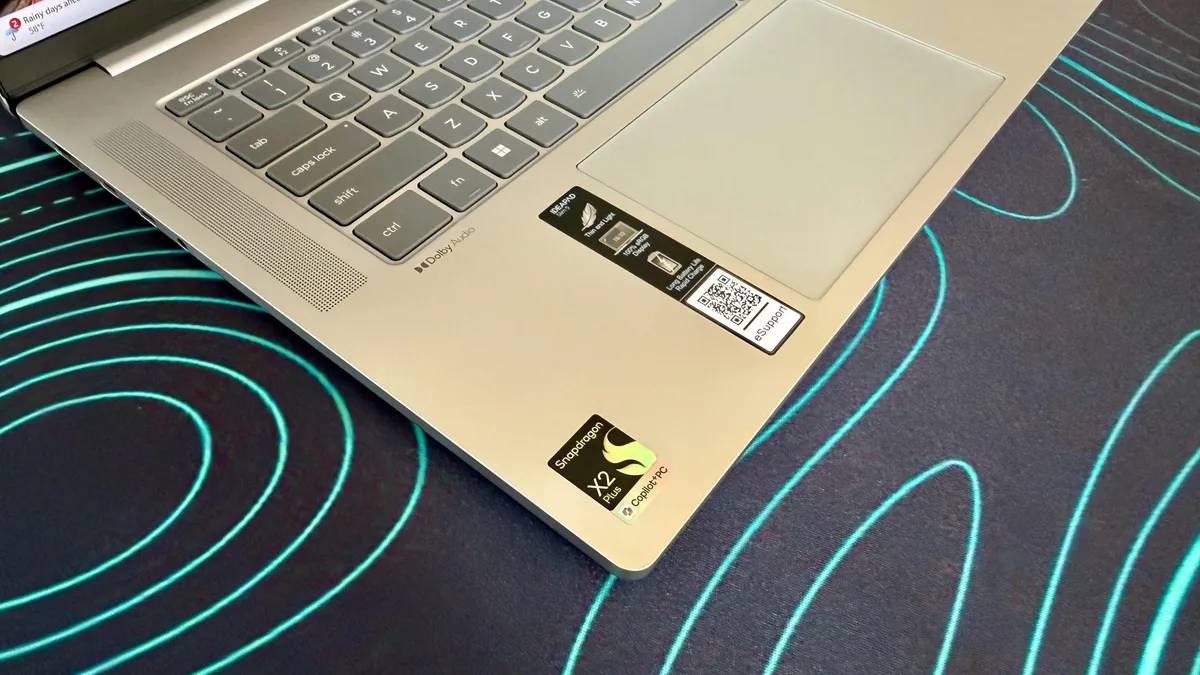
A major development in the personal computing market is the emergence of low-cost AI-enabled laptops, with Lenovo’s IdeaPad Slim 5x positioning itself as an entry point into the Copilot+ PC ecosystem. The device reflects a strategic shift toward AI-native computing, while also highlighting performance and capability trade-offs in budget-tier hardware.
The Lenovo IdeaPad Slim 5x introduces Copilot+ AI features at a lower price point, aiming to broaden access to next-generation Windows AI capabilities. The system integrates on-device AI acceleration designed for productivity, summarization, and intelligent workflow assistance.
However, performance constraints remain evident, particularly in sustained workloads and high-end creative tasks. The device is positioned for mainstream users rather than power professionals, with trade-offs in processing capacity and premium build features.
The launch reflects broader OEM competition to align with Microsoft’s Copilot+ ecosystem, where AI acceleration is becoming a baseline requirement for new PC categories across global markets.
The development aligns with a broader trend across global markets where personal computing is undergoing a structural transition toward AI-native hardware. Following Microsoft’s Copilot+ PC framework, manufacturers are redesigning laptops to include dedicated neural processing units (NPUs) that enable local AI execution.
This shift represents the most significant PC platform evolution since the rise of mobile-first computing. Lenovo, along with competitors such as Dell, HP, and ASUS, is racing to define price-performance balance in this new category.
Historically, entry-level laptops have been focused on affordability and basic productivity. However, AI integration is now redefining baseline expectations, pushing even budget systems to support on-device intelligence. This mirrors earlier transitions such as GPU acceleration in gaming laptops and SSD adoption in mainstream computing.
Analysts describe entry-level Copilot+ PCs as an early stage in AI hardware commoditization. While premium devices currently deliver stronger performance, budget models like the IdeaPad Slim 5x are expected to drive mass adoption of AI-assisted computing workflows.
Industry observers note that the real value of Copilot+ systems lies in local AI processing, which reduces reliance on cloud services and improves responsiveness in productivity applications. However, limitations in chip performance and thermal design constrain advanced use cases.
Tech reviewers emphasize that while the device is suitable for everyday productivity, it may struggle with intensive creative workloads or multitasking scenarios. OEMs are expected to refine AI-PC performance parity over the next product cycles as chipmakers optimize NPUs for broader workloads.
For PC manufacturers, the Lenovo IdeaPad Slim 5x represents a strategic push to democratize AI computing and expand market share in the entry-level segment. It signals intensifying competition in AI-first hardware ecosystems.
For enterprises and education sectors, such devices could enable broader deployment of AI productivity tools at lower cost, though performance constraints may limit mission-critical use cases.
For consumers, AI PCs introduce new expectations around software-driven value rather than hardware-only upgrades. From a policy perspective, the shift raises questions about long-term hardware standards, energy efficiency of AI workloads, and the lifecycle of AI-enabled consumer devices as compute requirements evolve.
The next phase of Copilot+ adoption will depend on improvements in chip efficiency and real-world AI application performance. Watch for tighter integration between Windows AI services and hardware acceleration. As pricing becomes more competitive, differentiation will shift from raw specifications to AI capability depth. The market is likely to fragment into performance tiers within AI-native PC categories.
Source: CNET
Date: May 21, 2026


