
IgniteTech CEO Defends Workforce Overhaul for AI Transformation

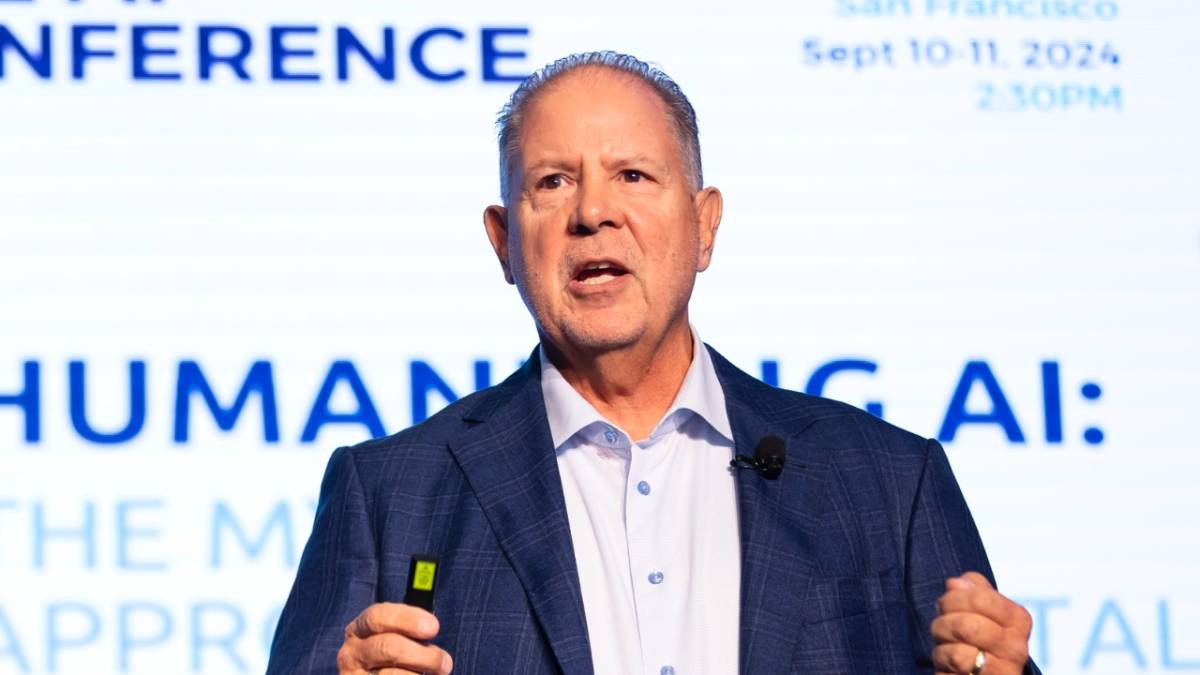
Eric Vaughan, CEO of enterprise software company IgniteTech, replaced nearly 80% of his workforce over the course of 2023 and into early 2024 after employees resisted the company's aggressive AI adoption mandate.

January 12, 2026
|

Eric Vaughan, CEO of enterprise software company IgniteTech, replaced nearly 80% of his workforce over the course of 2023 and into early 2024 after employees resisted the company's aggressive AI adoption mandate. Dialzara Two years later, Vaughan maintains he would make the same decision, calling generative AI an existential transformation requiring immediate cultural change rather than gradual adaptation. Dialzara The controversial restructuring highlights deepening tensions between C-suite AI urgency and white-collar workforce resistance across the technology sector.

In early 2023, convinced generative AI represented an existential threat, Vaughan mandated company-wide AI transformation, dedicating 20% of payroll to training initiatives including mandatory "AI Mondays" where employees could only work on AI projects regardless of department. Dialzara When the investment failed due to what Vaughan characterized as mass resistance and sabotage, particularly from technical staff, the company launched a massive recruiting effort for AI Innovation Specialists" and replaced hundreds of employees.

The transformation culminated in a complete organizational restructuring under Chief AI Officer Thibault Bridel-Bertomeu, with every division now reporting into the AI organization. Dialzara By year-end 2024, IgniteTech achieved near 75% EBITDA margins on nine-figure revenue, launched two patent-pending AI solutions including email automation platform Eloquens AI, and completed a major acquisition of Khoros.

The development reflects broader workforce resistance documented in Writer's 2025 enterprise AI adoption report, which found one in three workers actively sabotage company AI rollouts rising to 41% among millennial and Gen Z employees through refusing tools, generating low-quality outputs, or avoiding training.

Vaughan discovered technical personnel were most resistant, voicing concerns about AI limitations rather than possibilities, while marketing and sales staff embraced the technology enthusiastically. Microsoft This friction stems from fears of job displacement, frustration with inadequate AI tools, and unclear strategy from leadership according to Writer's research.

The timing proved critical as IgniteTech faced what Vaughan characterized as an inflection point between companies that successfully integrate AI and those rendered irrelevant. Dialzara Writer's survey shows 71% of C-suite leaders report AI applications being created in silos, with nearly half saying employees were left to figure out generative AI independently, validating Vaughan's concerns about organizational fragmentation.

Vaughan emphasized the cultural imperative: "You can't compel people to change, especially if they don't believe. Belief was really the thing he needed to recruit for. Changing minds was harder than adding skills." Dialzara Reflecting in early 2026, he stated the company isn't ahead of the curve but rather "just not getting run over from behind yet," given AI's relentless pace of change.

Joshua Wöhle, CEO of AI upskilling firm Mindstone, which trains employees at Lufthansa, Hyatt, and NBA teams, contrasted IgniteTech's replacement approach with reskilling strategies employed by companies like Ikea. Microsoft Writer's Chief Strategy Officer Kevin Chung explained worker sabotage stems from pressure to succeed with inadequate tools: "When you're handed something that doesn't work, you get frustrated, so the sabotage kicks in."

Vaughan acknowledged the difficulty: "That was not our goal. It was extremely difficult. But at the end of the day, everybody's got to be in the same boat, rowing in the same direction."

For global executives, IgniteTech's experience illustrates the collision between AI transformation timelines and organizational change management capabilities. Writer's research reveals workers don't trust where organizations are headed, with 46% citing integration challenges with existing systems, 42% struggling with data quality, and 39% facing change management issues as primary obstacles.

The financial results 75% EBITDA margins and continued revenue growth validate Vaughan's approach from a shareholder perspective but raise questions about workforce sustainability and talent market dynamics. Companies must weigh whether forced transformation through replacement delivers better long-term outcomes than gradual upskilling investments.

Investors should monitor whether IgniteTech's model becomes industry standard or remains an outlier, particularly as AI capabilities expand and resistance potentially intensifies. The precedent establishes that market access to AI talent may determine competitive positioning more than existing workforce capabilities.

Vaughan emphasized that AI transformation represents cultural and business change, not merely technological upgrade, cautioning against replicating his exact approach while insisting organizational alignment remains non-negotiable. Dialzara Industry observers anticipate increased workforce polarization between AI enthusiasts and resisters as transformation pressure intensifies across sectors.

The critical question remains whether other enterprises can achieve similar results through less disruptive pathways, or if IgniteTech's aggressive replacement strategy presages broader industry restructuring. Decision-makers must balance innovation urgency against workforce stability as AI capabilities accelerate. The next 18 months will determine if gradual upskilling or radical replacement becomes the dominant organizational response to AI disruption.

Source & Date

Source: Fortune, Writer Enterprise AI Report, Mindstone
Date:
January 11, 2026 (originally reported August 17, 2025)

  • Featured tools
WellSaid Ai
Free

WellSaid AI is an advanced text-to-speech platform that transforms written text into lifelike, human-quality voiceovers.

#
Text to Speech
Learn more
Alli AI
Free

Alli AI is an all-in-one, AI-powered SEO automation platform that streamlines on-page optimization, site auditing, speed improvements, schema generation, internal linking, and ranking insights.

#
SEO
Learn more

Learn more about future of AI

Join 80,000+ Ai enthusiast getting weekly updates on exciting AI tools.
Thank you! Your submission has been received!
Oops! Something went wrong while submitting the form.

IgniteTech CEO Defends Workforce Overhaul for AI Transformation

January 12, 2026

Eric Vaughan, CEO of enterprise software company IgniteTech, replaced nearly 80% of his workforce over the course of 2023 and into early 2024 after employees resisted the company's aggressive AI adoption mandate.

Eric Vaughan, CEO of enterprise software company IgniteTech, replaced nearly 80% of his workforce over the course of 2023 and into early 2024 after employees resisted the company's aggressive AI adoption mandate. Dialzara Two years later, Vaughan maintains he would make the same decision, calling generative AI an existential transformation requiring immediate cultural change rather than gradual adaptation. Dialzara The controversial restructuring highlights deepening tensions between C-suite AI urgency and white-collar workforce resistance across the technology sector.

In early 2023, convinced generative AI represented an existential threat, Vaughan mandated company-wide AI transformation, dedicating 20% of payroll to training initiatives including mandatory "AI Mondays" where employees could only work on AI projects regardless of department. Dialzara When the investment failed due to what Vaughan characterized as mass resistance and sabotage, particularly from technical staff, the company launched a massive recruiting effort for AI Innovation Specialists" and replaced hundreds of employees.

The transformation culminated in a complete organizational restructuring under Chief AI Officer Thibault Bridel-Bertomeu, with every division now reporting into the AI organization. Dialzara By year-end 2024, IgniteTech achieved near 75% EBITDA margins on nine-figure revenue, launched two patent-pending AI solutions including email automation platform Eloquens AI, and completed a major acquisition of Khoros.

The development reflects broader workforce resistance documented in Writer's 2025 enterprise AI adoption report, which found one in three workers actively sabotage company AI rollouts rising to 41% among millennial and Gen Z employees through refusing tools, generating low-quality outputs, or avoiding training.

Vaughan discovered technical personnel were most resistant, voicing concerns about AI limitations rather than possibilities, while marketing and sales staff embraced the technology enthusiastically. Microsoft This friction stems from fears of job displacement, frustration with inadequate AI tools, and unclear strategy from leadership according to Writer's research.

The timing proved critical as IgniteTech faced what Vaughan characterized as an inflection point between companies that successfully integrate AI and those rendered irrelevant. Dialzara Writer's survey shows 71% of C-suite leaders report AI applications being created in silos, with nearly half saying employees were left to figure out generative AI independently, validating Vaughan's concerns about organizational fragmentation.

Vaughan emphasized the cultural imperative: "You can't compel people to change, especially if they don't believe. Belief was really the thing he needed to recruit for. Changing minds was harder than adding skills." Dialzara Reflecting in early 2026, he stated the company isn't ahead of the curve but rather "just not getting run over from behind yet," given AI's relentless pace of change.

Joshua Wöhle, CEO of AI upskilling firm Mindstone, which trains employees at Lufthansa, Hyatt, and NBA teams, contrasted IgniteTech's replacement approach with reskilling strategies employed by companies like Ikea. Microsoft Writer's Chief Strategy Officer Kevin Chung explained worker sabotage stems from pressure to succeed with inadequate tools: "When you're handed something that doesn't work, you get frustrated, so the sabotage kicks in."

Vaughan acknowledged the difficulty: "That was not our goal. It was extremely difficult. But at the end of the day, everybody's got to be in the same boat, rowing in the same direction."

For global executives, IgniteTech's experience illustrates the collision between AI transformation timelines and organizational change management capabilities. Writer's research reveals workers don't trust where organizations are headed, with 46% citing integration challenges with existing systems, 42% struggling with data quality, and 39% facing change management issues as primary obstacles.

The financial results 75% EBITDA margins and continued revenue growth validate Vaughan's approach from a shareholder perspective but raise questions about workforce sustainability and talent market dynamics. Companies must weigh whether forced transformation through replacement delivers better long-term outcomes than gradual upskilling investments.

Investors should monitor whether IgniteTech's model becomes industry standard or remains an outlier, particularly as AI capabilities expand and resistance potentially intensifies. The precedent establishes that market access to AI talent may determine competitive positioning more than existing workforce capabilities.

Vaughan emphasized that AI transformation represents cultural and business change, not merely technological upgrade, cautioning against replicating his exact approach while insisting organizational alignment remains non-negotiable. Dialzara Industry observers anticipate increased workforce polarization between AI enthusiasts and resisters as transformation pressure intensifies across sectors.

The critical question remains whether other enterprises can achieve similar results through less disruptive pathways, or if IgniteTech's aggressive replacement strategy presages broader industry restructuring. Decision-makers must balance innovation urgency against workforce stability as AI capabilities accelerate. The next 18 months will determine if gradual upskilling or radical replacement becomes the dominant organizational response to AI disruption.

Source & Date

Source: Fortune, Writer Enterprise AI Report, Mindstone
Date:
January 11, 2026 (originally reported August 17, 2025)

Promote Your Tool

Copy Embed Code

Similar Blogs

January 12, 2026
|

Google Partners with Walmart and Retail Giants to Embed Shopping in Gemini AI Chatbot

Google has partnered with Walmart and several major retailers to integrate shopping directly within its Gemini AI chatbot, enabling consumers to browse, compare, and checkout without leaving the chat interface.
Read more
January 12, 2026
|

Google Unveils “Agentic Commerce” Era, Signalling AI-Driven Transformation in Retail

Google today unveiled a vision for “agentic commerce,” where AI agents autonomously manage shopping, transactions, and personalized customer experiences. This marks a strategic pivot in retail technology.
Read more
January 12, 2026
|

TSMC Forecasts 27% Q4 Profit Surge as AI-Driven Chip Demand Soars

Taiwan Semiconductor Manufacturing Company (TSMC) is projected to post a 27% jump in Q4 profits, driven by surging global demand for AI chips. The growth underscores the company’s
Read more
January 12, 2026
|

AI Bubble Fears Raise Alarm Over Savings and Pensions

Concerns are intensifying over a potential artificial intelligence investment bubble, with analysts warning that a sharp market correction could ripple through global finances. As AI-driven tech valuations surg.
Read more
January 12, 2026
|

Analyst Identifies Top 10 AI Investment Opportunities for 2026

A fresh wave of investor focus is converging on artificial intelligence equities as markets position for 2026. A leading investment analysis has identified ten AI-linked stocks poised to benefit from accelerating enterprise adoption.
Read more
January 12, 2026
|

Strategic Thinkers Challenge AI Race Between U.S. and China

Leading foreign policy strategists are challenging the prevailing "AI race" framework that characterizes U.S.-China technological competition, arguing the zero-sum narrative oversimplifies a complex.
Read more